Korean Etiquette for Foreign Travelers: Dos and Don'ts You Must Know
Updated for March 2026
Korea is one of the most welcoming countries in the world for foreign visitors — but it also has a rich set of cultural customs that can catch first-time travelers completely off guard. Accidentally sitting in a priority subway seat, pouring your own drink at a dinner table, or tipping a restaurant server can create awkward moments that are easily avoided with a little preparation.
This guide breaks down everything you need to know about Korean etiquette, from the dinner table to the subway platform, so you can travel with confidence and earn genuine respect from locals.
🍽️ Dining Etiquette: The Rules That Matter Most
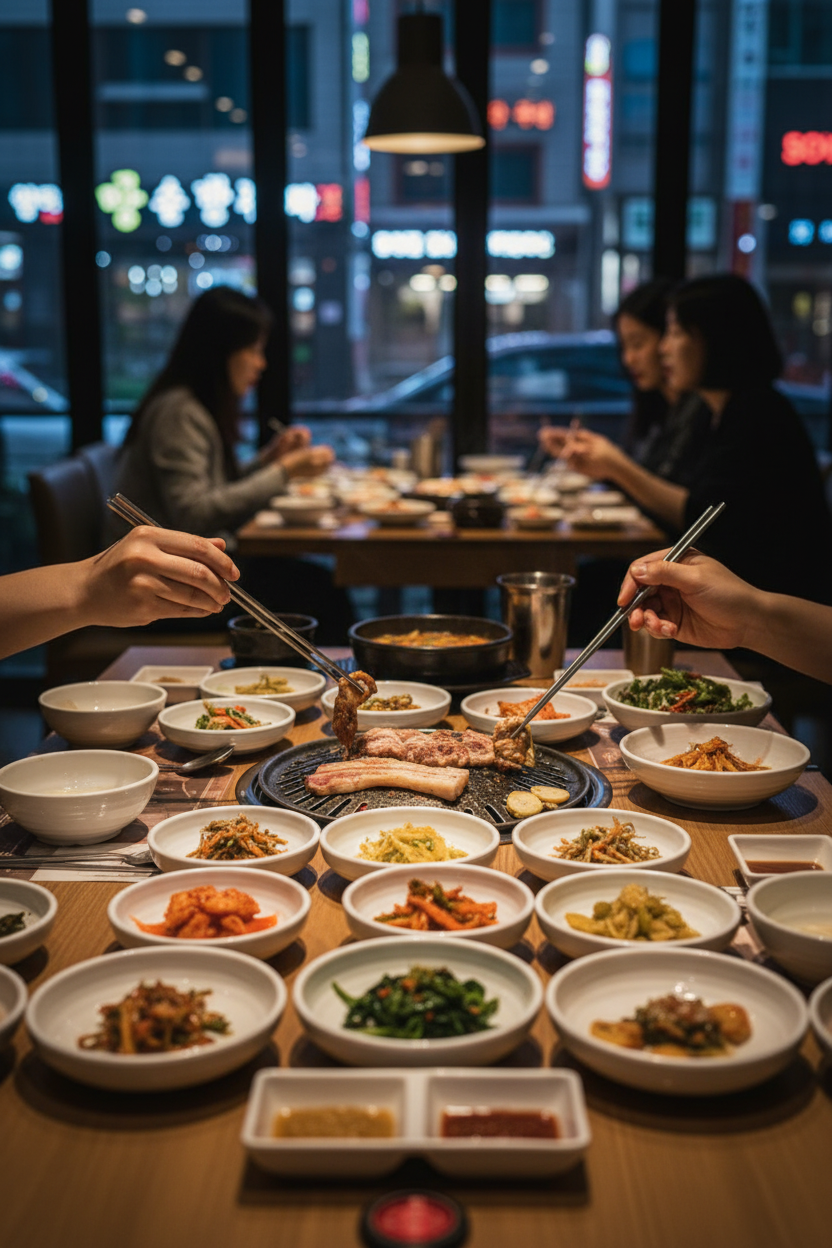
Korean dining culture is deeply social and steeped in tradition. Meals are communal events, and how you behave at the table signals a great deal about your character and respect for others.
Wait for the Eldest Person to Eat First
In Korean culture, age hierarchy (나이 서열) governs almost every social interaction — and the dinner table is no exception. When sitting down for a meal, it is standard practice to wait until the oldest or most senior person at the table picks up their chopsticks or spoon before you begin eating. This is not a rigid rule that will cause offense if broken by a foreign visitor, but making the effort to observe it will earn you genuine appreciation from Korean hosts.
Never Pour Your Own Drink
One of the most important rules at a Korean table is that you should never pour your own drink. In Korean drinking culture, you pour for others and others pour for you. If you notice someone's glass is empty, refill it. If your own glass is running low, simply hold it up slightly — someone will notice and fill it for you.
This principle applies to both alcohol (such as soju (소주) or makgeolli (막걸리)) and non-alcoholic beverages at formal settings.
Expert Tip: When receiving a drink from someone older or more senior than you, hold your glass with both hands or place your free hand under your forearm as a sign of respect. This small gesture makes a big impression.
Use Two Hands When Giving or Receiving
The two-handed gesture is a cornerstone of Korean respectful behavior. Whenever you give or receive something — a business card, a gift, a plate of food, change at a store — using both hands (or at minimum one hand with the other supporting the forearm) is the polite way to do it. Using only one hand, especially when interacting with an elder, can come across as dismissive or rude.
Do Not Stick Chopsticks Upright in Rice
Sticking chopsticks vertically into a bowl of rice resembles the incense offerings made at funerals and memorial ceremonies in Korea and other East Asian cultures. It is considered deeply inauspicious and disrespectful. Always rest your chopsticks flat on the chopstick rest or across the edge of your bowl.
Blowing Your Nose at the Table
This one surprises many Western travelers: blowing your nose loudly at a Korean dining table is considered very rude. If you need to blow your nose, excuse yourself and step away from the table. Sniffling quietly is considered far more acceptable than a loud blow in public.
Sharing Dishes
Korean meals typically feature banchan (반찬) — small shared side dishes placed in the center of the table. Everyone eats from these communal dishes. You do not need to serve yourself a personal portion of each dish. Simply pick from the shared plates throughout the meal. Using the serving end of your chopsticks (the end you have not put in your mouth) when taking from shared dishes is appreciated, though Korean locals often forgo this at casual settings.
🚇 Subway and Public Transport Manners
Seoul's subway system (서울 지하철) is one of the finest in the world — clean, punctual, and extensive. Koreans take pride in it, and the unwritten rules of subway behavior are taken seriously.
Priority Seats Are Sacred
Every subway car has designated priority seats (노약자석), usually marked in a different color (often pink or a distinct pattern) and located at the ends of each car. These seats are reserved for the elderly, pregnant women, people with disabilities, and those traveling with young children.
Even if a priority seat is empty and the train is not crowded, it is considered bad form for a young, able-bodied person to sit in one. Many Koreans will choose to stand rather than sit in these seats. As a foreign traveler, following this norm is a simple and visible way to show respect.
Expert Tip: Some subway lines in Seoul have a designated quiet car (조용한 칸). In these cars, phone calls are discouraged, and you should keep music and conversations at a low volume. Look for signage at the platform or inside the car.
Phone Calls on the Subway
While phone calls are not officially prohibited on most subway cars, keeping your voice low is the social expectation. Loud phone conversations are frowned upon. If you need to take a call, speak quietly or step off at the next stop.
Eating on the Subway
Eating on Seoul's subway is generally discouraged, and strong-smelling food is especially problematic. Light, odorless snacks are tolerated by most passengers, but save your tteokbokki (떡볶이) for the platform or outside.
Escalator Etiquette
Stand on the right side of escalators to leave the left side free for people who want to walk. This rule is widely observed across Seoul and major Korean cities.
🚫 Tipping Culture: Don't Do It
If there is one cultural fact every traveler to Korea must know before arriving, it is this: tipping is not customary in Korea and can sometimes cause confusion or offense.
Unlike in the United States or some parts of Europe, leaving a tip at a Korean restaurant, for a taxi driver, or at a hotel does not communicate gratitude — it can suggest that you view the service worker in a condescending way. Service staff are paid a standard wage, and excellent service is simply the professional standard, not something that requires an extra financial reward.
If you feel compelled to express appreciation, a sincere verbal "thank you" (감사합니다, gamsahamnida) is far more appropriate and warmly received than cash left on the table.
Note (2025): A small number of restaurants and cafes in Seoul have recently experimented with optional tip boxes or kiosk prompts — a trend that has sparked considerable backlash from Korean consumers who value price transparency and equal service. If you encounter one, it is entirely optional to contribute, and declining is completely normal and socially acceptable.
👟 Shoe Removal Indoors
Removing your shoes before entering a home is a non-negotiable rule in Korean households. Korean floors are traditionally heated from beneath (a system called ondol (온돌)), and the floor is a living space — people sit, eat, and sometimes sleep on floor-level cushions. Tracking outdoor dirt inside is considered deeply disrespectful.
When you arrive at a Korean home, look for a small entrance area called a hyeonggwan (현관) where shoes are left. You may be offered indoor slippers. Always accept and wear them.
This same rule applies in some traditional restaurants (hanok-style or floor-seating), some Buddhist temples (사찰), and certain martial arts studios and cultural spaces. Look for a shoe rack or a step up in flooring as your cue.
🙏 Bowing: Korea's Universal Greeting
Bowing is the standard form of greeting in Korea. Unlike in Japan, Korean bows are not as deep or as formalized in most everyday contexts, but the gesture matters.
- Casual greeting: A slight nod or a small bow (about 15 degrees) is appropriate between peers.
- Respectful greeting: A deeper bow (30–45 degrees) is used when greeting elders, people in positions of authority, or in formal situations.
- Apology or deep gratitude: A 90-degree bow is used for sincere apologies or profound thanks.
As a foreign visitor, locals do not expect you to bow perfectly. Even a small, genuine nod goes a long way. Handshakes are also common in more international or business settings — especially among younger Koreans — but are often accompanied by a slight bow.
👴 Age Hierarchy and Respectful Speech (존댓말)
Korean society is structured around a profound respect for age and seniority. The Korean language itself encodes this — there is an entire formal speech level called jondaemal (존댓말) used when speaking to elders or superiors, and a casual speech level called banmal (반말) used between close friends of similar age.
As a foreigner, you are not expected to navigate the complexities of Korean honorifics. However, understanding the underlying cultural value helps you behave appropriately. Always show deference to older people: give up your seat, let them pass through doors first, listen attentively when they speak, and avoid casual or dismissive body language.
Expert Tip: If someone asks your age early in a conversation, do not be offended — this is how Koreans calibrate the appropriate level of speech and formality. It is a social courtesy, not an intrusion.
🎁 Gift-Giving Customs
Bringing a gift when visiting a Korean home or meeting someone in a business context is a thoughtful gesture. A few important customs to know:
- Do not give shoes as a gift — they are considered bad luck, as they imply the recipient should "walk away."
- Avoid sets of four — the number 4 (사) sounds similar to the word for death (사망) in Korean and is considered inauspicious. Choose sets of 3, 5, or 7.
- Red ink is for the deceased — do not write a card or sign your name in red ink when giving a gift.
- Gifts are often not opened immediately in the presence of the giver, which is standard Korean modesty. Do not be offended if your gift is set aside to be opened later.
- Wrapping matters — a nicely wrapped gift shows care and effort.
🏛️ Behavior at Temples and Cultural Sites
Korea's Buddhist temples (불교 사찰) and traditional palaces like Gyeongbokgung Palace (경복궁) attract millions of visitors, and appropriate behavior shows respect for the living culture.
- Dress modestly at temples. Shoulders and knees should be covered.
- Speak quietly inside temple grounds and prayer halls.
- If monks are conducting a ceremony, observe from a respectful distance and never interrupt.
- At traditional palaces, do not climb on structures or touch cultural artifacts.
- Photography is generally permitted in outdoor areas of palaces, but check signage inside exhibition halls.
📵 Public Behavior: Volume and Space
Koreans, particularly in Seoul, tend to keep their voices at a moderate level in public spaces. Loud, boisterous behavior — while not illegal — can draw uncomfortable stares, especially from older generations.
- Avoid shouting or laughing loudly on public transit or in quiet neighborhoods.
- Queuing is expected and respected — cutting in line is deeply frowned upon.
- Public displays of affection (holding hands, light kissing) are increasingly accepted among younger Koreans in urban areas but may still draw stares in more conservative or older neighborhoods.
❓ Frequently Asked Questions
Q1: Do I need to bow every time I meet someone in Korea? A short nod or slight bow when greeting someone is appreciated but not strictly mandatory for foreign tourists. Koreans do not expect visitors to be experts in formal bowing customs. A genuine smile and a small nod convey warmth and respect.
Q2: Is it rude to eat while walking in Korea? Eating while walking is not as taboo as in some other Asian countries, but it is generally seen as informal and slightly impolite — particularly near traditional neighborhoods or in formal settings. Street food stalls (pojangmacha (포장마차)) typically have standing areas nearby where you are expected to eat before moving on.
Q3: Can I sit in priority seats if the subway is completely empty? Technically yes, but most Koreans avoid sitting in priority seats even when the car is empty, as someone needing the seat may board at any moment. As a visitor, it is best to simply avoid these seats to avoid any awkwardness.
Q4: What should I do if I accidentally commit a social faux pas? A sincere apology — "Joesonghamnida" (죄송합니다) — and a small bow go a long way. Koreans are genuinely understanding of foreign visitors who make honest cultural mistakes. What matters most is that your intentions are respectful.
Q5: Is it acceptable to refuse food that is offered to me in Korea? It is fine to decline food, especially if you have dietary restrictions. The polite way is to thank the host warmly and briefly explain (even with hand gestures if language is a barrier). Refusing without any acknowledgment can seem dismissive. If you can manage even a small taste, it is usually appreciated.