KTX & Korea Train Guide 2026: How to Book, Ride & Travel Korea by Rail
Updated for April 2026
Korea's high-speed rail network is one of the best reasons to go beyond Seoul. A trip that would take four to five hours by bus — Seoul to Busan, Seoul to Gyeongju, Seoul to Jeonju — becomes 2–3 hours by KTX, with comfortable seats, reliable departures, and city-center arrival. For any trip that involves leaving Seoul, the train is almost always the best option.
This guide covers everything you need to know: the difference between KTX and SRT, how to book tickets as a foreigner, seat classes, the Korail Pass, and practical tips for first-time riders.
🚄 Understanding Korea's Train System
Korea operates two main high-speed rail services:
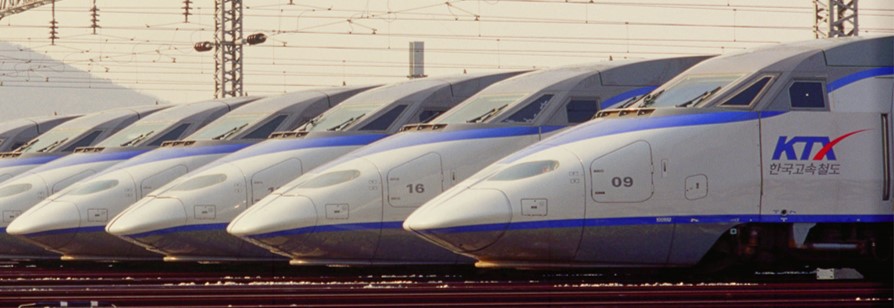
KTX (Korea Train eXpress) Operated by Korail (Korea Railroad Corporation), KTX is the original high-speed service, running since 2004. It covers the widest network of destinations across the country, departing from Seoul Station and Yongsan Station.
SRT (Super Rapid Train) Operated by SR, a separate company, SRT runs on the same tracks as KTX but primarily departs from Suseo Station in southeastern Seoul (Gangnam area). SRT tickets are slightly cheaper than KTX on overlapping routes, making it popular with travelers staying in Gangnam.
2026 Update: Starting March 2026, pilot cross-operations allow some KTX trains to depart from Suseo Station and some SRT trains to depart from Seoul Station. This increases scheduling flexibility — check departure stations carefully when booking.
ITX & Mugunghwa (무궁화호) Slower conventional trains that stop at more stations. Useful for smaller cities not served by high-speed rail, and significantly cheaper — but travel times are much longer.
🗺️ Major KTX Routes
From March 2026, some routes now allow cross-operator departures — verify the departure station when booking.
🎫 How to Buy KTX Tickets
Option 1: Korail Website / App (Recommended)
The most convenient option for advance booking.
- Website: www.letskorail.com — English interface available
- App: Korail Talk (코레일톡) — English now available; significantly improved for international users in 2025–2026
- Payment: international credit cards accepted on the website
- Tickets can be downloaded as QR codes — no printing needed
For SRT: - Website: www.srail.or.kr — English interface available - Membership registration required; international email addresses accepted
Option 2: Station Ticket Machines (Kiosks)
All major stations have English-language ticket machines. Accepts credit cards and cash. Best for same-day or next-day travel when availability isn't tight.
Option 3: Ticket Counter
Station ticket windows (매표소) have English-speaking staff at major stations (Seoul, Busan). Bring your passport for foreigner identification.
How far in advance to book: - Popular routes on weekends and holidays (especially Chuseok and Lunar New Year) sell out weeks in advance - Weekday travel: 1–3 days ahead is usually sufficient - Same-day tickets are often available on less busy routes
💺 Seat Classes
KTX Standard (일반실) The default class — comfortable, with fold-down tray tables, power outlets, and air conditioning. Seats are in a 2-2 configuration. More than adequate for any journey.
KTX Première (특실) Business class equivalent — wider seats, more legroom, complimentary drink service. Worth considering for journeys over 2.5 hours if you want to arrive relaxed.
Seat direction: Korean high-speed trains have forward-facing and backward-facing seats. When booking online, you can select seat direction. Forward-facing is generally preferred on longer journeys.
🪪 Korail Pass (외국인 전용 패스)
The Korail Pass is a rail pass available exclusively to foreign passport holders — not available to Korean nationals.
2026 Update: The Korail Pass Plus launched in late 2025 integrates KTX unlimited travel with a rechargeable transit card usable on subways and buses across Korea. Available at Incheon Airport and major station kiosks — no pre-purchase required.
Is it worth it? It depends on your itinerary. A Seoul–Busan round trip alone costs around ₩110,000–130,000. If your trip includes multiple inter-city journeys (e.g., Seoul → Gyeongju → Busan → Jeonju → Seoul), the pass offers good value. The Korail Pass Plus adds extra value if you plan to use urban transit heavily. For a single round trip, individual tickets may be cheaper.
Where to buy: At Incheon Airport kiosks, major Korean train stations (with passport), or pre-purchase online before arriving in Korea at authorized agents.
📍 Key Stations
Seoul Station (서울역) The main hub — KTX departures to Busan, Gyeongju, Mokpo, and most destinations. Connected to subway Lines 1 and 4, and the AREX airport express. Arrivals hall has currency exchange, convenience stores, and food options.
Yongsan Station (용산역) Secondary Seoul hub — KTX/ITX departures to Jeonju, Gwangju, and Jeolla Province lines. Connected to subway Line 1 and the Gyeongui-Jungang Line. Less crowded than Seoul Station.
Suseo Station (수서역) SRT-only departure point in Gangnam area. Connected to the Bundang Line subway. Convenient for travelers staying south of the Han River.
🧳 Practical Tips
Luggage: There is no luggage check-in on Korean trains — all bags travel with you. Overhead racks accommodate standard rolling suitcases. Large bags (over 28 inches) can be tight; check the dedicated luggage space at the front/back of each car.
Arrival at the station: KTX operates like an airline — gates close a few minutes before departure. Arrive at least 15–20 minutes early, especially at busy Seoul Station where finding the right platform takes time.
Food on board: A snack cart service runs on most KTX journeys. Major stations have convenience stores and food vendors on the platform concourse — stock up before boarding.
Noise etiquette: Korean train culture values quiet. Phone calls in the quiet car (designated 정숙칸) are not permitted. Speaking at normal volume is fine in standard cars, but keep volume low.
Seat reservations: All KTX and SRT tickets include a seat reservation — there is no standing ticket option on high-speed services. Your seat number is printed on the ticket and confirmed in the app.
🆚 Train vs. Bus vs. Domestic Flight
Verdict: For distances under 3 hours, KTX wins on time and comfort. Bus is better for budget travel or destinations without train service. Domestic flights rarely make sense given airport transfer times.
❓ Frequently Asked Questions
Q1: Can I use a T-money card on KTX? No — T-money is for urban subway and bus only. KTX requires a separate ticket booking.
Q2: Is there Wi-Fi on KTX? Free Wi-Fi is available on most KTX trains, though speeds can be inconsistent in tunnels and rural stretches.
Q3: Can I board without printing my ticket? Yes — a QR code on your phone (via the Korail app or booking confirmation email) is sufficient. Conductors scan it during the journey.
Q4: What if I miss my train? Unused KTX tickets can be refunded, with a cancellation fee that increases the closer to departure time. Same-day cancellation incurs a higher fee. Rebooking is possible at the station or via app if the next train has availability.
Q5: Is the Korail Pass refundable? Partially — unused passes can be partially refunded, but the fee structure is complex. Only purchase if your travel plans are confirmed.