Busan Food Guide 2026: What to Eat in Korea's Food Capital
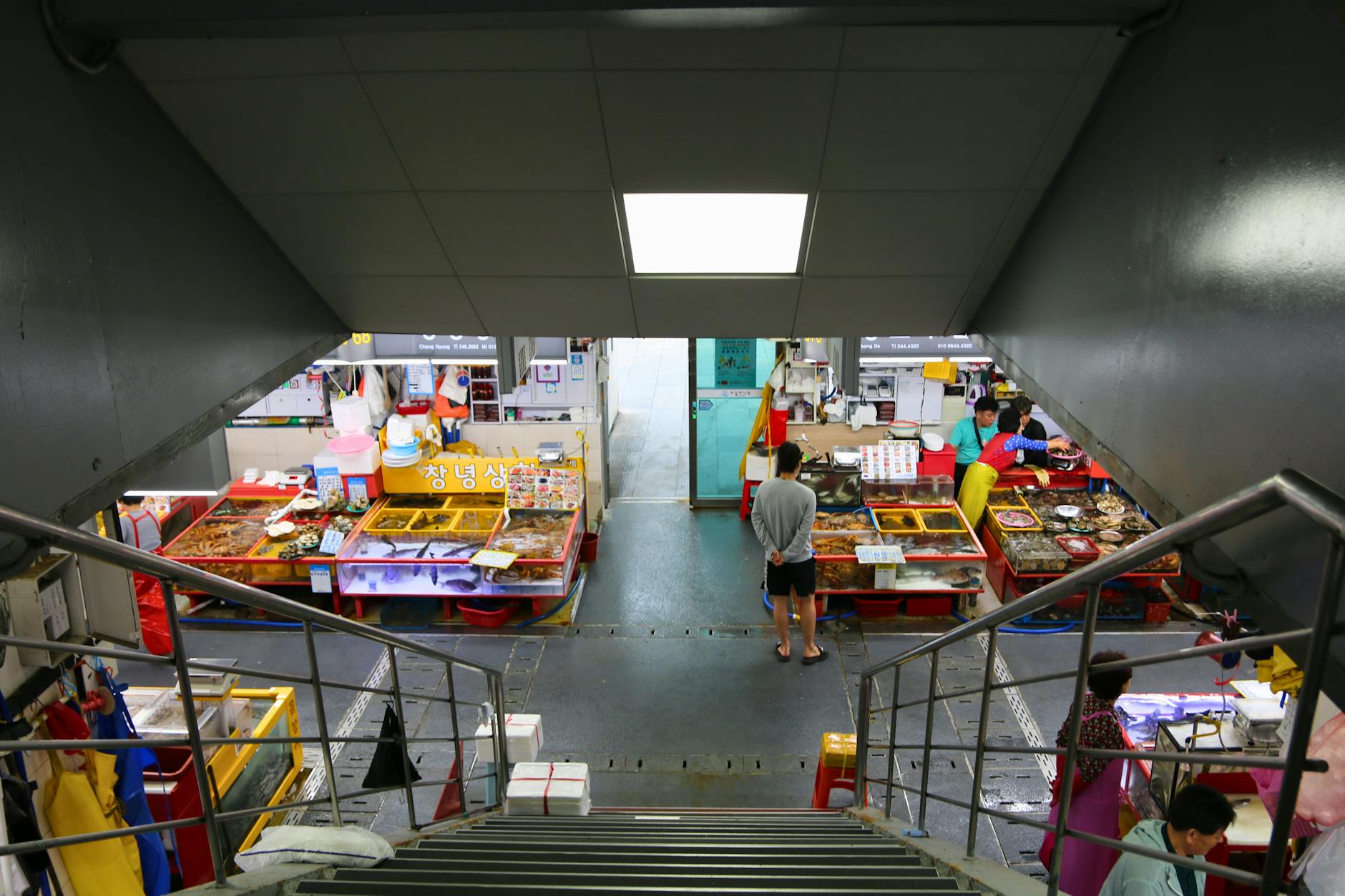
Photo by Bruna Santos on Pexels
Busan is the city Koreans go to when they want to eat. Korea's second-largest city has developed its own distinct food culture — shaped by the sea, by the Korean War refugees who poured into the city in the 1950s, and by a coastal temperament that values freshness and directness over refinement. Several of Korea's most beloved dishes were born or perfected here. This is what to eat.
The Essential Busan Combo: Start Here
Before diving into specifics, there are two dishes that define Busan eating — and most locals will tell you to do both on your first full day.
Dwaeji gukbap (돼지국밥) for breakfast or lunch. Milmyeon (밀면) for lunch or dinner. These two dishes, born from the same wartime era, tell the entire story of what Busan cooking is about: resourceful, deeply satisfying, and unlike anything you'll find in Seoul.
The Essential Busan Dishes
Dwaeji Gukbap (돼지국밥) — Pork Soup with Rice
If Busan has a soul food, this is it. A milky, slow-simmered pork bone broth served with rice and slices of boiled pork — simple, deeply nourishing, and eaten at any hour. During the Korean War, refugees in Busan stretched every ingredient as far as it would go, and dwaeji gukbap became the dish of the city.
How to eat it: Add the side condiments — salted shrimp (새우젓), chopped green onion, and fermented kimchi — directly into the broth. Mix the rice in or eat it separately. Most locals eat it for breakfast.
Where to eat: - Ssangdung Dwaeji Gukbap (쌍둥이 돼지국밥) — One of Busan's most famous gukbap spots, near Seomyeon. Open early, packed with locals. - Ilgwang Dwaeji Gukbap (일광 돼지국밥) — Long-established Busan institution with a particularly rich broth.
Price: ₩9,000–12,000
Milmyeon (밀면) — Busan Cold Noodles
Another dish born from the Korean War. When buckwheat (used for naengmyeon) ran scarce, Busan cooks substituted wheat flour — and milmyeon was born. Served cold in a sweet-savory beef broth, or as a dry version mixed with spicy sauce (비빔밀면), the noodles are slightly chewy and deeply refreshing on a warm day.
Dwaeji gukbap + milmyeon eaten on the same day is the unofficial Busan food itinerary. Order the gukbap for breakfast, milmyeon for lunch — both are affordable and filling.
Where to eat: - Gaya Milmyeon (가야밀면) — Credited with creating the dish; the original Bujeon-dong location is a Busan pilgrimage. - Nampodong Milmyeon — Convenient to the Nampo-dong tourist area.
Price: ₩8,000–11,000
Bokguk (복국) — Pufferfish Soup
Busan's other great morning dish, less well-known to visitors but beloved locally. A clear, delicate broth made from pufferfish (복어), served with rice and seasoned with a squeeze of yuzu (유자). Clean, restorative, and unlike anything available elsewhere in Korea at this quality level.
Found at specialist bokguk restaurants near Jagalchi Market and Nampo-dong — look for 복국 or 복어 on the sign.
Price: ₩12,000–18,000
Ssiat Hotteok (씨앗호떡) — Seed-Filled Pancakes
Busan's version of the classic Korean hotteok is stuffed not just with sugar but with a mix of seeds and nuts — sunflower seeds, pumpkin seeds, pine nuts — giving it a crunch and depth the original doesn't have. The most famous ssiat hotteok stall in Korea is in Gukje Market's Bupyeong Kkangtong food alley.
Where: Bupyeong Kkangtong Market (부평깡통시장), stall near the main entrance. Expect a queue — it moves quickly.
Price: ₩1,500–2,000 each
Hoe (회) — Raw Fish, Busan Style
Being Korea's largest port city, Busan's raw fish (hoe) is freshness in its purest form. Unlike refined Japanese sashimi, Busan hoe is generous, casual, and eaten with sesame leaf, garlic, and spicy gochujang sauce — dipped, wrapped, and eaten in one go.
Where: - Jagalchi Market (자갈치시장) — Korea's largest seafood market. Point at what you want in the ground floor stalls, then take it to the 2nd floor hoe center (회센터) to be sliced and plated at your table. The experience is as much about the atmosphere as the fish. - Haeundae Raw Fish Town (해운대 횟집타운) — Concentrated strip of hoe restaurants near Haeundae Beach; touristy but reliable.
Price: ₩30,000–60,000 for a meal for two at Jagalchi's 2nd floor
Ganjang Gejang (간장게장) — Soy-Marinated Raw Crab
Called "rice thief" (밥도둑) because it makes you eat far too much rice. Raw blue crab marinated in soy sauce, ginger, and garlic until the flesh becomes silky and intensely savory. Scoop rice directly into the shell and mix with the roe and juices.
Where: Gwangalli area restaurants; also available at seafood restaurants around Jagalchi.
Dongrae Pajeon (동래파전) — Busan's Signature Scallion Pancake
Busan has its own version of the Korean scallion pancake — thicker, richer, and more lavishly topped with seafood than the standard haemul pajeon. Dongrae pajeon originated in the Dongrae district and is considered one of Korea's finest regional pancake traditions. Eaten with makgeolli (rice wine) in the traditional pairing.
Where: Dongrae Halmae Pajeon (동래할매파전) near Dongrae Station (Line 1) is the most famous — a Busan institution for over 60 years.
Price: ₩18,000–25,000 per pancake
The Essential Markets
Jagalchi Market (자갈치시장)
Korea's most famous seafood market, running along the waterfront near Nampo-dong.
How it works: - Ground floor (1층): Working market where fishing boats unload directly — live fish, shellfish, sea cucumbers, and sea creatures you won't find names for in English. Browse, point at what you want, and negotiate a price. - 2nd floor Hoe Center (2층 회센터): Take your market purchase upstairs and pay a small preparation fee (회 뜨는 비용, typically ₩5,000–10,000) to have it cleaned, sliced as hoe, and plated at your table with banchan. This is the full Jagalchi experience.
What to order cooked: If you prefer cooked seafood, most 2nd floor restaurants also serve haemul jjim (spicy steamed shellfish), grilled fish, and seafood soups.
Getting there: Jagalchi Station (Line 1), Exit 10 → 3-minute walk Hours: Ground floor stalls from 5am; 2nd floor restaurants 9am–10pm
Gukje Market & Bupyeong Kkangtong Food Alley (국제시장 & 부평깡통시장)
Two adjacent markets that together form Busan's most important street food zone. Gukje (International) Market is the main goods market — clothing, housewares, traditional items — while the Bupyeong Kkangtong Market food alley running alongside it is where to eat.
The four essential foods of this area: 1. Ssiat hotteok (씨앗호떡) — seed-and-nut stuffed pancakes; the most famous stall in Korea is here 2. Bibim dangmyeon (비빔당면) — spicy cold glass noodles in a tangy chili dressing; a Busan market staple 3. Eomuk (어묵) — Busan fish cake skewers in hot broth; significantly better than the Seoul version 4. Fried mandu (군만두) — crispy dumplings, sold hot at street stalls throughout the alley
Also worth trying: milmyeon and dwaeji gukbap are available at sit-down restaurants just off the main market lanes.
Getting there: Jagalchi Station (Line 1), Exit 7 → 10-minute walk; or Nampo Station (Line 1), Exit 7
Haeundae Market (해운대 전통시장)
The neighborhood market near Haeundae Beach — less famous than Gukje but excellent for local food at lower prices.
What to eat here: - Bungeoppang (붕어빵) — the classic fish-shaped pastry filled with red bean or cream cheese; multiple stalls around the market - Tteokbokki and eomuk — good morning or afternoon snack before hitting the beach - Fresh produce and seasonal seafood — at lower prices than tourist-facing restaurants nearby
Best time: Morning market atmosphere before the beach crowds arrive.
Busan Street Food Worth Seeking Out
Eomuk (어묵 / 오뎅): Busan fish cake is genuinely different from Seoul — denser, more complex, better texture. Eat it on a skewer with a cup of hot broth at any street stall. The Bupyeong Kkangtong Market area has the best vendors.
Bibim dangmyeon (비빔당면): Thin glass noodles tossed in a tangy, spicy red sauce with vegetables — sold at market stalls for ₩3,000–5,000. A distinctly Busan snack that doesn't get enough attention outside the city.
Nakji (낙지) — Small Octopus: Lightly blanched or served raw, eaten with sesame oil and salt. A Busan speciality at Jagalchi and seafood restaurants around the port.
Busan Coffee Culture
Busan has developed a serious specialty coffee scene, particularly around Haeundae and the F1963 cultural complex in Mangmi-dong — a former wire factory turned arts and dining destination.
F1963: Houses Terarosa (one of Korea's premier specialty roasters), a Starbucks Reserve, restaurants, a bookshop, and a garden courtyard. Worth a stop even if you don't drink coffee.
Practical Tips for Eating in Busan
Best food neighborhoods by meal: - Nampo-dong / Jagalchi: Markets, hoe, bokguk, eomuk, street food — the classic Busan food experience - Seomyeon (서면): City center, highest concentration of dwaeji gukbap restaurants, late-night dining - Dongrae: Dongrae pajeon, traditional neighborhood atmosphere - Haeundae: Seafood restaurants, beach snacks, coffee - Gwangalli: Younger crowd, creative restaurants, cocktail bars with Gwangan Bridge views
Getting around: Line 1 (orange) connects Seomyeon → Nampo → Jagalchi. Line 2 (green) reaches Haeundae and Gwangalli. Taxis are plentiful and inexpensive by Seoul standards.
From Seoul: KTX from Seoul Station → Busan Station (2.5 hours, ₩59,800 standard). Book on the Korail app — weekend trains sell out.
Busan rewards eating over sightseeing. The best meals here are in market stalls and neighborhood restaurants that look like nothing from outside but have been perfecting one dish for decades. Trust the queues.
Planning a Busan trip? Read our Busan Travel Guide for beaches, neighborhoods, and day trips from the city.