Can You Drink Alcohol on the Street in Korea? What Travelers Need to Know
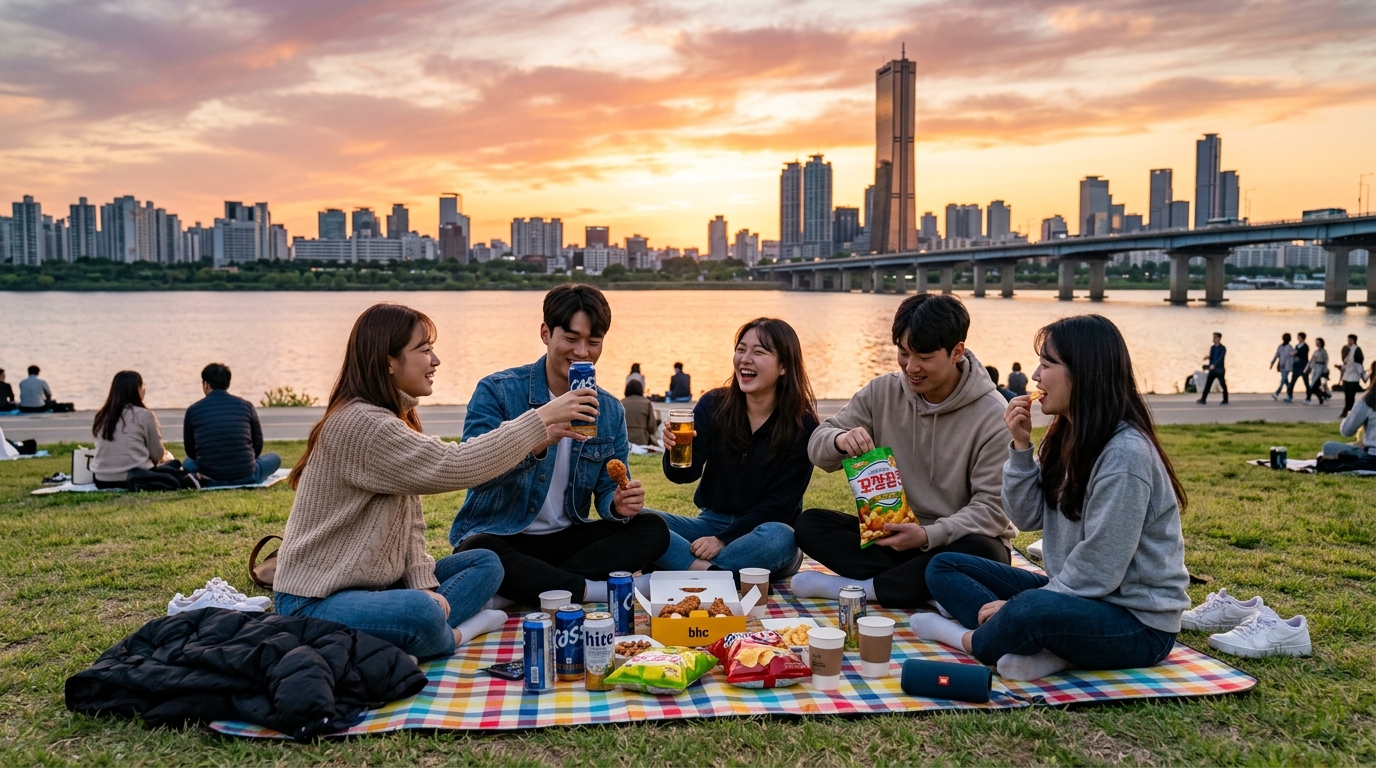
One of the things that genuinely surprises first-time visitors to Korea is seeing people drinking beer and soju openly in parks, on riverside benches, and at folding tables outside convenience stores — completely casually, in full public view. If you're wondering whether this is actually legal, the answer is more nuanced than a simple yes or no, and it changed somewhat in 2024.
Quick Answer
Public drinking has long been a normal part of Korean outdoor culture, and there are no national open container laws prohibiting it. However, since 2024, some local governments in Seoul and other cities have introduced restrictions in specific public spaces — parks, plazas, and playgrounds — with fines of up to ₩100,000 for violations. In practice, drinking at Han River parks, convenience store outdoor seating, and pojangmacha street stalls remains widely accepted. The key is knowing which spaces now have posted restrictions.
The Full Answer
Korea Has No National Open Container Law
Unlike the United States, the United Kingdom, or many European countries, South Korea has no national legislation prohibiting alcohol consumption in public spaces. The concept of an "open container" violation simply does not exist at the federal level. This explains why outdoor drinking is so deeply embedded in Korean social culture — it has historically been legal by default everywhere not specifically restricted.
This is why the Han River picnic scene exists: thousands of Koreans regularly gather along the riverbanks with convenience store bags, portable grills, and bottles of makgeolli or cass beer, eating tteokbokki and watching the water. It is not a grey area. It is a mainstream social activity.
What Changed in 2024
Starting in early 2024, several local governments across South Korea — including some Seoul districts — began implementing their own ordinances restricting public alcohol consumption in designated areas. The Korea Herald reported fines of up to ₩100,000 (approximately $75) for violations in these zones.
The areas most commonly affected include:
- Major public parks in residential areas — particularly parks with designated children's play zones
- Children's playgrounds — fines apply regardless of time of day
- Areas surrounding city halls, district offices, and government buildings — public plazas attached to administrative buildings are increasingly designated alcohol-free
- Some pedestrian-only streets in tourist zones — certain garosugil-style walking streets have posted restrictions
To put it simply: if you are sitting in a park with a playground nearby, check for signs. If you are at a riverside, a convenience store table, or a pojangmacha — you are almost certainly in unrestricted territory.
Crucially: these are local, area-specific rules — not a blanket national ban. The Han River parks, most convenience store forecourts, and pojangmacha areas are not affected by these ordinances. But the landscape is changing, and signage matters.
What to look for: Alcohol-free zones are typically marked with signs (금주구역, geumju guyeok). If you see this posted, it applies. If there is no signage, public drinking remains the historical norm.
Where Public Drinking Is Completely Normal
Han River Parks (한강공원) This is the most iconic outdoor drinking spot in Seoul. Yeouido, Banpo, and Ttukseom Han River Parks are full of Koreans picnicking with food and drinks on weekends and warm evenings. Convenience stores in the parks sell everything you need. This is the definitive Korean outdoor drinking experience and remains entirely unaffected by recent local ordinances.
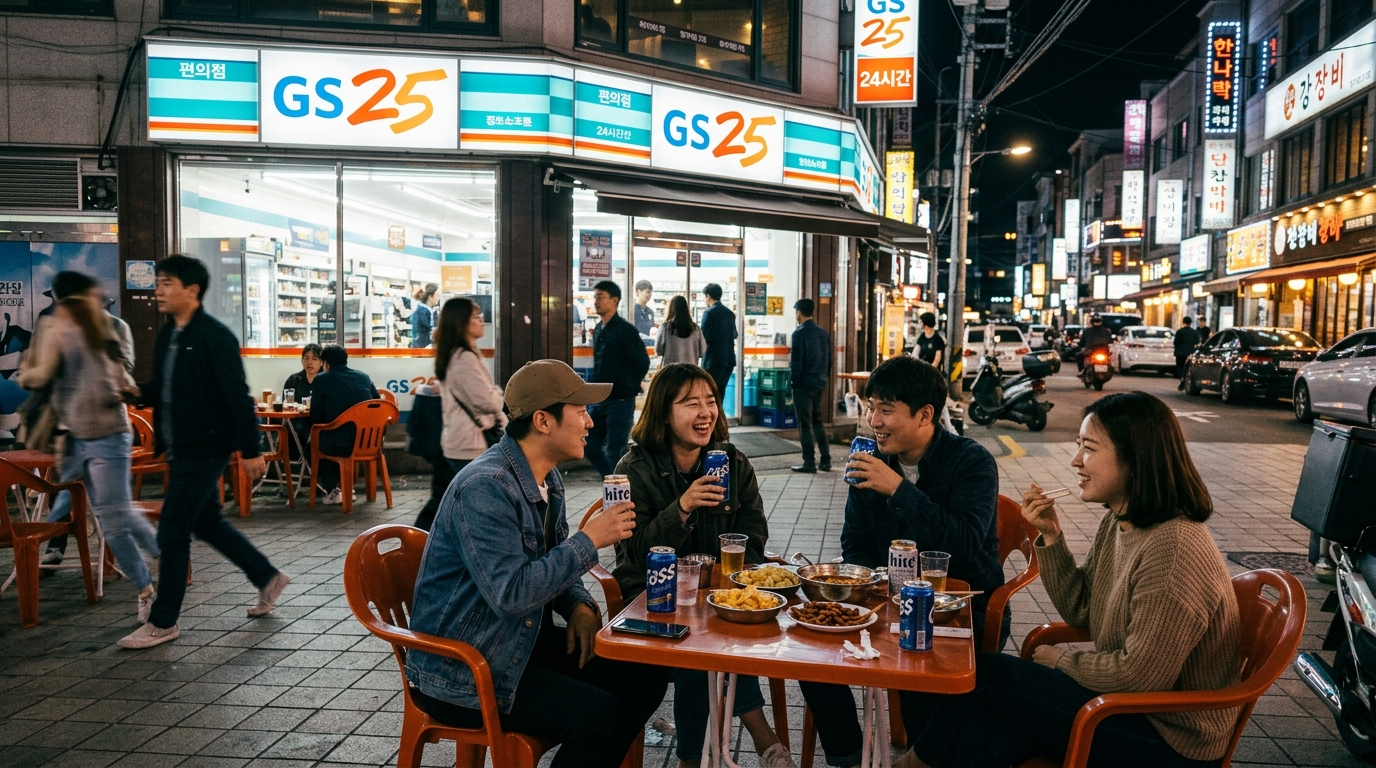
Convenience Store Outdoor Seating GS25, CU, and 7-Eleven all have outdoor seating areas — plastic chairs and folding tables — outside most locations. Sitting here with a beer or a can of makgeolli is completely normal and widely practiced by locals of all ages. Staff do not object.
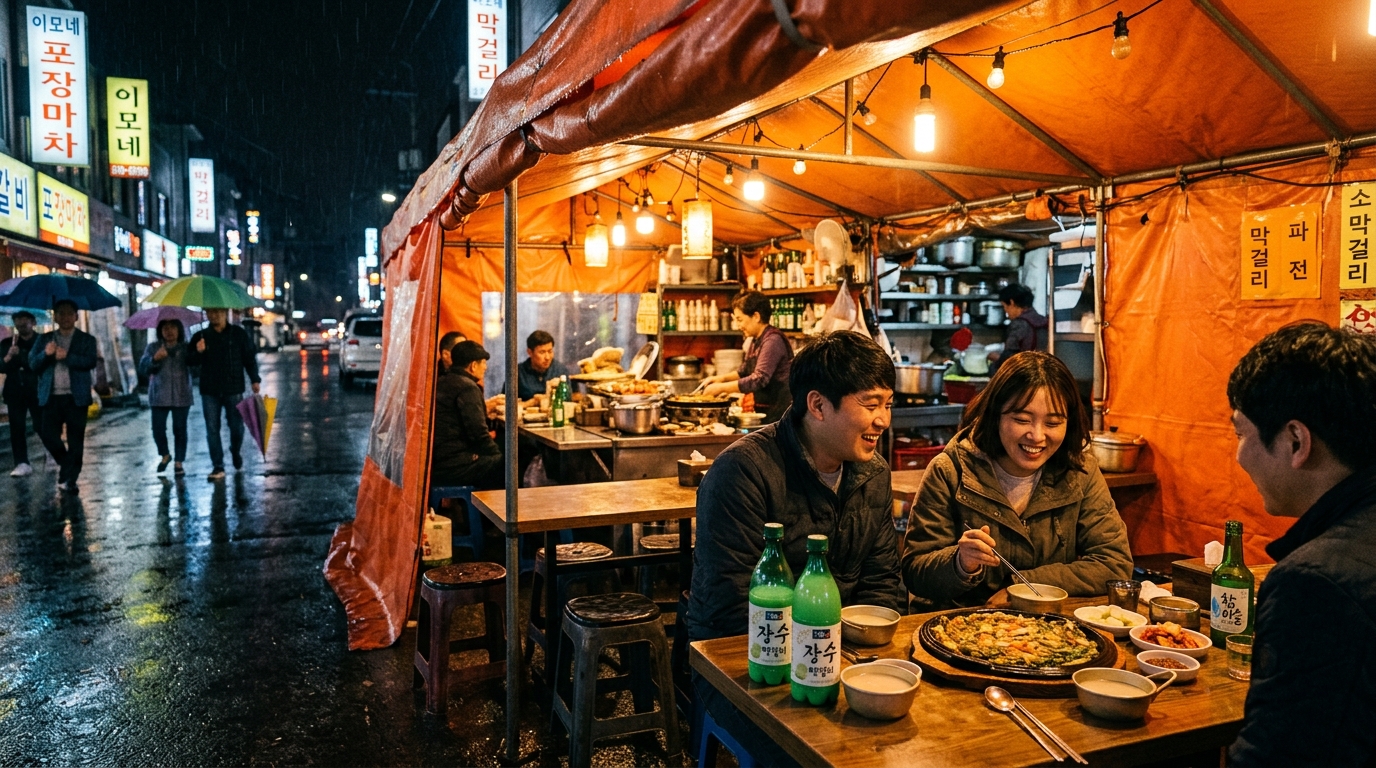
Pojangmacha (포장마차) These orange-tented street stalls — serving fried snacks, tteokbokki, and odeng — are cultural institutions. Drinking soju or makgeolli alongside the food at a pojangmacha is exactly what they are designed for. They operate in public spaces and are licensed accordingly.
Cheonggyecheon Streamside The Cheonggyecheon stream walkway running through central Seoul is a popular early-evening spot for couples and friends to sit along the water. Drinking here is common and generally unpoliced.
Beaches (outside restricted zones) Haeundae Beach in Busan, Gyeongpo Beach, and most coastal areas allow outdoor drinking. Some beach areas post seasonal restrictions during peak summer — check for signage.
Where You Should Not Drink
- The subway and all underground stations — strictly prohibited. No exceptions.
- Posted 금주구역 (alcohol-free zone) areas — respect the signs.
- Children's playgrounds and school zones — regardless of signage, this is socially inappropriate and increasingly subject to fines.
- Inside buses and taxis — prohibited.
The Police Attitude
Korean police generally do not intervene in peaceful public drinking. The law has historically not provided grounds to do so. What can result in police involvement is disorderly conduct under the influence — and it is worth being specific about what that means:
- Shouting, singing loudly, or making noise that disturbs residents or other park-goers
- Physical confrontation or aggressive behavior toward strangers
- Refusing to move when asked by police or security staff
- Urinating in public or causing property damage
In short: police are not patrolling for people drinking quietly on a riverbank. They respond to behavior that affects others. A group of friends having beers at Han River attracts no attention. A group arguing loudly at midnight in a residential area is a different situation entirely.
This approach is consistent with Korean social norms around public drinking: the culture expects people to remain composed regardless of how much they have consumed. Visible drunkenness that spills into others' space is considered embarrassing and socially unacceptable — the expectation of self-control applies even in festive settings.
What You Need to Know
The 2024 changes are real but localized. If you plan to drink in a park or public square, glance around for posted signs. In the absence of signage, you are in traditional open territory. Enforced zones are currently limited and well-marked.
Your first night in Korea: start at a convenience store. This is genuinely the fastest way to feel like you belong. Walk out of your accommodation, find the nearest GS25 or CU (usually within two minutes), grab a can of Cass beer or a bottle of soju for ₩2,000–2,500, and sit at the plastic table outside. No bar cover charge, no reservations, no dress code — just the street and a cold drink. This is not a tourist approximation of Korean culture. It is exactly what people here actually do after work. Arriving in Seoul and drinking indoors on your first night is a missed opportunity; the outdoor convenience store experience costs less than a coffee and tells you more about daily life here than most tourist attractions.
A can of Cass or Hite beer runs ₩2,000–3,000. A 360ml bottle of soju is around ₩1,700–2,500. Sit outside, enjoy the street, and you are doing exactly what millions of Koreans do.
Makgeolli at a pojangmacha is a distinctly Korean experience. If you want to drink in a way that feels authentically local, find a pojangmacha near a market — Gwangjang Market and Namdaemun area both have clusters — and order a bowl of makgeolli with pajeon (Korean pancake). This costs ₩5,000–8,000 for the set and is one of the most characteristically Korean evenings you can have.
Drinking age is 만 19세 (international age 19). Convenience stores and pojangmacha will not typically check ID for adults who clearly look of age, but having your passport is advisable if you look young. The legal threshold uses international age since the 2023 age system standardization.
Frequently Asked Questions
Is it legal to drink at Han River Park? Yes. Han River parks are the most popular outdoor drinking spots in Seoul and are not subject to the 2024 local ordinances restricting alcohol in some other public spaces. Bring food from a nearby convenience store, find a spot on the grass or by the water, and enjoy. This is a completely mainstream local activity.
Can you drink soju on the street in Korea? Generally yes, in areas without specific alcohol-free zone signage. Soju is the most commonly consumed spirit in Korea and is widely drunk outdoors — at pojangmacha, convenience store tables, and picnic spots. The brand Jinro's green bottle is ubiquitous in outdoor social settings.
What is the fine for drinking in a restricted zone in Korea? Local ordinances introduced since 2024 allow fines of up to ₩100,000 (approximately $75) for drinking in designated alcohol-free zones. These zones are marked with signage (금주구역). The fine amounts and enforcement vary by district.
Can foreigners drink in public in Korea? The same rules apply to foreigners and Korean nationals. There is no separate treatment. Public drinking in non-restricted areas is permitted, and alcohol-free zones apply to everyone.
Is public drinking common in Korea? Extremely. Korea has one of the highest alcohol consumption rates per capita in East Asia, and outdoor drinking is a well-established cultural tradition. Han River picnics, pojangmacha culture, and convenience store outdoor seating are all mainstream expressions of this. Seeing groups of Koreans drinking beer in a park or outside a convenience store is completely ordinary.
Practical Tips
- Check for 금주구역 signs before settling in a public space. These mark alcohol-free zones introduced under 2024 local ordinances. No sign = traditional open territory.
- Han River parks are your best bet for a proper outdoor drinking experience. Bring a convenience store bag, find grass near the water, and you're set.
- Convenience store outdoor seating is underrated. A ₩2,500 beer and ₩3,000 snack at a GS25 table is how many Seoulites decompress after work.
- Try pojangmacha for the cultural experience. Order makgeolli and pajeon, sit on a plastic stool, and watch the street. This is a distinctly Korean evening.
- Never drink on the subway or in stations. This is strictly prohibited and enforced.
- Be composed. Korean social norms expect people to remain functional and relatively quiet even while drinking. Loud or aggressive behavior draws attention and can result in police involvement regardless of the legality of the drinking itself.
- Buy alcohol at convenience stores for the best value. Cass, Hite, Kloud, Terra for beer; Jinro or Chum Churum for soju; Makgeolli bottles from the refrigerator section. All at prices well below bar or restaurant pricing.
Related Questions
- What Is Makgeolli and Where to Drink It in Seoul — Korea's traditional rice wine and where to find the best pojangmacha experience.
- What Is Banchan? The Free Side Dishes at Korean Restaurants Explained — How Korean restaurant dining works, from the first dish to the last.
- Is It Safe to Walk Alone at Night in Seoul? — Safety context for late-night areas where outdoor drinking is common.