Do Koreans Speak English? What You Can Actually Get By With

If you're planning a trip to Korea and wondering whether you can get by without knowing a word of Korean — the answer is mostly yes, with a few important caveats. English proficiency in Korea is uneven, and knowing where it works and where it doesn't will save you real frustration on the ground.
This guide breaks down exactly what to expect: where English is reliable, where it falls apart, and the tools that actually bridge the gap.
Quick Answer
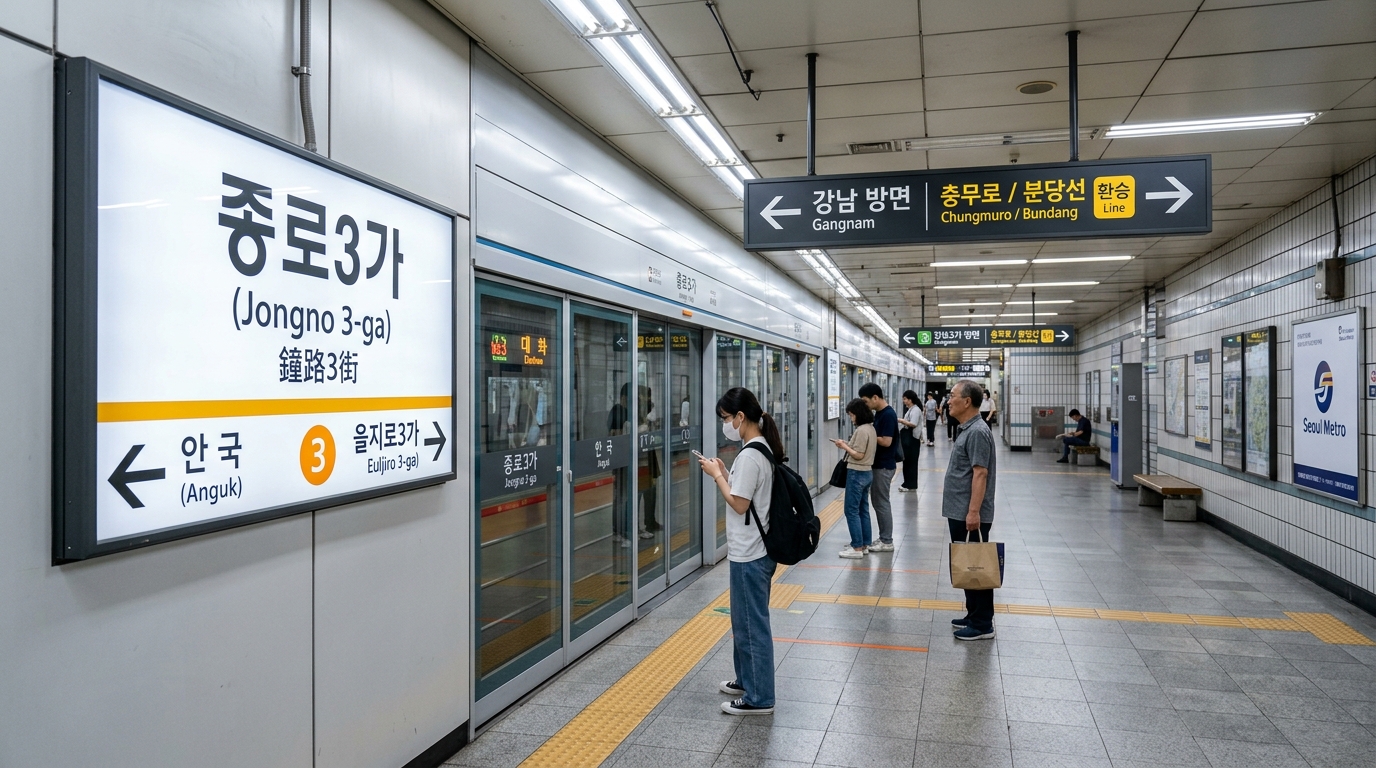
English proficiency in Korea is uneven. Tourist areas, the subway system, and younger Koreans (under 40) in cities are generally manageable without Korean. Away from tourist zones — and in any conversation beyond a simple transaction — English becomes unreliable. For most travelers, the practical answer is this: you can get around Seoul mostly comfortably with only English, but a translation app is essential the moment you leave the main tourist path.
The Full Answer
Where English Works Reliably
The Seoul subway system is one of the most foreigner-friendly in the world. All lines have bilingual Korean/English signs, automated announcements, and station maps. You can plan and navigate your entire subway journey without knowing a single Korean character.
Major tourist attractions — Gyeongbokgung Palace, Bukchon Hanok Village, Namsan Tower, Lotte World — generally have English-speaking staff at ticket booths and bilingual information boards. You won't be lost.
Incheon International Airport is very English-friendly and well bilingual. Immigration officers handle standard questions in English. Signage throughout the terminal is comprehensive and clearly translated.
Hotels, guesthouses, and hostels catering to foreign visitors will have English-speaking staff. This is a baseline expectation at any internationally-minded accommodation.
Convenience stores require no conversation at all. Point, tap your card, done. GS25, CU, 7-Eleven — wordless transactions are the norm.
Chain restaurants and cafés — Starbucks Korea, Ediya, Paris Baguette, McDonald's — have English menus or touch-screen kiosks with English mode. Ordering is straightforward.
Many younger Koreans in their 20s and 30s have had years of English education and can handle basic conversation, though ability varies widely by individual. Don't be surprised if someone pulls out their phone to help you before you even ask.
Where English Becomes Unreliable
Local neighborhood restaurants (식당) are where the language gap hits hardest. Many smaller, older restaurants have Korean-only menus and staff who have never needed to use English. This is the single situation where a translation app is not optional — it's essential.
Traditional markets like Gwangjang Market and Namdaemun Market are run largely by older vendors who operate entirely in Korean. Pointing and showing prices on your phone is the standard approach and it works fine.
Taxis are a known pain point. Older drivers often have little to no English. The safest method: copy your destination in Korean text from Naver Map and show it on your phone screen. Don't try to pronounce the address.
Outside Seoul, the picture changes. Busan's tourist areas are reasonably manageable. Gyeongju, Jeonju, and smaller cities have noticeably less English in restaurants and shops. Rural areas should be treated as Korean-only environments.
Medical situations at major city hospital ERs typically have some English support. Smaller clinics and pharmacies outside tourist areas may not — plan accordingly if you have a specific medical need.
Phone calls are a unique challenge. Koreans are often more comfortable with written English than spoken. If you need to communicate something, typing it out and showing the screen is consistently more effective than speaking.

The Generation Gap Is Real
This is one of the most practically useful things to understand about English in Korea:
- Under 40: Reasonable chance of basic English comprehension. Many will try to help and can manage simple exchanges.
- 40–60: Widely variable. Many understand some written English but are uncomfortable speaking it.
- 60+: Limited English in most cases, especially outside the tourism industry.
This reflects when English education became a serious part of the Korean school curriculum. The age of the person you're interacting with is a useful predictor of how the conversation will go.
Tools That Actually Help
Papago (by Naver) is the translation app you want in Korea. It outperforms Google Translate for Korean specifically, and its camera mode translates menus in real time. Download it before you land.
Google Translate camera mode also works for menus and signage. Accuracy for Korean is a notch below Papago, but it's a solid backup.
Naver Map shows restaurant menus with photos, useful for ordering without any language exchange. It's also the most accurate navigation app for Korea.
Copy-pasting Korean text is underrated as a strategy. When you find your destination in Korean on Naver Map, paste it to show taxi drivers or staff directly. Far more reliable than attempting pronunciation.
Showing numbers on your phone — for prices, quantities, floor numbers, times — eliminates the pronunciation problem entirely. Type the number, hold up the screen.
What You Need to Know
Koreans Are Generally Patient With Language Barriers
Most Koreans who encounter a confused foreign visitor will try to help — pointing, using their own phones, drawing diagrams, finding a colleague who speaks more English. Expect goodwill, not frustration. The language gap rarely translates into a bad interaction.
Kiosks Have Made Things Easier for Non-Korean Speakers
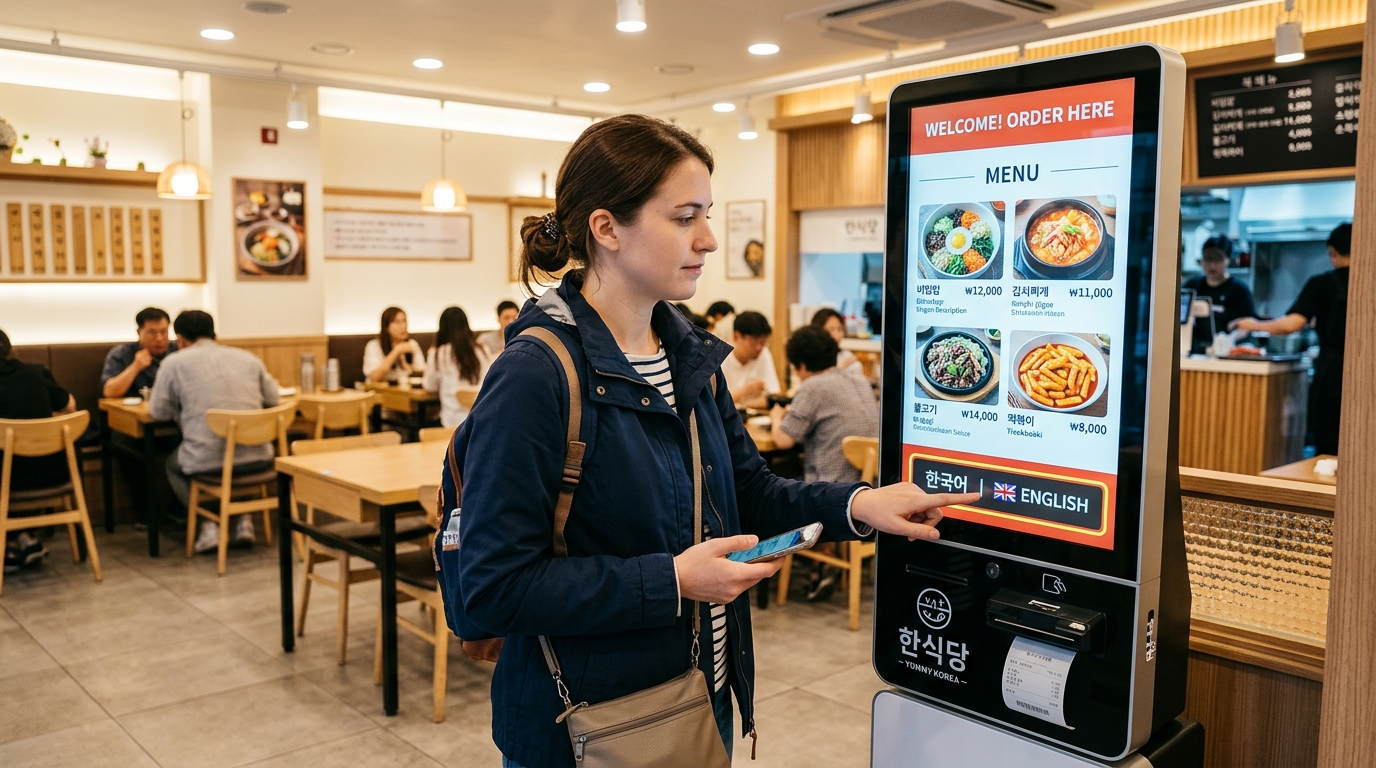
Touch-screen ordering kiosks have replaced staff interaction in a growing number of Korean restaurants and chains. McDonald's, Lotteria, many fried chicken chains, and even some traditional restaurants now use kiosks — and most have an English mode. This trend has, counterintuitively, made ordering easier for travelers who don't speak Korean.
English Menus Are More Common in Seoul Tourist Areas Than You'd Expect
Restaurants near Myeongdong, Insadong, Hongdae, and Itaewon frequently have English menus or picture menus. The tourist corridor in Seoul has adapted to international visitors. This does not apply equally to neighborhood restaurants even a few blocks off the main drag.
"Can I Get By?" vs. "Will It Always Be Easy?"
These are two different questions. You can navigate Korea without Korean — millions of tourists do it every year. It will not always be easy in local spots, small towns, or with older locals. Papago, Naver Map, and a willingness to point and show your phone screen covers the vast majority of situations you'll actually encounter.
Practical Tips
- Download Papago before you arrive. Camera translation mode for menus is the single most useful travel tool in Korea.
- Find your key destinations in Korean on Naver Map and save them — paste the Korean text to show drivers or staff instead of trying to pronounce it.
- Use the English mode on kiosks whenever available. Usually a flag icon or "ENG" button in the top corner.
- At local restaurants with no English menu, open Papago camera mode and point it at the menu board. Works on paper menus and wall signs.
- Don't rely on verbal communication with older taxi drivers. Show Korean text on your screen, confirm they've seen it.
- In tourist areas, don't assume no English menu exists — ask or check for a photo menu. Many places have them tucked away.
- Type rather than speak when English comprehension seems uncertain. Showing text on your phone screen is consistently more effective than verbal communication across all age groups.
Related Questions
- Basic Korean Phrases Every Traveler Should Know — Even a few words go a long way. The most practical ones for daily situations.
- How to Order Food in Korea Without Speaking Korean — A practical walkthrough for navigating Korean restaurants.
- Can You Use Google Maps in Korea? — Why Naver Map is often the better choice and how to use both effectively.