Do You Need Cash in Korea or Is Card OK Everywhere?
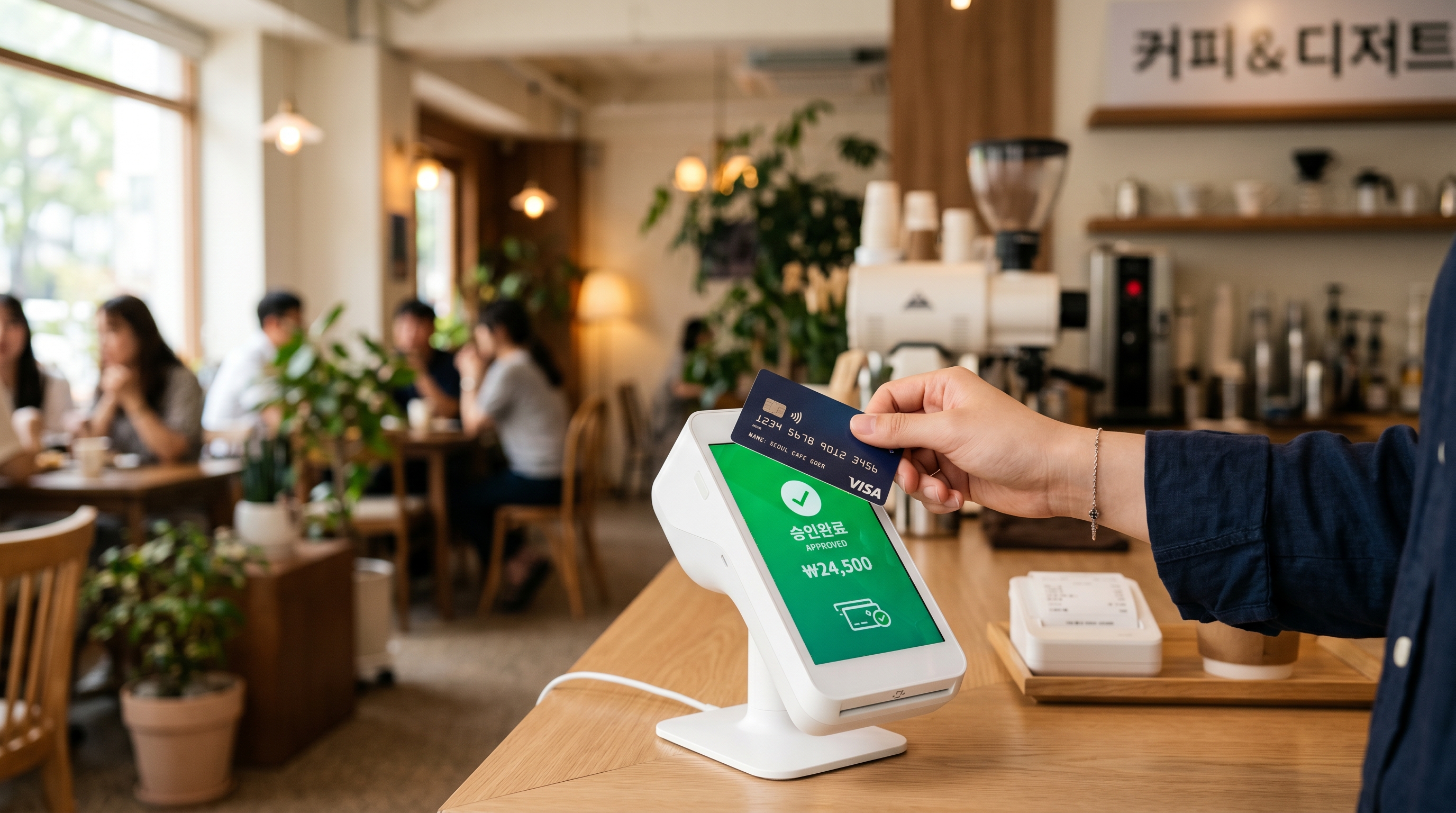
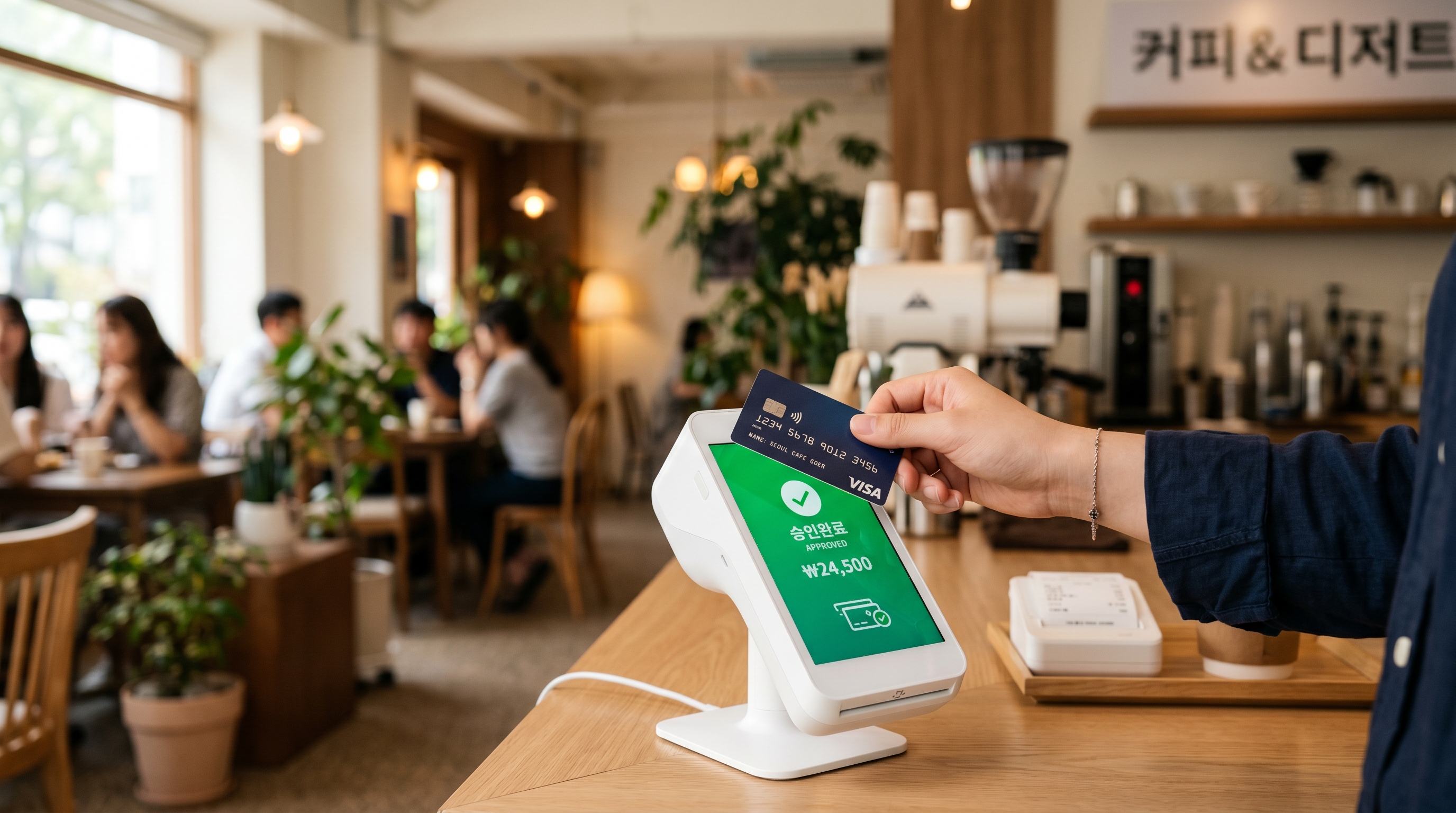
Every traveler heading to Korea asks the same question before the trip: do I need to load up on Korean won, or can I just use my card? The honest answer sits somewhere in the middle — and knowing where that line falls will save you from a frustrating moment at a market stall with no cash and a vendor who can't help you.
Quick Answer
Cards (Visa, Mastercard) work almost everywhere in modern Korea — restaurants, cafés, convenience stores, department stores, and most taxis. However, traditional markets, street food stalls, pojangmacha (outdoor tented bars), and some small local eateries are still cash-only. Carry ₩50,000–100,000 in cash at all times as a buffer, and you'll never be caught short.
The Full Answer
Where Cards Work Without Any Issue
Korea's card infrastructure is among the most developed in the world. South Korea consistently ranks near the top globally for cashless payment adoption, and for travelers this means card-first is a safe default in most situations.
Convenience stores (CU, GS25, 7-Eleven, Emart24): Cards accepted universally, including foreign Visa and Mastercard. Contactless (tap) payments work at most locations. Apple Pay and Google Pay are increasingly accepted.
Restaurants — chain and mid-range: Any sit-down restaurant that isn't a tiny, decades-old local spot will accept cards without hesitation. This covers Korean BBQ chains (Samgyeopsal 24, 8 Seconds), noodle chains, international restaurants, and anything in a food court or shopping mall.
Cafés: Every café in Korea — from major chains (Starbucks Korea, Ediya, Mega MGC Coffee) to independent specialty cafés — accepts cards. Ordering at a counter kiosk (increasingly common) is card or app only.
Subway and T-money: The Seoul Metro doesn't accept credit cards directly at gates. T-money cards can be topped up at station vending machines or convenience store counters — cash is the most reliable method for topping up, as foreign card compatibility at vending machines can be inconsistent. The newer QR ticketing system (available on Naver Pay, Kakao Pay) works for some travelers, but requires Korean app setup in advance.
KTX and intercity trains: Korail tickets purchased online (letskorail.com) or at station kiosks accept foreign cards. Booking ahead online is smoother.
Taxis: Kakao Taxi (the standard app) links to your card in-app, and most physical taxis have card readers — though some older drivers still prefer cash for short trips.
Hotels and accommodation: All hotels accept cards. Even guesthouses and budget stays typically have a card reader or use an online booking platform that handles payment.
Where You Will Need Cash
This is the critical list. These are situations where arriving without cash creates a real problem:
Traditional markets: Gwangjang Market, Namdaemun Market, Dongdaemun Market, Mangwon Market, Tongin Market — traditional markets are still strongly cash-friendly, and some stalls only accept cash. While card-accepting vendors have become more common in recent years, cash remains the safest option. Don't rely on card availability at a specific stall without confirming first.
Street food stalls (포장마차 and outdoor stalls): Vendors selling tteokbokki, hotteok, bungeoppang, and odeng from carts or outdoor stands often prefer cash. Some accept cards — particularly in busier tourist areas or more recently established spots — but it's not something you can count on. When in doubt, have cash ready before joining the queue.
Pojangmacha (포장마차): The tented street-food and drinking spots found near subway exits, rivers, and entertainment districts at night. Classic late-night Korea experience — and entirely cash-based.
Small local restaurants in older neighborhoods: The kind of place that's been operating for 30 years, with handwritten menus on the wall and one or two dishes on the menu. Especially common in older areas of Jongno, Euljiro, and traditional residential neighborhoods outside the tourist belt. These are often the best meals you'll have in Korea — but they don't always have card readers.
Temple entry fees and small admission tickets: Some smaller temples, local museums, and entry booths at nature spots charge ₩1,000–5,000 and are cash only. Major attractions (Gyeongbokgung, Lotte World) accept cards.
Coin-operated facilities: Coin laundromats, locker storage at smaller stations, vending machines in some older buildings.

What You Need to Know
How Much Cash to Actually Carry
For most travelers in Seoul staying in modern accommodation and eating at a mix of restaurants and cafés:
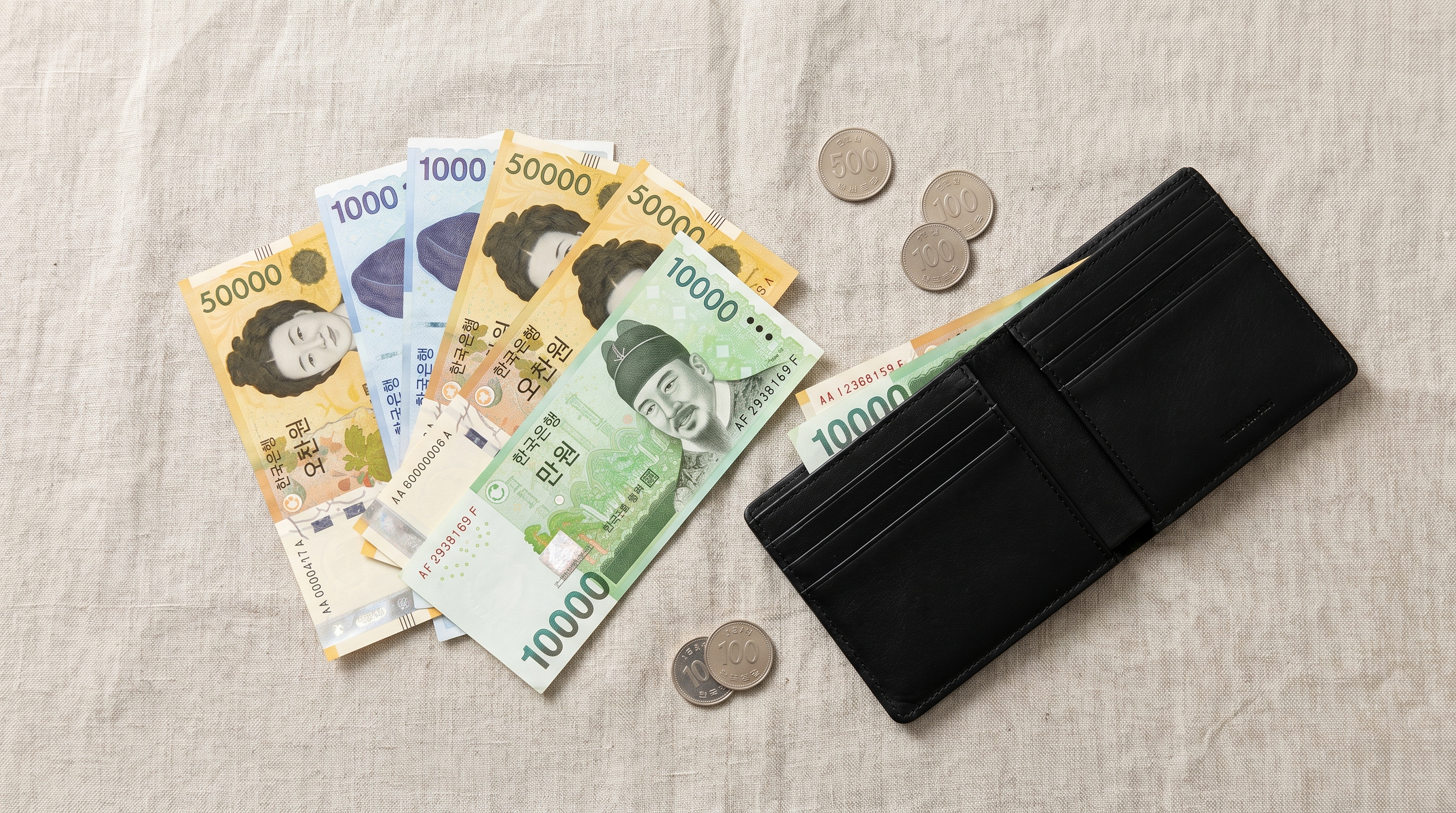
- Comfortable buffer: For most travelers, carrying ₩50,000 (about $37 USD) at all times covers the majority of cash-only situations
- Market-heavy day: ₩80,000–120,000 (covers full market meal, drinks, snacks, small purchases)
- Total trip cash recommendation: ₩200,000–300,000 for a 7-day trip that includes market visits
If your itinerary is mostly cafés, restaurants, and department store shopping, you can get by with less. If you're planning Gwangjang Market, a pojangmacha evening, and a traditional neighborhood walk, have cash ready.
Where to Get Korean Won
Best option — Incheon Airport arrival hall: KEB Hana Bank and other exchange booths operate at arrivals. Rates are competitive, and you can exchange immediately off the plane. Avoid the booths in the international departure zone — rates are noticeably worse.
Myeongdong money changers: The highest-concentration area for private exchange booths in Seoul. Competition keeps rates sharp, often matching or beating bank rates. Located along the main Myeongdong shopping street, they're easy to find and open until late.
ATMs inside convenience stores: CU, GS25, and 7-Eleven stores have Global ATMs (look for the "Global" or "Foreigner" label on the machine) that accept foreign Visa/Mastercard. Fee is typically ₩3,000–5,000 per withdrawal. Works 24/7. This is the most convenient fallback if you run low.
Avoid: Hotel exchange desks and airport departure-zone booths. Rates are consistently poor.
Foreign Card Fees
Most foreign banks charge a 1–3% foreign transaction fee on purchases and a flat fee plus percentage for ATM withdrawals. Before traveling: - Check your card's foreign transaction fee - Consider a no-FX-fee card (Wise, Charles Schwab, Revolut) if you're doing a longer trip - Notify your bank of travel dates to prevent automatic fraud blocks on your card
T-Money Card — The Essential Third Option
T-money is Korea's reloadable transit card, used for subway, bus, and some taxis. It's not cash, but it reduces the need for cash in the transit context. More importantly, many convenience stores, some vending machines, and a handful of smaller food stalls accept T-money as payment.
You can buy a T-money card at any subway station vending machine or convenience store (₩3,000–5,000 card cost). Top it up with cash at vending machines or convenience store counters — this is the most reliable method. Some machines accept foreign cards, but results vary by machine and card issuer.
Practical Tips
-
Withdraw cash before heading to a market. Don't assume there's an ATM nearby when you're already inside Gwangjang or Namdaemun. Find an ATM at the nearest convenience store on your way there.
-
Keep small bills. ₩1,000 and ₩5,000 notes are useful for street food stalls, vending machines, and small market purchases. Breaking a ₩50,000 note at a tiny stall can be inconvenient. Convenience stores are the easiest place to break large bills.
-
Tell your bank before you travel. Foreign card blocks are common and happen without warning. A quick call or app notification to your bank prevents your card from being declined at the worst moment.
-
Use Myeongdong money changers, not your hotel. The difference in rates can be 3–5% for larger amounts — meaningful on a trip budget of several hundred dollars.
-
Cards work at convenience stores for almost anything. If you're unsure whether a place accepts cards, the nearest CU or GS25 definitely does. Use them as your cashless fallback for snacks, water, and small purchases.
-
Kakao Pay and Naver Pay are Korean-only — mostly. Some travelers with overseas bank accounts can set up Kakao Pay, but it's complex. Don't count on it as a primary payment method unless you've verified it works with your specific card and setup.
-
For day trips outside Seoul: Smaller cities have the same card infrastructure in modern restaurants and shops, but local markets and older neighborhoods outside major cities skew more cash-heavy. Carry a larger cash buffer when heading to rural areas or smaller cities.
Related Questions
- Is tap water safe to drink in Korea? — What you can and can't drink straight from the tap, and where to find free water throughout the city.
- How to use the Seoul subway as a foreigner — T-money cards, QR tickets, app options, and navigating the line system without Korean.
- Best Korean convenience store food to try — Everything worth eating at CU, GS25, and 7-Eleven, with prices.