How Much Does a Week in Korea Cost for a Budget Traveler? (2026)

Korea surprises most first-time visitors. A country this developed — fast trains, world-class cities, a thriving food scene — costs significantly less than comparable destinations in Western Europe or Japan. A week in Korea is genuinely affordable if you know where the money goes and where it doesn't need to.
Quick Answer
A budget traveler can comfortably get through a week in Korea on ₩57,000–93,000 per day (roughly $42–70 USD), putting the total weekly cost at around ₩400,000–650,000 excluding flights. Very frugal travelers who stick to dormitories, convenience stores, and free attractions can push this down to ₩350,000–450,000. Mid-range travelers spending more freely on restaurants, day trips, and shopping typically land at ₩900,000–1,300,000 for the same week. The biggest variables are accommodation style and how much you shop.
The Full Answer
Accommodation: The Biggest Budget Lever
Where you sleep determines more of your daily budget than anything else.
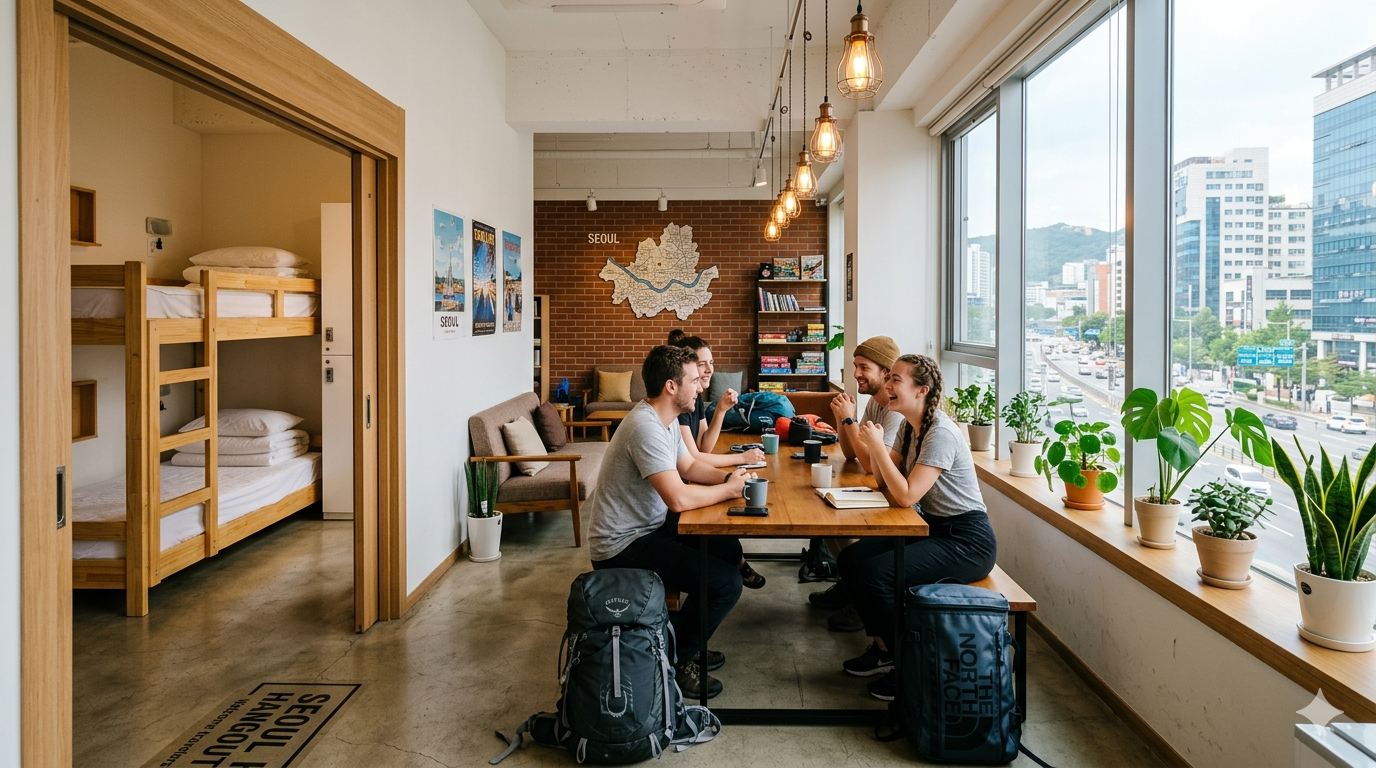
Budget options: - Hostel dormitory (4–10 bed): ₩25,000–45,000/night in Seoul. Hongdae and Insadong have the most options. The lower end is achievable on weekdays and off-peak seasons; weekends and cherry blossom season push prices toward the upper range. Well-rated budget hostels in Korea are genuinely clean and well-run. - Goshiwon (고시원): Tiny private rooms from ₩20,000–30,000/night, sometimes including WiFi and basic kitchen access. An option for longer stays; atmosphere is spartan. - Budget guesthouse (private room): ₩40,000–70,000/night for a basic private room. Korean guesthouses (민박) sometimes include breakfast.
Mid-range options: - Business hotel / 모텔: ₩60,000–100,000/night for a clean private room, often including ensuite bathroom and good WiFi. Korean motels are significantly nicer than their name suggests to foreign ears. - Mid-range hotel (3-star): ₩90,000–150,000/night in central Seoul.
Weekly accommodation cost: - Budget (dorm): ₩175,000–315,000 - Mid-range (private room): ₩490,000–770,000
Food: Where Korea Really Shines for Budget Travelers
Food is where Korea's value proposition becomes obvious. Eating well at local prices costs a fraction of what comparable quality costs in most other countries.
Budget eating (₩3,000–8,000 per meal): - Gimbap (김밥): ₩3,000–4,500 per roll at a 김밥천국 (Gimbap Cheonguk) chain. A complete meal. - Ramyeon at a convenience store: ₩2,000–3,500 for a cup noodle eaten in the store's seating area — a genuine Korean daily ritual, not just a budget fallback. - Dosirak (도시락) from convenience stores: ₩4,000–6,000 for a complete lunch box. Quality at CU, GS25, and 7-Eleven is genuinely good. - Set lunch (점심 특선): Many sit-down Korean restaurants offer a fixed lunch menu — soup, rice, and banchan — for ₩7,000–10,000. These often represent better value than the à la carte dinner menu. - Street food: Tteokbokki ₩3,000–5,000, hotteok ₩1,500, bungeoppang ₩1,000–2,000, odeng skewers ₩500–1,000 each.
Mid-range eating (₩10,000–25,000 per meal): - Korean BBQ: ₩12,000–20,000 per person for a full samgyeopsal or galbi meal with side dishes and drinks. - Sit-down restaurant dinner: ₩12,000–18,000 for most Korean restaurant dishes — bibimbap, sundubu jjigae, doenjang jjigae. - Café coffee: ₩4,500–7,000 for a specialty coffee. Korea has exceptional café culture at reasonable prices.
Weekly food cost: - Very frugal: ₩70,000–100,000 (almost exclusively convenience stores + 김밥천국 + street food) - Realistic budget: ₩70,000–120,000 (convenience stores + occasional sit-down meal or two) - Mid-range: ₩170,000–280,000 (mix of restaurants + one or two splurge meals)

Transport: Cheap by Any Standard
Seoul subway: ₩1,400–1,800 per ride with T-money. A full day of city transit — 6–8 rides — costs around ₩10,000. Weekly subway total for active sightseeing: ₩30,000–50,000.
Bus: Similar pricing to subway, also T-money compatible.
Inter-city travel: - KTX Seoul → Busan: ₩59,800 standard class one way. The train takes 2 hours 20 minutes. - Express bus Seoul → Busan: ₩23,000–28,000. Slower (4.5 hours) but significantly cheaper. - KTX Seoul → Gyeongju: ₩45,000–52,000.
Incheon Airport: - AREX all-stop train to Seoul Station: ₩4,950. Budget option, takes ~43 minutes. - AREX direct train to Seoul Station: ₩9,500. 43 minutes vs 51 minutes — the speed difference is modest. - Limousine bus: ₩17,000–18,000 to major hotel zones. Convenient for luggage. - Taxi: ₩70,000–90,000 to central Seoul. Only worth it for groups.
Weekly transport cost: - Seoul-only itinerary: ₩30,000–50,000 (subway + occasional bus) - Seoul + one long-distance day trip (Busan or Gyeongju by express bus): ₩80,000–130,000 - Seoul + one KTX trip: ₩150,000–200,000 (round-trip KTX alone is ₩120,000+)
Activities and Entrance Fees
Korea has a generous supply of free and low-cost attractions.
Free: - Han River parks (Banpo, Yeouido, Mangwon) - Bukchon Hanok Village walk - Gyeongbokgung Palace in hanbok (rental extra, but entry free) - National Museum of Korea - Hongdae street performances - Changing of the Guard ceremony at Gyeongbokgung (10am, 2pm daily)
Low cost (₩1,000–6,000): - Gyeongbokgung Palace: ₩3,000 - Changdeokgung Palace: ₩3,000 - Namsan Cable Car (return): ₩12,000 - Korean Folk Village (Suwon): ₩25,000
Higher cost: - DMZ tour (half-day): ₩50,000–80,000 - Lotte World theme park: ₩62,000 - Everland: ₩62,000 - HYBE Insight (BTS museum): ₩22,000
Weekly activities cost: - Mostly free attractions: ₩10,000–30,000 - Mix with one paid tour: ₩60,000–120,000
What You Need to Know
The Full Weekly Budget Breakdown
Very frugal = dorm bed + convenience store meals almost exclusively + free attractions only Budget = dorm bed + mix of 김밥천국 and convenience store + one or two paid activities Mid-range = private room hotel + restaurant meals + one paid tour or day trip by KTX
Hidden Costs That Catch Travelers Off Guard
Alcohol: Korea has a vibrant drinking culture and beer and soju are very cheap — a 500ml beer from a convenience store is ₩2,500–3,500, a bottle of soju is ₩1,800–2,500. But bar and restaurant prices are 3–4x higher. Nights out can add ₩30,000–80,000 to a day's budget quickly.
Shopping: Myeongdong, Hongdae, and Dongdaemun are genuinely dangerous for budgets. K-beauty, clothing, and souvenir shopping isn't cheap if you're not disciplined. Leave buffer room in your budget if shopping is part of the plan.
Airport transfers: The difference between the AREX all-stop train (₩4,950) and a taxi (₩80,000) is significant. Decide in advance and don't default to a taxi out of fatigue.
Coffee habit: Korea's café culture is excellent and reasonably priced, but two specialty coffees a day at ₩6,000 each adds ₩84,000 to a week's budget. Convenience store coffee (₩1,000–1,500 from machines) is a solid fallback.
When Korea Gets More Expensive
Cherry blossom season (late March – early April): Accommodation prices in Seoul and Jinhae spike significantly. Book 2–3 months ahead.
Chuseok (추석) and Seollal (설날): Major Korean holidays when many restaurants and shops close. Transport gets crowded and prices rise.
Summer (July–August): Peak domestic tourism season. Jeju Island and coastal destinations see significant price increases. Seoul itself is less affected.

Practical Tips
-
Eat at 김밥천국 (Gimbap Cheonguk) for budget meals. These chain restaurants serve filling Korean food — gimbap, ramyeon, bibimbap, jjigae — for ₩5,000–9,000. They're everywhere, open late, and reliable. A complete meal for under ₩7,000 is standard.
-
Use convenience stores strategically. A dosirak lunch (₩5,000–6,000) plus a triangle gimbap (₩1,500) is a genuinely satisfying meal. Convenience store breakfast — coffee, a triangle gimbap, and a boiled egg — costs around ₩4,000.
-
Drink alcohol from convenience stores, not bars. Soju at ₩1,800 from a GS25 versus ₩5,000–7,000 at a bar is the same drink. Sitting at a Han River park with convenience store drinks is one of Seoul's best free experiences.
-
Take the AREX all-stop train from Incheon, not a taxi. The trip to Seoul Station takes ~43 minutes and costs ₩4,950. It's efficient, comfortable, and saves ₩60,000–75,000 over a taxi.
-
Free museum days and free palace days add up. The National Museum of Korea is always free. Gyeongbokgung and Changdeokgung offer free entry in hanbok — rent for ₩15,000–25,000 for 2 hours and save the ₩3,000 entry fee as a bonus.
-
Day trips by express bus, not KTX, for Busan. The KTX costs ₩59,800 one way; the express bus costs ₩23,000–28,000. If you're not in a rush, the bus saves ₩70,000+ round-trip per person.
-
Book accommodation in advance for cherry blossom season. The price difference between a hostel booked two months ahead versus two weeks ahead during peak spring can be ₩15,000–25,000 per night.
Related Questions
- Do you need cash in Korea or is card OK everywhere? — Where to use cards, where cash is essential, and how much to carry.
- Is tap water safe to drink in Korea? — Free drinking water options across Seoul that cut your daily costs further.
- Best Korean convenience store food to try — The complete guide to eating well from CU, GS25, and 7-Eleven on a budget.