Korea Spring Festival Calendar 2026: April & May Events Guide
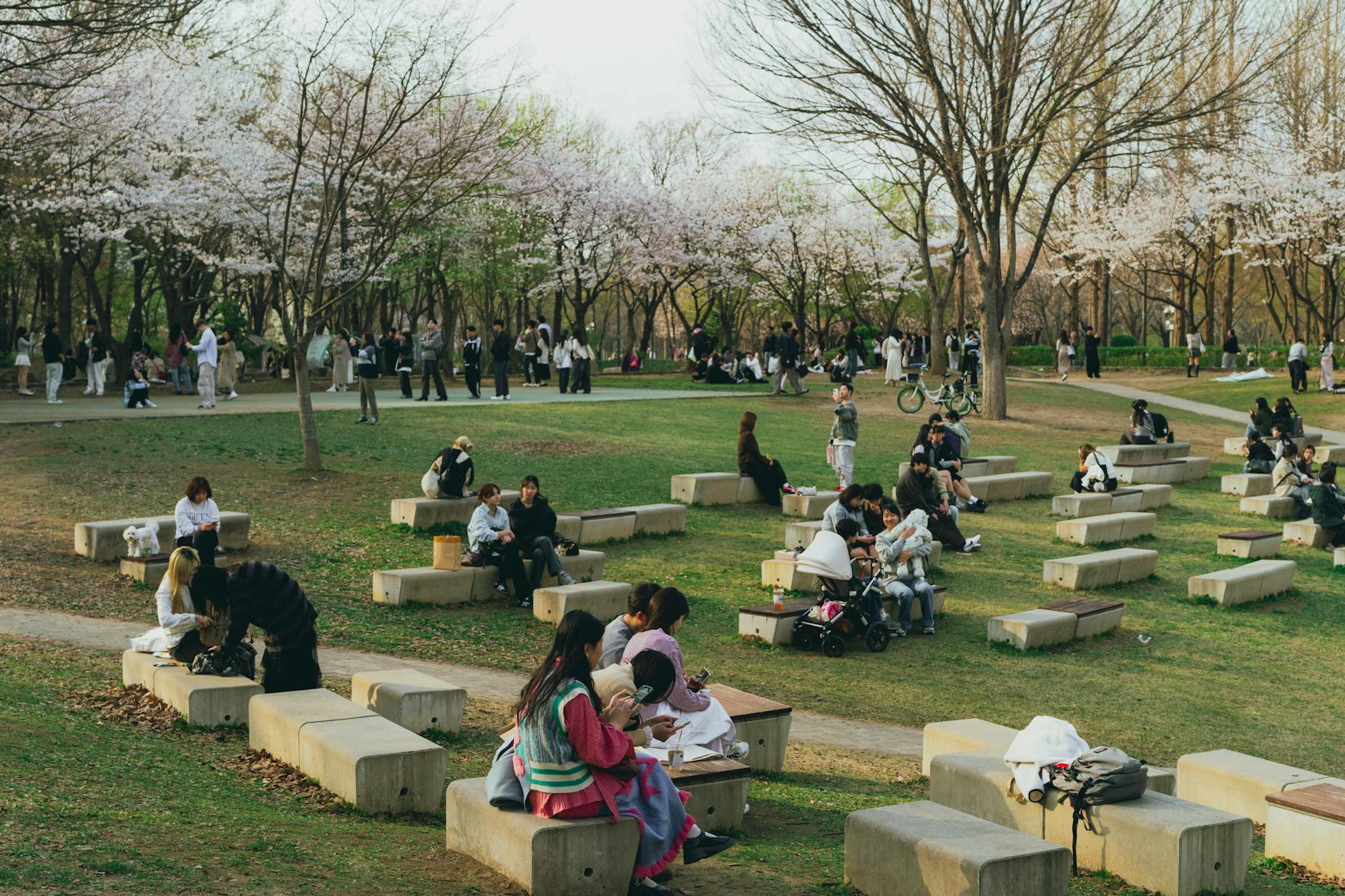
Photo by Theodore Nguyen on Pexels
Spring is Korea's most festival-dense season. Between late March and late May, the country runs a nearly continuous sequence of outdoor events — cherry blossom festivals, Buddhist lantern celebrations, tulip fields, cultural performances, and regional markets. This guide organizes everything worth planning around for April and May 2026 in chronological order.
Early April (April 1–10)
Jinhae Gunhangje Cherry Blossom Festival (진해 군항제)
Dates: March 27 – April 5 (festival concluded) Location: Jinhae (Changwon), South Gyeongsang Province
Korea's largest cherry blossom festival — 360,000 cherry trees, naval parades, and the country's most photographed blossom scenery. The 2026 festival runs through April 5 only. If you're arriving in Korea after that date, Jinhae's season will have passed. Seoul and Gyeongju blossom events continue into mid-April.
See our full [Jinhae Cherry Blossom Festival guide] for everything you need to know.
Yeouido Spring Flower Festival (영등포 여의도 봄꽃축제)
Dates: Early-to-mid April (exact dates follow blossom peak — TBC) Location: Yunjung-ro cherry blossom avenue + Yeouido Hangang Park, Seoul Entry: Free
The most famous cherry blossom avenue in Seoul — mature trees lining Yunjung-ro form an almost complete arch of blossoms overhead. During the festival period the road closes to traffic and becomes a pedestrian promenade.
Blossom timing note: Seoul's cherry blossoms typically peak in early-to-mid April (forecast varies by year — check the Korea Meteorological Administration forecast closer to your trip). Peak bloom lasts 7–10 days before petals fall. Arrive before 8am on any day for manageable crowds; weekend middays become packed shoulder to shoulder.
Best combination: Walk Yunjung-ro in the morning, then descend to Yeouido Hangang Park for a riverside picnic as the petals drift down.
Gyeongju Cherry Blossoms & Spring Culture (경주 봄)
Dates: Late March – mid-April (blossom season); cultural events ongoing Location: Gyeongju, North Gyeongsang Province
Korea's ancient Silla capital frames cherry blossoms against UNESCO World Heritage sites — Bulguksa Temple, Tumuli Park burial mounds, Anapji Pond. Less famous than Jinhae but often considered more beautiful in context.
Getting there: KTX Seoul Station → Singyeongju Station (~2 hours), then local bus or taxi
Jindo Mysterious Sea Road Festival (진도 신비의 바닷길 축제)
Dates: Mid-April (typically April 11–13 — confirm at the official festival site) Location: Jindo Island, South Jeolla Province
One of Korea's most extraordinary natural spectacles. Twice a year, tidal conditions cause a 2.8km strip of sea floor to emerge between Jindo and a small neighboring island — wide enough to walk across. The festival surrounds the event with cultural performances, folk music, and local food. A genuinely unmissable experience if your dates align.
Getting there: Bus from Gwangju (about 2 hours) or Mokpo (about 1 hour) to Jindo; from Seoul, take KTX to Mokpo then onward bus
Mid April (April 11–20)
Han River Spring Festival (한강 봄 페스티벌)
Dates: April 10 – May 5 (26 days) Location: Seven Han River parks — Yeouido, Ttukseom, Banpo, Jamsil, and others Entry: Free
The biggest continuous spring event in Seoul, running across the entire mid-spring window. Seven Han River parks host themed zones simultaneously.
Key program highlights: - Drone light shows over the river at night (schedule varies by park — check the Seoul Parks website for dates) - River festival boat programs on the Han River — special spring cruise routes connecting parks (official name TBC as 2026 program details are confirmed) - Han River Bus — newly launched boat service connecting parks (replaces water taxi on key routes) - Themed festival zones at each park: outdoor stages, food markets, performance areas
Best park by what you're after: - Yeouido: Cherry blossom road nearby + largest festival infrastructure - Banpo: Best sunset views + Banpo Bridge Rainbow Fountain (shows 19:30 / 20:00 / 20:30) - Ttukseom: Sports, bike rentals, younger crowd - Mangwon: Most local atmosphere, least tourist-heavy
Subway: Line 5 (Yeouido), Line 7 (Ttukseom), Line 3/7/9 (Banpo), Line 6 (Mangwon)
Taean Tulip Festival (태안 튤립축제)
Dates: April 1 – May 6, 2026 Location: Taean Tulip & Herb Festival grounds, Chungnam (충남 태안)
One of Korea's most colorful spring spectacles outside of cherry blossom season — millions of tulips across themed garden zones, with flower fields stretching into the distance. The scale is genuinely impressive and the crowds are much lighter than Seoul blossom events.
Getting there: Bus from Seoul Express Bus Terminal to Taean (about 2.5–3 hours); shuttle buses run from Taean Bus Terminal to the festival grounds during the event period
Late April (April 21–30)
Asan Yi Sun-sin Festival (아산 성웅 이순신 축제)
Dates: Late April (typically April 24–27 — confirm at the Asan city website) Location: Hyeonchungsa Shrine area, Asan, Chungnam
A large cultural festival celebrating Admiral Yi Sun-sin, Korea's most revered military hero, held near his memorial shrine. Reenactments of naval battles, traditional performances, archery demonstrations, and cultural exhibitions. Strong historical atmosphere — less touristy than Seoul events, deeply Korean in character.
Getting there: KTX or SRT from Seoul to Asan Station (~40 minutes), then local bus or taxi to Hyeonchungsa
Icheon Ceramic Festival (이천 도자기축제)
Dates: Late April – early May (exact 2026 dates TBC — typically runs 2–3 weeks) Location: Icheon World Ceramic Center, Gyeonggi Province
Korea's most important ceramics festival, held in the city that has produced fine celadon and white porcelain for centuries. Live pottery demonstrations, kiln firing, hands-on workshops, and one of the country's best craft markets. A practical day trip from Seoul.
Getting there: Bus from Seoul Express Bus Terminal to Icheon (about 1 hour)
Chunhyangjae Festival (춘향제)
Dates: Late April – early May (typically 5 days around late April) Location: Namwon, North Jeolla Province (전북 남원)
One of Korea's oldest and most beloved traditional festivals, celebrating Chunhyang — the heroine of Korea's most famous love story set in Namwon. Folk performances, traditional games, a Chunhyang beauty pageant, and cultural exhibitions fill the Gwanghallu Garden area where the story is set. Rich in traditional Korean culture and atmosphere.
Getting there: KTX from Seoul to Namwon (~2 hours); or Namwon is easily combined with a Jeonju trip
Early May (May 1–10)
Children's Day Holiday — Golden Week Spike
Date: May 5 (Tuesday) — Children's Day (어린이날), national holiday
May 5 is a national holiday and one of the busiest domestic travel dates of the year. Combined with surrounding weekends, the period around May 3–5 sees extremely high demand for accommodation and transportation across Korea. Book everything well in advance if your trip falls in this window.
Han River Spring Festival (continues)
Dates through: May 5 The Han River parks festival continues through Children's Day weekend — one of its busiest periods. Expect large crowds at Yeouido and Ttukseom parks. Arrive early or opt for Mangwon for a more relaxed experience.
Taean Tulip Festival (final days)
Through: May 6 The tulip festival overlaps with the Children's Day holiday period — this is its peak attendance window. Weekday visits in early May offer the best balance of full blooms and manageable crowds.
Mid May (May 11–20)
Yeondeunghoe — Lotus Lantern Festival (연등회)
Dates: May 16–17 (Saturday–Sunday), 2026 Main event: Grand Lantern Parade — May 16, 19:00–21:30 Location: Jongno parade route + Jogyesa Temple, central Seoul Entry: Free
Korea's most visually spectacular cultural festival, UNESCO-recognized as an Intangible Cultural Heritage of Humanity. Thousands of participants carry handcrafted lotus lanterns through central Seoul after dark — from Dongguk University Stadium through Jongno to Jogyesa Temple.
Key timings: - Lantern Parade: May 16, 19:00–21:30 — departs Dongguk University Stadium (Line 3, Exit 6) - Jogyesa Temple lantern installation: typically open from early May through late May - Cheonggyecheon Stream floating lanterns: best after 7pm throughout the festival period
How to participate: International visitors are encouraged to join the parade. The foreigner participation program usually allows non-Koreans to walk carrying a lotus lantern — registration required in advance via the official Yeondeunghoe website.
Note on Buddha's Birthday: The national public holiday Buddha's Birthday (부처님 오신 날) falls on May 16, 2026 — the same day as the Lotus Lantern Parade. The Yeondeunghoe festival is the cultural celebration of this holiday. Jogyesa Temple and Buddhist temples nationwide hold special ceremonies on the day itself, while the lantern parade takes place in the evening.
Best viewing spots: Jongno 3-ga intersection (Lines 1, 3, 5) — arrive by 18:00 for a good position — or in front of Jogyesa Temple for the parade finale.
Full guide: [Lotus Lantern Festival Seoul 2026]
Quick Reference: Spring 2026 Festival Timeline
Planning Tips
Book accommodation 2–3 months in advance. April and May are Korea's most popular travel months. The Lotus Lantern Festival weekend and Children's Day push prices and availability to their limits.
Weekdays are dramatically better. Weekend festival crowds in April can be overwhelming. A weekday visit to the same venue gives you space, light, and a genuinely different experience.
Cherry blossom dates vary by year. Seoul's peak bloom shifts by up to 10 days depending on winter and early spring temperatures. Check the Korea Meteorological Administration's blossom forecast before finalizing your plans.
Layer for spring evenings. Afternoons reach 18–23°C but evenings drop to 8–12°C — especially at riverside festival venues. Bring a light jacket.
T-money card works everywhere. Subway, bus, Ttareungyi bike share, and most convenience stores. Load it at any station on arrival.
New to Korea? Start with our Seoul 5-Day Itinerary for a complete first-visit framework, or check the Korea Travel Bucket List for 20 experiences not to miss.