What Is Banchan? The Free Side Dishes at Korean Restaurants Explained

If you've ever sat down at a Korean restaurant and watched a parade of small dishes arrive before you even ordered anything, you've already met banchan. For first-time visitors, the experience can be confusing — did you accidentally order all of this? Is there a hidden charge? The answer is no, and understanding banchan will completely change how you experience eating in Korea.
Quick Answer
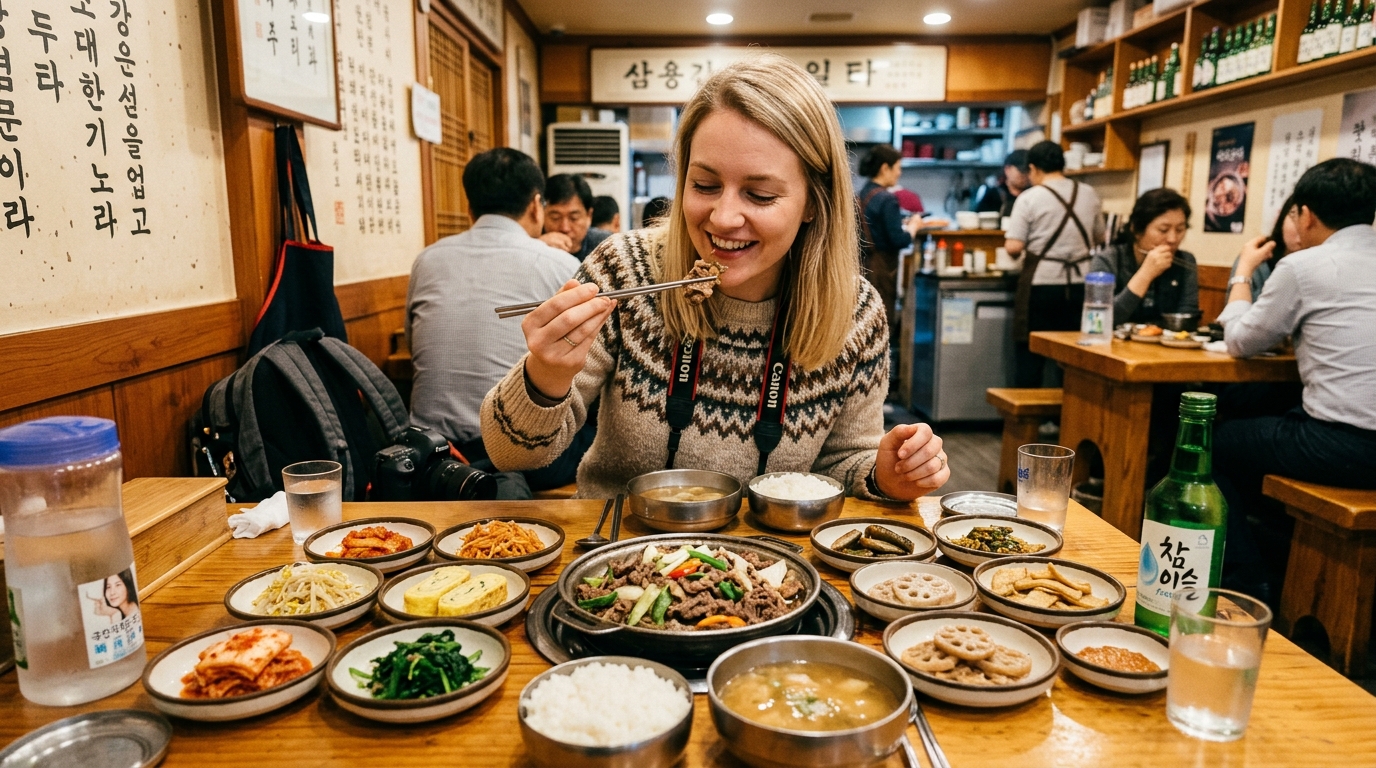
Banchan (반찬) are the small side dishes served automatically alongside rice and soup at Korean restaurants — and yes, they are usually free. You don't order them; they simply arrive at the table. Most restaurants will refill them at no charge if you run out. They are not a starter course to be eaten first; they are meant to be eaten throughout the entire meal alongside your main dish and rice.
The Full Answer
The word 반찬 (banchan) literally means "side dish" in Korean. It's not a restaurant gimmick or a cultural curiosity — it's a fundamental part of how Koreans eat. A Korean meal is structured around rice (밥, bap), and banchan exists specifically to complement it. The two are eaten together, not in sequence.
Depending on the restaurant and the price range of your meal, you'll typically receive anywhere from 2 to 8 small dishes. Budget restaurants may offer a modest spread of three or four; traditional Korean restaurants and higher-end hanjeongshik (한정식) establishments can fill the entire table.
Common Types of Banchan
Here are the dishes you're most likely to encounter:
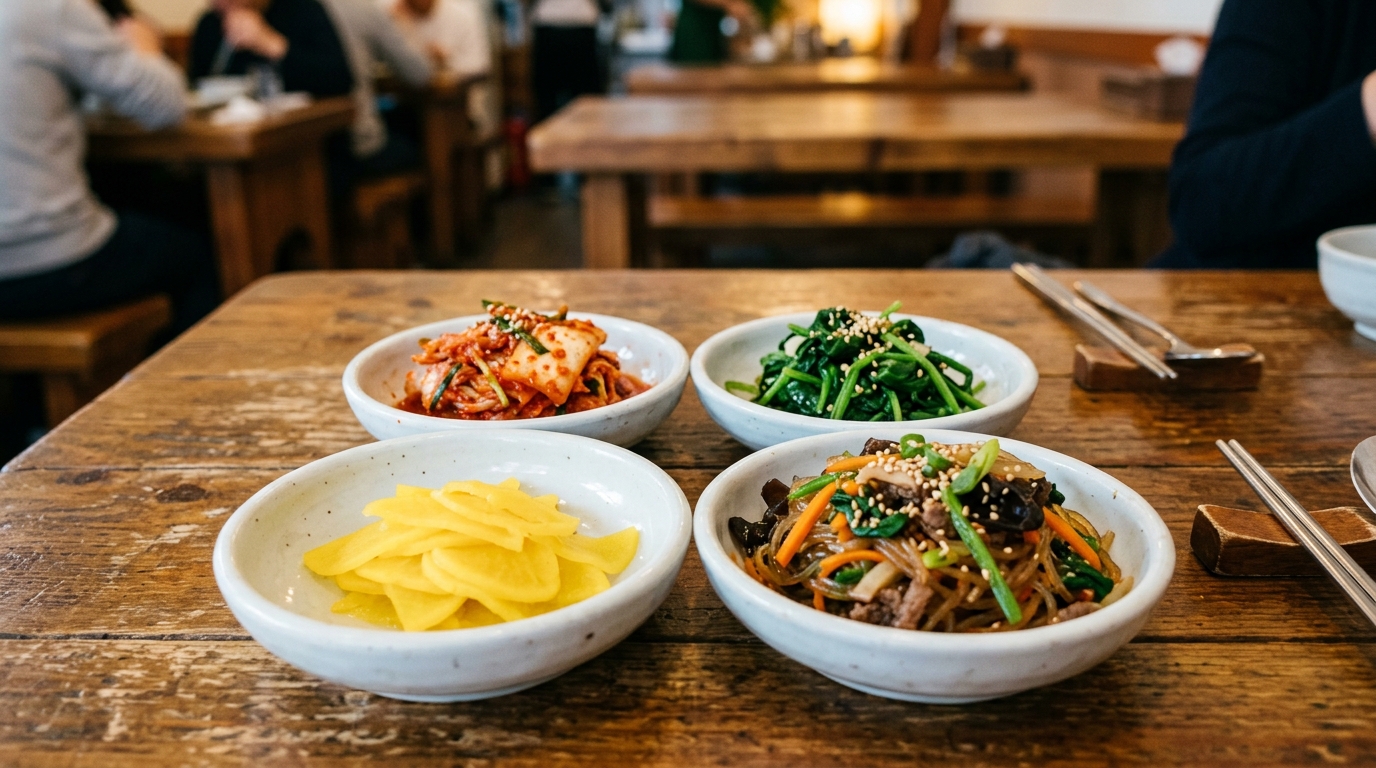
- Kimchi (김치): Fermented cabbage, seasoned with chili paste, garlic, and ginger. The most universal banchan — present at nearly every traditional Korean meal. Can be spicy.
- Spinach namul (시금치나물): Blanched spinach tossed with sesame oil and garlic. Mild, slightly nutty, not spicy.
- Bean sprout namul (콩나물무침): Lightly seasoned bean sprouts. Crunchy, mild, and refreshing.
- Japchae (잡채): Glass noodles stir-fried with vegetables and a touch of soy and sesame. Sweet, savory, not spicy.
- Dubu jorim (두부조림): Braised tofu in a mildly spicy sauce. A filling, protein-rich option.
- Pickled radish (깍두기 or 단무지): Either cubed kimchi-style radish or yellow pickled radish slices. Common alongside noodle dishes and grilled meats.
- Gyeran mari (계란말이): A rolled omelette, sometimes with vegetables inside. Mild flavor, universally liked.
- Myeolchi bokkeum (멸치볶음): Stir-fried dried anchovies with a sweet-savory glaze. Salty, crunchy, and addictive.
- Kongnamul (콩나물): Soybean sprouts simply seasoned with sesame oil. Mild and clean-tasting.
Is Banchan Free?
Yes, completely. Banchan is included in the cost of your meal — there is no separate charge, not even at budget restaurants. The number and variety of banchan you receive often serves as an informal signal of a restaurant's quality tier. More banchan often suggests a more generous meal, though it is not a strict rule.
Can You Ask for Refills?
Absolutely. Asking for more banchan is entirely normal and expected. If a dish runs out:
- Hold up the empty dish and make brief eye contact with a staff member
- Say "더 주세요" (deo juseyo) — "More, please"
At the vast majority of traditional Korean restaurants, refills are free and unlimited. The exception is a small number of higher-end restaurants that charge for refills of premium banchan items — but this is rare and will typically be communicated upfront.
Etiquette at the Table
- Eat directly from the shared banchan dish. In most settings, you reach in with your chopsticks and eat from the communal dish rather than transferring to your own bowl first — though habits can vary by restaurant and family style.
- You don't have to finish everything. There's no obligation to empty every dish. If you don't like something, leave it.
- Don't mix banchan into your rice bowl unless you're eating bibimbap-style. Even then, only mix within your own bowl.
- Take from the top. Don't dig through a banchan dish with your chopsticks — take what's nearest to you.
What You Need to Know
Banchan varies by region. The set of dishes at a restaurant in Jeonju — Korea's food capital — will look very different from Seoul or Busan. Regional specialties often appear as banchan, and noticing these differences is one of the best ways to experience local food culture.
Lunch sets often offer the best value. Many restaurants offer a lunch set menu (점심 특선) that includes a generous banchan spread at a lower price than dinner. If you want to try banchan-heavy traditional Korean food without spending a lot, lunch is the move.
Non-spicy options exist. Namul dishes (spinach, bean sprouts, kongnamul), japchae, yellow pickled radish, and gyeran mari are consistently mild. You can leave the kimchi and visibly red-sauced dishes and still eat well.
Vegetarians and vegans should be cautious. Many banchan appear vegetarian but are seasoned with fish sauce or shrimp paste — kimchi is the most common example. If eating fully plant-based is a priority, look for temple food restaurants (사찰음식), which serve entirely vegan Korean cuisine with a full banchan spread prepared without any animal products.
Banchan is specific to sit-down Korean meal culture. Street food stalls, fast-casual chains, and Western-style cafes generally don't include banchan. You'll encounter it at traditional Korean restaurants, Korean BBQ spots, and hansik (한식) restaurants.
Practical Tips
- Don't wait for banchan to finish before eating your main dish. Everything on the table is meant to be eaten simultaneously — rice, main dish, and banchan in rotation. That's the intended experience.
- Signal for refills before a dish is completely empty. It's easier to get a refill when there's still a little left than to ask for a brand new dish.
- Photograph the spread when it first arrives. The full banchan presentation changes at every restaurant and is one of the most visually striking parts of Korean dining.
- Pace yourself. First-time visitors often overeat banchan before the main dish arrives. It's a complement, not a course.
- Pay attention to traditional pairings. Pickled radish with fried chicken or naengmyeon, kimchi with almost everything, japchae with rice-heavy meals. The restaurant has thought about the combinations.
- At Korean BBQ, some banchan are for wrapping. Perilla leaves (깻잎) and raw garlic slices are designed to be wrapped around grilled meat, not eaten alone.
- Try a small amount of unfamiliar banchan first. Banchan spans a wide range of flavors and intensity. There's no pressure to commit to a full dish before you know whether you like it.
Related Questions
- Is Korean Food Always Spicy? Less Spicy Options Explained — Which Korean dishes are mild, and how to navigate a spicy menu.
- How to Order Food in Korea Without Speaking Korean — A practical walkthrough for navigating Korean restaurants.
- Vegan and Vegetarian Options in Korea — Where to find plant-based food and which dishes to look for.