How to Visit Seongsan Ilchulbong in Jeju — Tickets, Sunrise Timing, and Tips
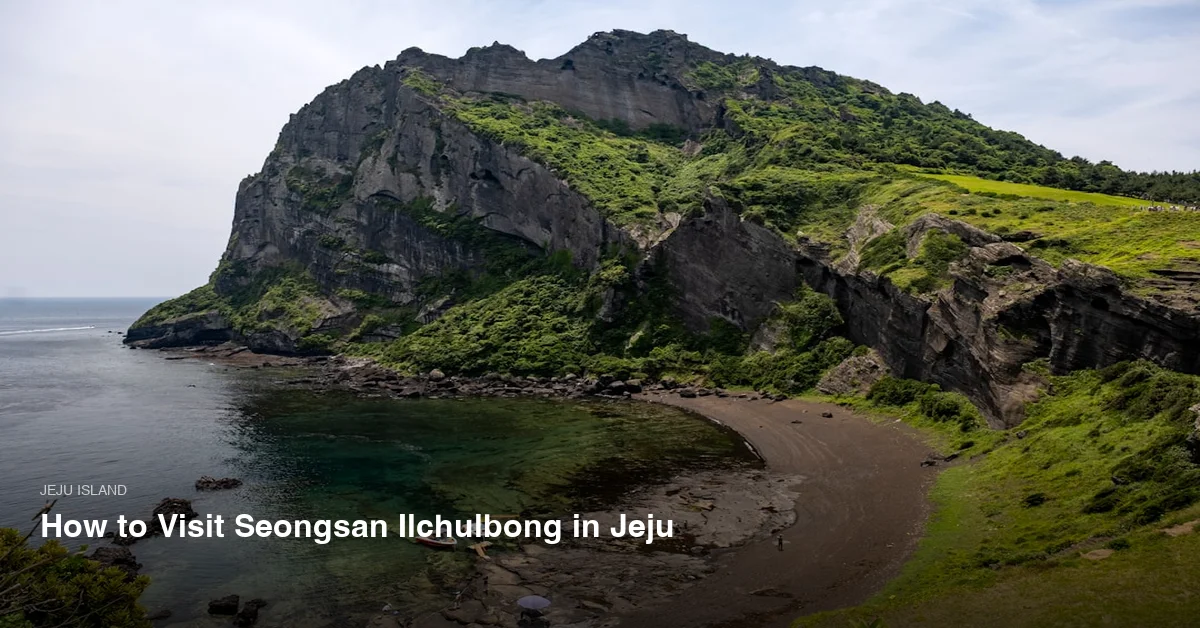
Photo by Lightscape on Unsplash
Quick Answer
Seongsan Ilchulbong (성산일출봉), a UNESCO World Heritage volcanic crater on Jeju's eastern tip, is open from 4:30 AM in summer and 6:00 AM in winter — timed specifically to allow sunrise viewing year-round since October 2024. Entry costs ₩5,000 for adults (as of 2026). The hike to the 182-meter summit takes 20–40 minutes on stone staircases. Plan 1.5–2 hours for the full visit.
What Is Seongsan Ilchulbong?
Seongsan Ilchulbong — literally "Seongsan Sunrise Peak" — is a hydrovolcanic tuff cone formed over 5,000 years ago when underwater magma erupted through cold seawater in what geologists call a Surtseyan-type eruption. The explosion left a crater 600 meters wide and 90 meters deep, now covered in grass and visible from the wooden observation deck at the 182-meter summit. What was once a separate island gradually merged with the Jeju mainland as sediment built up over millennia, creating the distinctive headland that projects into the sea today.
In 2007, UNESCO inscribed Seongsan Ilchulbong as part of the Jeju Volcanic Island and Lava Tubes World Heritage Site (List No. 1264), alongside Hallasan Natural Reserve and the Geomunoreum Lava Tube System. The citation recognized the tuff cone's exceptional exposures of structural and sedimentological characteristics — essentially, it is one of the best-preserved examples of this type of volcanic formation anywhere in the world. For visitors, that translates to dramatic vertical cliffs, a striking profile visible from the sea, and a crater that genuinely looks unlike anything else on the island.
Seongsan Ilchulbong draws around 1.54 million visitors annually (Korea Times, 2023) — making it one of the most visited natural sites in South Korea. The crowds are concentrated in summer and on weekend mornings, but the site is large enough that visiting at off-peak times is straightforward.
Tickets and Opening Hours
Admission Prices (as of 2026)
| Visitor Type | Price |
|---|---|
| Adults | ₩5,000 |
| Youth (ages 13–24) | ₩2,500 |
| Children (ages 7–12) | ₩2,500 |
| Children under 7 | Free |
| Jeju residents | Free (ID required) |
| Groups of 20+ (adults) | ₩4,000 |
| Groups of 20+ (youth) | ₩2,000 |
Operating Hours
As of October 27, 2024, Jeju authorities extended opening hours specifically to enable year-round sunrise viewing. Previously, the park opened at 7:00–7:30 AM — after sunrise for most of the year. The current schedule:
| Season | Hours |
|---|---|
| May–August | 04:30–20:00 |
| March–April / September–October | 05:00–19:00 |
| November–February | 06:00–18:00 |
Last ticket sales are one hour before closing time.
Free entry tip: Many sunrise visitors report entering before the ticket booth opens — the booth typically starts operating at the park's official opening time, and those already on the trail before then are not turned back. This is an informal practice, not official policy, and cannot be guaranteed. Verify on-site.
Monthly closure: The site is closed on the first Monday of each month. If that Monday falls on a public holiday, the closure shifts to the following Tuesday. It is also closed on January 1, Seollal (Lunar New Year), and Chuseok. Check before you go — this catches a significant number of visitors off guard each year.
Contact: +82-64-783-0959 | Address: 284-12 Ilchul-ro, Seongsan-eup, Seogwipo-si, Jeju-do
Getting There
From Jeju City (제주시) by Bus
| Bus | Journey Time | Frequency | Fare |
|---|---|---|---|
| Bus 111 (express) | ~74 minutes | Every 70 min | ~₩2,000 |
| Bus 211 | ~84 minutes | Every 20–30 min | ~₩2,000 |
| Bus 212 | ~85 minutes | Every 20–30 min | ~₩2,000 |
| Bus 701 | ~80 minutes | Varies | ₩2,000 adults / ₩1,000 children |
| Bus 112 (from airport) | Varies | Check schedule | ~₩2,000 |
All buses depart from Jeju Intercity Bus Terminal, except Bus 112 which departs from Jeju International Airport. Buses 211 and 212 run more frequently and are generally the most practical choice for daytime visits. Check current timetables at bus.jeju.go.kr before your trip.
Important note for sunrise visitors: Early morning buses — before 5:00 AM — may not run on schedule or at all. Most visitors who come specifically for sunrise drive a rental car or take a taxi. Rental cars are the most common approach, and the drive from Jeju City takes approximately 1–1.5 hours via National Route 12.
From Seogwipo (서귀포시)
Bus 201 from Seogwipo Bus Terminal reaches Seongsan Ilchulbong in approximately 1 hour 35 minutes.
By Taxi
A taxi from Jeju City costs approximately ₩50,000–₩70,000 and takes around 1 hour (as of 2026, estimated). Taxis are the most reliable option for very early morning departures when buses are not running.
From Udo Island (우도)
Take the ferry back to Seongsan Port, then walk approximately 700 meters (about 10 minutes on foot) to the Ilchulbong entrance.
The Hike: What to Expect
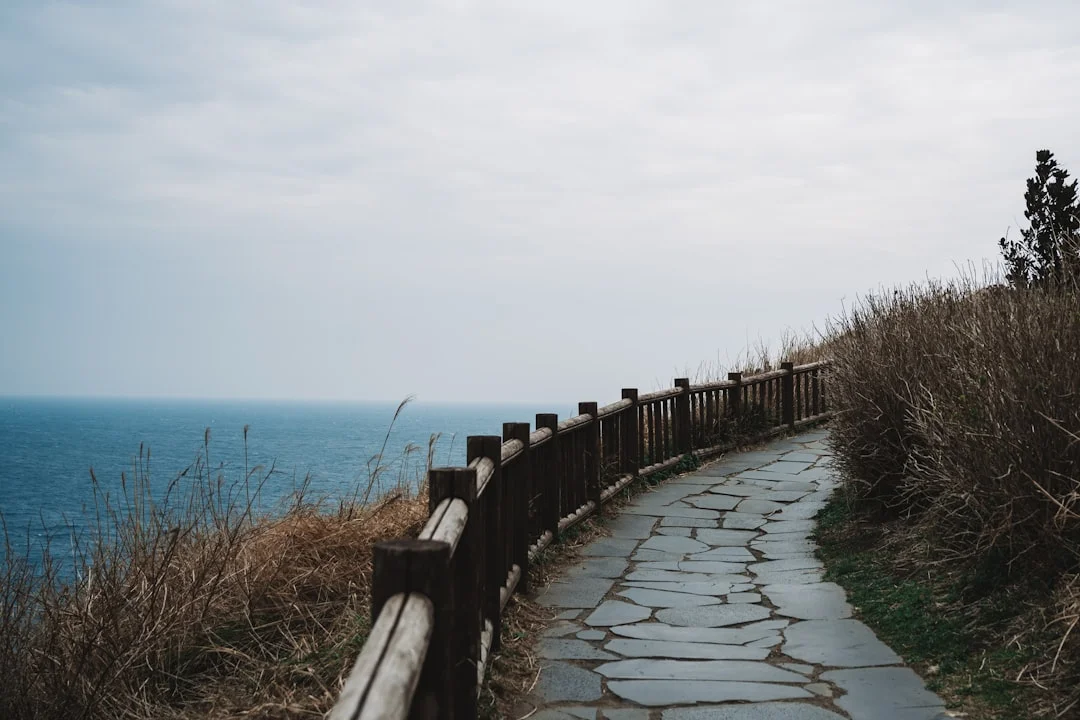
The trail from the ticket booth to the summit is approximately 1 km one way and takes 20–40 minutes depending on your pace and fitness level. The lower section is a flat path; the upper section consists entirely of stone and wooden staircases — well-maintained, clearly marked, but genuinely steep. Regular walking shoes or sneakers are sufficient. Dedicated hiking boots are not necessary.
The trail operates as a one-way system, with separate ascending and descending routes. Rest spots are available at intervals, and restrooms are located both at the base and partway up.
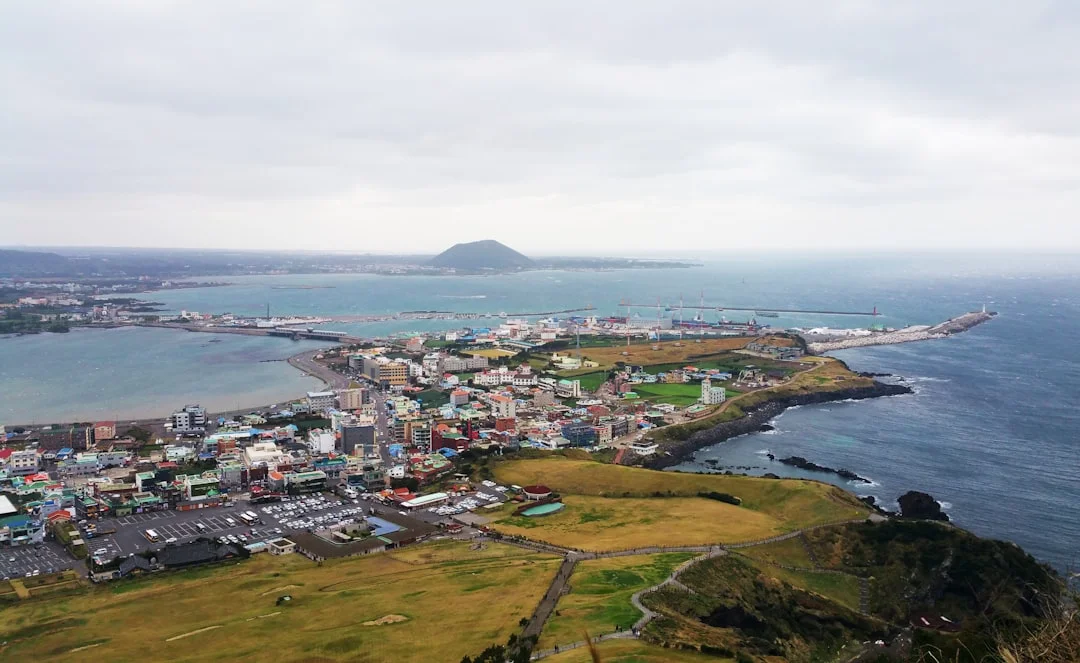
At the summit, a wooden observation deck overlooks the full crater — 600 meters wide, grassed over, and framed by the ocean on three sides. On clear mornings, Hallasan (한라산), Jeju's central volcanic peak, is visible to the west. The view disappears into cloud quickly as the morning progresses. The summit is exposed and often very windy even in summer; a light windbreaker is worth carrying regardless of the season. No water is sold on the trail, so bring your own.
Total visit time — including the ascent, time at the summit, and descent — is typically 1.5 to 2 hours. The site is not wheelchair accessible beyond the base area. Elderly visitors and those with mobility limitations can view the peak from Gwangchigi Beach (광치기해변) or the flat path around the base without climbing.
Sunrise at Seongsan Ilchulbong: Is It Worth It?
The short answer is yes — but the value depends on your travel style and the month you visit.
Seongsan Ilchulbong is the easternmost significant peak on Jeju, facing directly east over open ocean. There is no better position on the island for watching the sun rise from the sea. The crater adds foreground context that a flat beach cannot. The extended opening hours introduced in October 2024 make this accessible year-round rather than only in summer.
Approximate Sunrise Times by Month (Jeju, ~33.5°N)
| Month | Sunrise |
|---|---|
| January | 07:35–07:40 |
| February | 07:10–07:20 |
| March | 06:40–06:55 |
| April | 06:05–06:20 |
| May | 05:30–05:45 |
| June | 05:15–05:25 |
| July | 05:20–05:35 |
| August | 05:40–06:00 |
| September | 06:00–06:25 |
| October | 06:25–06:50 |
| November | 06:50–07:15 |
| December | 07:20–07:40 |
Verify the exact time for your visit at timeanddate.com/sun/south-korea/jeju before you go.
When to arrive: Allow at least 30–45 minutes from the ticket booth to reach the summit at a steady pace. During summer (May–August), the park opens at 4:30 AM — enough time to reach the top before the 5:15–5:45 AM sunrise window. In winter, the 6:00 AM opening aligns with the later sunrise.
Best months for the experience: Spring (April–May) and fall (September–October) offer the best combination — comfortable temperatures, clear skies, and moderate crowds. Summer brings the earliest sunrises but also peak tourist season, heat, and humidity. Winter sunrises are colder and more atmospheric, and the surrounding landscape is quieter.
Crowds: Weekday sunrises are considerably less crowded than weekends and Korean public holidays. The single most crowded event is the New Year's Day sunrise — in 2026, climbing was restricted to 500 pre-registered visitors, with registration required in advance online. If you plan to visit on January 1, check the Seongsan Sunrise Festival (성산일출축제) website at sunrisefestival.kr for registration details.
The Haenyeo Performance
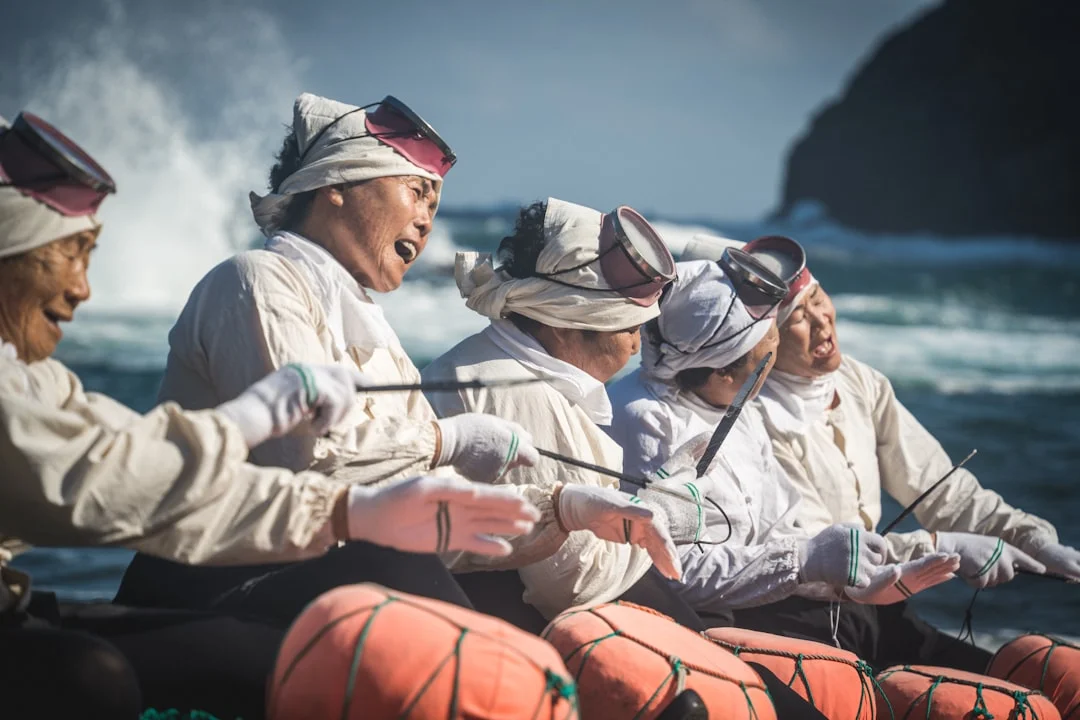
At the beach directly beside the Seongsan Ilchulbong entrance, a free performance by Jeju's haenyeo (해녀) — traditional female free divers — takes place twice daily at 13:30 and 15:00. The venue is Seongsanpo Haenyeo Gongyeonjang (성산포 해녀물질공연장), located at Umutgae Beach (Umutgaehaebyeon) to the left of the main entrance.
Each performance runs approximately 20 minutes: the first 10 minutes are an introduction featuring traditional haenyeo songs, followed by a live diving demonstration in the sea — no equipment, no oxygen, just breath-hold diving to harvest seafood from the seabed. The haenyeo practice is itself recognized by UNESCO as intangible cultural heritage.
Admission is free with your Seongsan Ilchulbong entry ticket. The beach is public, so you can also watch from the shore without a ticket. After the performance, the haenyeo sell fresh catch — sea cucumbers, sea pineapples, and conch — directly on the beach.
Important caveat: Performances are weather-dependent and can be cancelled with no notice due to strong winds or rough seas. Before visiting specifically for the show, call ahead to confirm: +82-64-783-0959 or +82-64-783-1135. The show is also closed on January 1, Seollal, and Chuseok.
Many visitors who come for the sunrise leave before the 13:30 performance. Planning your day around both — sunrise hike in the morning, haenyeo show in the afternoon — gives you significantly more than a one-hour visit.
Combining with Udo Island and Gwangchigi Beach
The most efficient use of a day at Seongsan is to combine it with Udo Island (우도) and Gwangchigi Beach (광치기해변).
Udo Island is accessible from Seongsan Port, approximately 700 meters (10 minutes on foot) from the Ilchulbong entrance. Ferries run every 30 minutes during peak season; the crossing takes 15 minutes. Round-trip fares are ₩11,000 for adults, ₩10,100 for students, and ₩9,000 for elderly and disabled visitors (as of 2026). The first ferry from Seongsan departs at 07:30 (March–October) or 08:00 (November–February); the last ferry back from Udo departs at 18:00–18:30.
One significant practical note: private passenger cars are now restricted on Udo — rental cars cannot take the ferry. Explore the island by electric bike or shuttle bus, both available at the Udo ferry terminal.
Gwangchigi Beach is approximately 700 meters west of the Ilchulbong entrance — a short walk. This black-sand beach with lava rock formations is the only spot from which you can see Seongsan Ilchulbong in full profile from sea level, making it the most useful photography location in the area. The lava rocks are covered in green moss at low tide, creating textured foreground for wide shots. It is also the endpoint of Jeju Olle Trail Route 1 and the starting point of Route 2. Admission and parking are free.
Seopjikoji (섭지코지), approximately 5 km south, is worth a brief stop if you have a car — a volcanic cape with rapeseed fields in spring and a 30-minute walk around the headland.
A practical full-day sequence: - 05:00 AM — Hike Seongsan Ilchulbong for sunrise - 07:30 AM — Breakfast at a local seafood restaurant near the entrance (abalone porridge, 전복죽, is a local staple) - 08:30 AM — Ferry to Udo Island (3 hours exploring) - 12:00 PM — Return ferry to Seongsan - 13:30 PM — Haenyeo performance - 14:30 PM — Walk to Gwangchigi Beach
What You Need to Know
- First Monday closures are easy to overlook. The site is closed on the first Monday of each month (or the following Tuesday if Monday is a public holiday), plus January 1, Seollal, and Chuseok. Verify the date before traveling.
- No water is sold on the trail. Bring your own — especially in summer when the exposed staircases heat up quickly.
- Parking is free as of 2026. The public parking lot at the base is free of charge, though this is under periodic review by Jeju authorities. Arrive well before sunrise if driving — the lot fills quickly.
- Rental cars cannot go to Udo. If you plan to combine Seongsan with Udo Island, leave your rental car at the Seongsan Ilchulbong parking lot and take the ferry as a foot passenger.
- New Year's Day requires pre-registration. Climbing on January 1 is restricted to 500 registered visitors — check sunrisefestival.kr for details.
- The haenyeo show is not guaranteed. It is cancelled in bad weather with no notice. If it is a priority, call to confirm on the day: +82-64-783-0959.
- Last ticket sales are 1 hour before closing time. If you are planning a late afternoon visit, factor this in.
Practical Tips
-
Arrive at least 30–45 minutes before sunrise to reach the summit in time. The hike from the ticket booth takes 20–30 minutes at a steady pace — arriving just as the gate opens leaves little margin.
-
Check the monthly closure calendar before you travel. The first-Monday closure is easy to miss. Visit the official Jeju tourism site or call +82-64-783-0959 to confirm the site will be open on your planned date.
-
If you are coming for sunrise, plan on a rental car or taxi. Early morning buses may not operate in time for the park's opening, particularly in summer when the gate opens at 4:30 AM.
-
Plan your visit around the 13:30 or 15:00 haenyeo performance. Most visitors do not know the show exists, let alone time their day around it. Arriving for sunrise and staying for the afternoon performance turns a 1.5-hour stop into a full experience.
-
Bring a windbreaker regardless of the season. The summit is exposed and the wind at 182 meters is consistently stronger than at the base, even on calm days.
-
For photography, Gwangchigi Beach in the late afternoon gives you the best view of Ilchulbong. The peak reflects in the tidal pools at low tide. Check tide times before you go.
-
Combine with Udo Island as a foot passenger. The ferry from Seongsan Port takes 15 minutes and runs every 30 minutes. Leave your rental car at the Ilchulbong parking lot and explore Udo by electric bike — the island is small enough to circuit in 2–3 hours.
Frequently Asked Questions
What time does Seongsan Ilchulbong open for sunrise?
Opening hours vary by season: 4:30 AM from May through August, 5:00 AM from March through April and September through October, and 6:00 AM from November through February. These hours were deliberately extended in October 2024 to allow summit arrival before sunrise in every month of the year. Previously, the park opened at 7:00–7:30 AM, which was after sunrise for most of the year. Verify the exact time at bus.jeju.go.kr or by calling +82-64-783-0959.
How much does it cost to enter Seongsan Ilchulbong?
Admission is ₩5,000 for adults and ₩2,500 for youth and children between ages 7 and 24 (as of 2026). Children under 7 enter free. Jeju residents also enter free with valid ID. Groups of 20 or more pay reduced rates: ₩4,000 per adult and ₩2,000 per youth. Ticket sales close one hour before the park's closing time.
How long does it take to hike to the top?
The ascent from the ticket booth to the summit takes 20–40 minutes depending on your fitness level and pace. The full visit — up, time at the summit, and back down — typically runs 1.5 to 2 hours. The trail surface is stone and wooden staircases on the upper section, flat path below.
Can I get to Seongsan Ilchulbong by bus from Jeju City?
Yes. The most frequent options are Bus 211 and Bus 212 from Jeju Intercity Bus Terminal, each taking approximately 84–85 minutes and running every 20–30 minutes. Bus 111 (express) takes around 74 minutes but runs less frequently. Fares are approximately ₩2,000 (as of 2026). For sunrise visits, check whether early morning buses operate — departures before 5:00 AM may not be available, in which case a taxi or rental car is the more practical option.
What is the haenyeo show at Seongsan Ilchulbong?
Jeju's haenyeo (해녀) — traditional female free divers — perform twice daily at 13:30 and 15:00 at the beach beside the main entrance. Each show runs about 20 minutes: an introduction with traditional songs followed by a live breath-hold diving demonstration. Admission is free with your entry ticket. The performance is weather-dependent and can be cancelled without notice; call +82-64-783-0959 to confirm on the day. Fresh seafood is sold directly after the show.
Is Seongsan Ilchulbong worth visiting if it is not sunrise?
Yes. The crater views, ocean panorama, and haenyeo performance are compelling at any time of day. Late afternoon — between 5:00 and 7:00 PM in summer — offers good light for photography and significantly fewer people than early morning. The site is also worth visiting in winter when the landscape is quieter and the winter light is sharper, provided you arrive before the 18:00 closing time.
Can I combine Seongsan Ilchulbong with Udo Island in one day?
The combination is straightforward. Seongsan Port is a 10-minute walk from the Ilchulbong entrance, and ferries to Udo run every 30 minutes with a 15-minute crossing. Round-trip fare is ₩11,000 for adults (as of 2026). Note that rental cars are restricted on Udo — explore the island by electric bike or shuttle bus. A practical sequence: sunrise hike at Seongsan, then take the 7:30 AM ferry to Udo, return by noon, and stay for the 13:30 haenyeo performance.
Is Seongsan Ilchulbong accessible for visitors with limited mobility?
The summit trail is not wheelchair accessible — it consists entirely of steep staircases. The base area, beach, and haenyeo performance area are flat and accessible by foot without climbing. Gwangchigi Beach, approximately 700 meters west of the entrance, also offers an unobstructed view of the peak from sea level and is fully accessible.