Is Korean Food Always Spicy? What to Eat If You Can't Handle Heat

Korean cuisine has a reputation for being fiery, and some of it is. But a significant portion of the most beloved Korean dishes contain no chili at all — and even in spicy dishes, you can often ask for less heat. If you've been nervous about visiting Korea because of the food, this guide is for you.
Quick Answer
No, Korean food is not always spicy. While dishes like kimchi jjigae, tteokbokki, and buldak are genuinely hot for most first-time visitors, a wide range of popular Korean foods — including bulgogi, samgyetang, kalguksu, japchae, and kimbap — contain no chili at all. Most Korean BBQ restaurants grill meat plain and let you add spice separately. The phrase "덜 맵게 해주세요" (deol maepge haejuseyo) — "please make it less spicy" — is understood at most sit-down restaurants.
The Full Answer
Spice Level at a Glance
A quick reference before you order. Scale: 1 = no heat, 5 = very spicy.
Where Korean Spice Actually Comes From
Korean heat comes almost entirely from one ingredient: gochugaru (고추가루), dried red chili pepper flakes, and its paste form gochujang (고추장). These are used in specific dishes — stews, fermented vegetables, certain noodle sauces — not across the board. Korean cuisine also draws heavily on soy sauce, sesame oil, garlic, doenjang (fermented soybean paste), and anchovy broth, none of which are spicy. Understanding this distinction helps: if a dish doesn't use gochugaru or gochujang, it's almost certainly not hot.
Notes on Key Dishes
The table above covers the basics. A few things worth knowing about specific items:
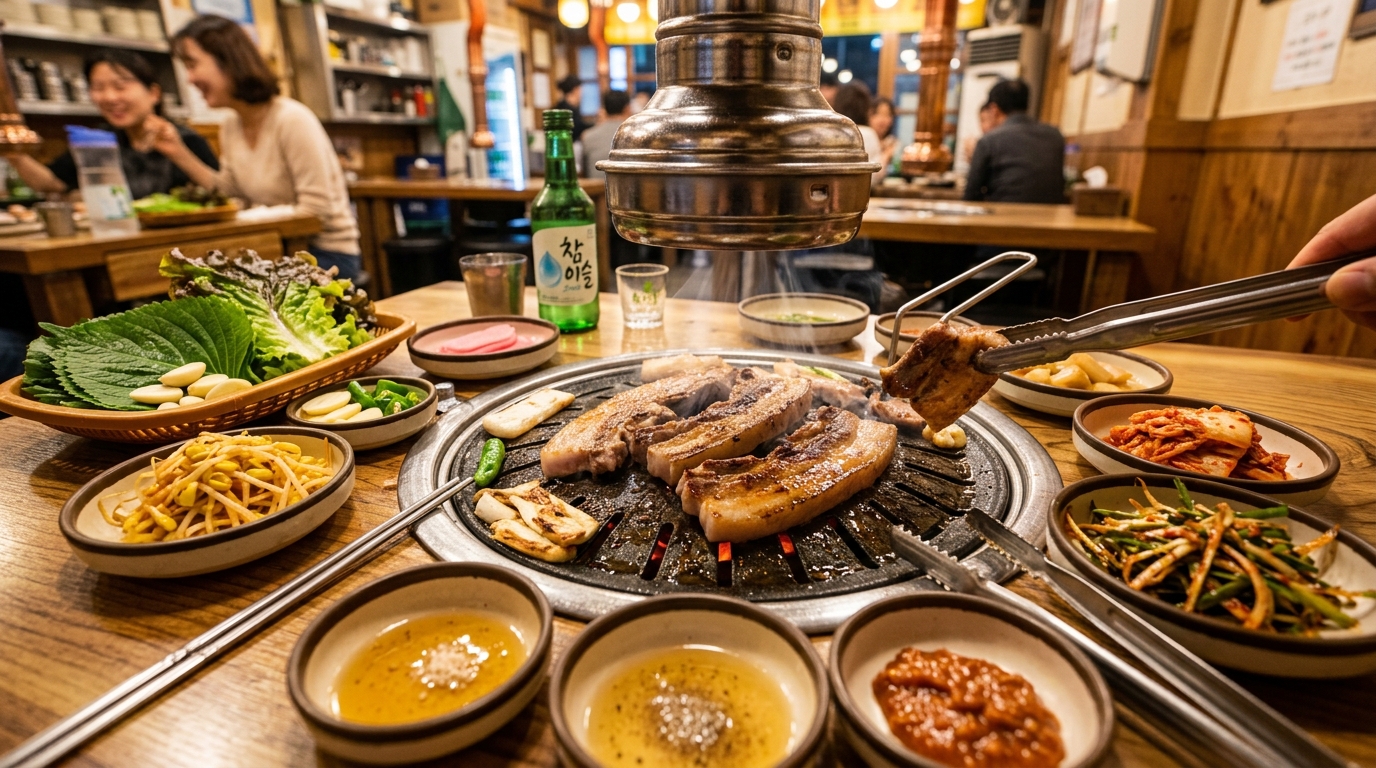
Korean BBQ is one of the more forgiving options for spice-averse diners. Galbi (갈비, beef short ribs) is a BBQ cut not in the table — also grilled plain with no chili. The key is that all sauces arrive on the side, so you set your own level. Bulgogi is marinated in soy, pear, and sesame before cooking, which makes it slightly sweeter and more flavourful than plain grilled cuts.
Kalguksu (칼국수, knife-cut noodles) deserves a special mention: the base broth is mild, but many shops offer an 얼큰 (eolkeun) version that is spicy. The word 얼큰 on a menu means heat — avoid it if you want the plain version.
Jajangmyeon (짜장면, black bean sauce noodles) is worth knowing specifically because it's easy to confuse with jjamppong (짬뽕) — the two are served at the same type of Korean-Chinese restaurant. Jajangmyeon is mild and black; jjamppong is red and very spicy.
Street food to try without worry: gyeran ppang (계란빵, egg bread), hotteok (호떡, sweet filled pancake), and twigim (튀김, Korean tempura) are all neutral in heat and easy to find at outdoor markets.
Hidden Spicy Traps to Watch For
Even if you order something that sounds safe, a few things can catch you off guard:
Kimchi as a banchan side dish. Every Korean meal comes with free banchan (side dishes), and kimchi is almost always included. Traditional kimchi is fermented with gochugaru and can be quite spicy. You don't have to eat it — it's optional — but it will be on your table.
Doenjang jjigae with added chili. Some restaurants add a small amount of gochugaru to their doenjang stew. The base is not spicy, but individual restaurants vary. If you're very sensitive, ask before ordering.
Jjamppong vs. jajangmyeon. Both are Korean-Chinese noodle dishes served at the same type of restaurant. Jajangmyeon (black bean) is mild. Jjamppong (seafood noodle soup) is typically very spicy and red. They look similar on the menu — double-check before ordering.
"Spicy" versions of normally mild dishes. Korean menus often offer an eolkeun (얼큰, spicy) variation of soups that are otherwise mild. Kalguksu, sundubu, and even some samgyetang restaurants do this. Look for the word on the menu.
Instant ramyeon at convenience stores. Most Korean instant noodles are hot by default. If you want something milder, look for Shin Ramyun Black (slightly less spicy than original), or choose non-noodle options.
How to Ask for Less Spice
At sit-down restaurants, these phrases are generally understood at most kitchens. Save them as a screenshot to show staff directly — no pronunciation required.
Most Korean restaurants accommodate spice requests, especially outside peak hours. Staff at tourist-area restaurants often expect this from foreign visitors.
At Korean BBQ restaurants, no phrase is needed: the meat is grilled plain, and all sauces are served separately for you to choose.
What You Need to Know
Korean cuisine is far more diverse than its spicy reputation suggests. The dishes that travel internationally — kimchi, tteokbokki, Korean fried chicken with yangnyeom sauce — tend to be the spicy ones. The mild dishes that Koreans eat daily (seolleongtang, samgyetang, japchae, kimbap) simply don't travel as well on social media. The proportion of non-spicy dishes is larger than most visitors expect before they arrive.
Children and spice-sensitive adults eat Korean food every day in Korea. School cafeterias, hospital food, and elderly home cooking all tend toward the mild end of the spectrum. The food culture accommodates spice sensitivity — it is not a special accommodation for foreigners.
Most Korean BBQ is inherently a safe choice. The grill-it-yourself format means total control over what goes on the meat. Skip the dipping sauces, stick to plain garlic and sesame oil, and you have a completely spice-free meal.
A note for vegetarian and vegan travelers: spice level and hidden animal ingredients are separate issues. Many non-spicy Korean dishes still contain anchovy broth (멸치국물), fish sauce (액젓), or shrimp paste (새우젓) as a base. Doenjang jjigae, seolleongtang, and kalguksu are all non-spicy but contain animal products. Even banchan side dishes labeled as vegetable-based may be seasoned with jeot (salted seafood). If you have dietary restrictions beyond spice, see the vegan and vegetarian guide for how to navigate this separately.
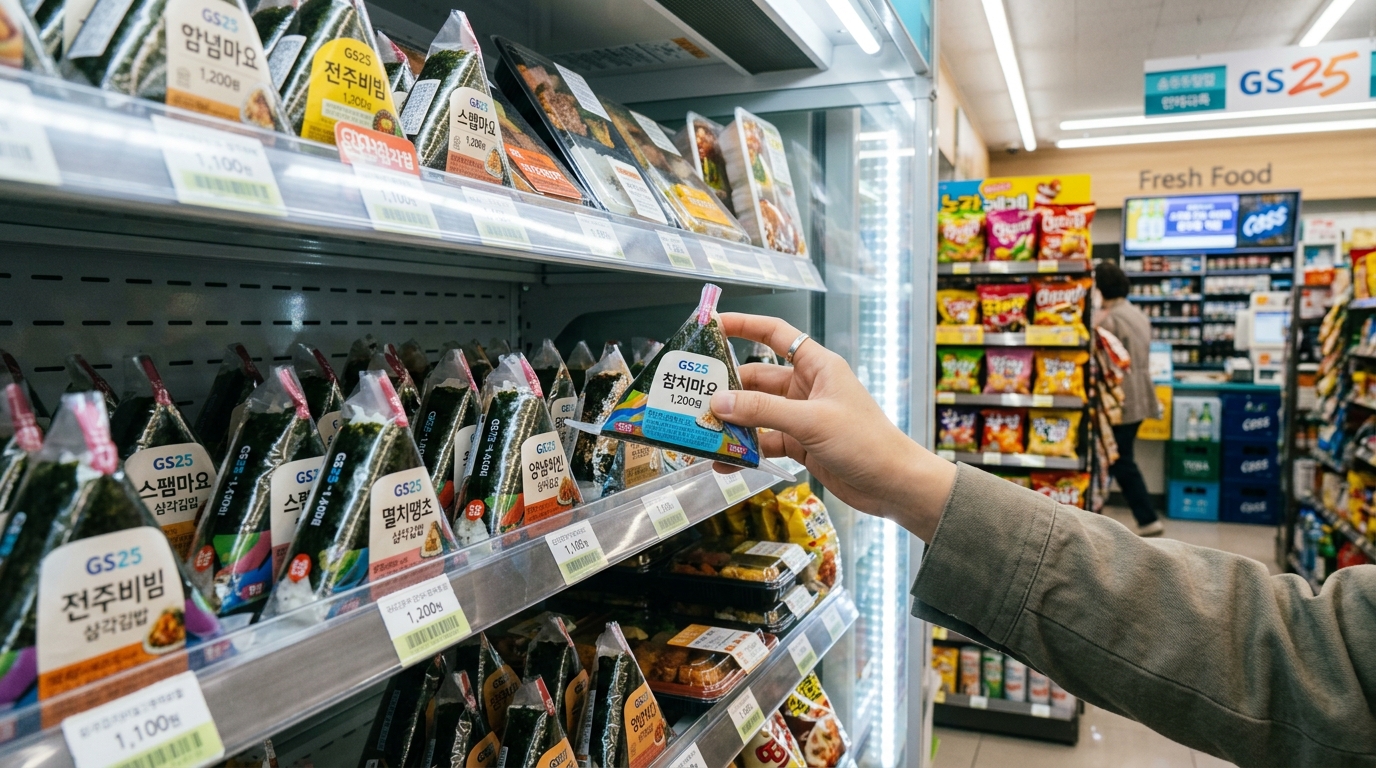
Convenience store food is reliable for mild options. Kimbap triangles (삼각김밥), egg sandwiches, and plain rice balls are all mild and widely available 24 hours at GS25 and CU stores throughout the country.
Practical Tips
- Lead with Korean BBQ. Samgyeopsal or bulgogi is the safest first meal for spice-averse travelers. Grill the meat plain, dip in sesame oil with salt, wrap in lettuce — no heat involved.
- Learn the two phrases. Screenshot "덜 맵게 해주세요" (less spicy) and "안 맵게 해주세요" (not spicy) on your phone before arrival. Show the screen — no pronunciation required.
- At bibimbap restaurants, hold the gochujang. The sauce arrives separately. Ask for it on the side or skip it entirely. The bowl is good without it.
- Order mul naengmyeon, not bibim. At cold noodle restaurants, the mul (water broth) version is mild. The bibim (mixed) version is spicy red. The word mul is the safe one.
- Avoid anything labeled 얼큰 (eolkeun) or 매운 (maeun) on menus. Both mean spicy. If either word appears next to a dish, there is heat in it.
- Kimbap restaurants (김밥천국 style) are a reliable safe option. These casual spots serve kimbap, mandu, japchae, and egg dishes — almost entirely mild — at low prices, and they're common in most neighbourhoods.
- At Korean BBQ, the heat is always optional. The banchan will include kimchi (skip it if needed), but the grilled meat is plain. Sauces come on the side — you decide what goes on.
Frequently Asked Questions
Is kimchi always spicy? Traditional kimchi — the fermented napa cabbage version — is made with gochugaru and is moderately to quite spicy depending on how long it has fermented. However, there are non-spicy kimchi varieties: baek kimchi (백김치, white kimchi) is fermented without chili and is mild. Some modern restaurants also offer this. If you receive kimchi as a side dish and don't want it, you can leave it — it's not obligatory to eat.
Can I eat Korean food if I'm very sensitive to spice? Yes. The spice level table above lists more than a dozen dishes rated 1 (no heat). Korean BBQ requires no special request — the meat is grilled plain and sauces come on the side. At other restaurants, showing "안 맵게 해주세요" (not spicy) on your phone is a recognised request that most kitchens will try to accommodate.
Is tteokbokki (Korean rice cakes) spicy? Standard tteokbokki is spicy — the sauce is gochujang-based and quite hot. It is one of the dishes most likely to surprise unprepared visitors. Some restaurants now offer cream or rose (cream + gochujang) versions that are milder, but traditional tteokbokki should be treated as a spicy dish.
Is Korean fried chicken spicy? It depends on the sauce. Original (plain) fried chicken is not spicy — it's crispy with no coating or a soy-garlic glaze that has no heat. Yangnyeom (양념) sauce is the sweet-spicy red variety. When ordering, ask for "original" or "soy garlic" to stay safe. Most Korean fried chicken chains offer both.
What Korean food is safe for children? Bulgogi, samgyetang, kalbijjim (braised short ribs), kimbap, mandu, gyeran bap (egg rice), hotteok, and gyeran ppang are all child-friendly options with no spice. Korean buffet restaurants (뷔페) also tend to include mild options alongside spicy dishes.
Related Questions
- What Is Banchan? The Free Side Dishes at Korean Restaurants Explained — How the side dish system works, including kimchi, and what to do if you don't want something.
- Vegan and Vegetarian Options in Korea — Navigating dietary restrictions in Korean restaurants, including hidden animal ingredients.
- Do Koreans Speak English? What You Can Actually Get By With — How to communicate at restaurants when there's a language gap.