How to Hike Hallasan in Jeju — Trails, Reservations, and What to Expect
Quick Answer
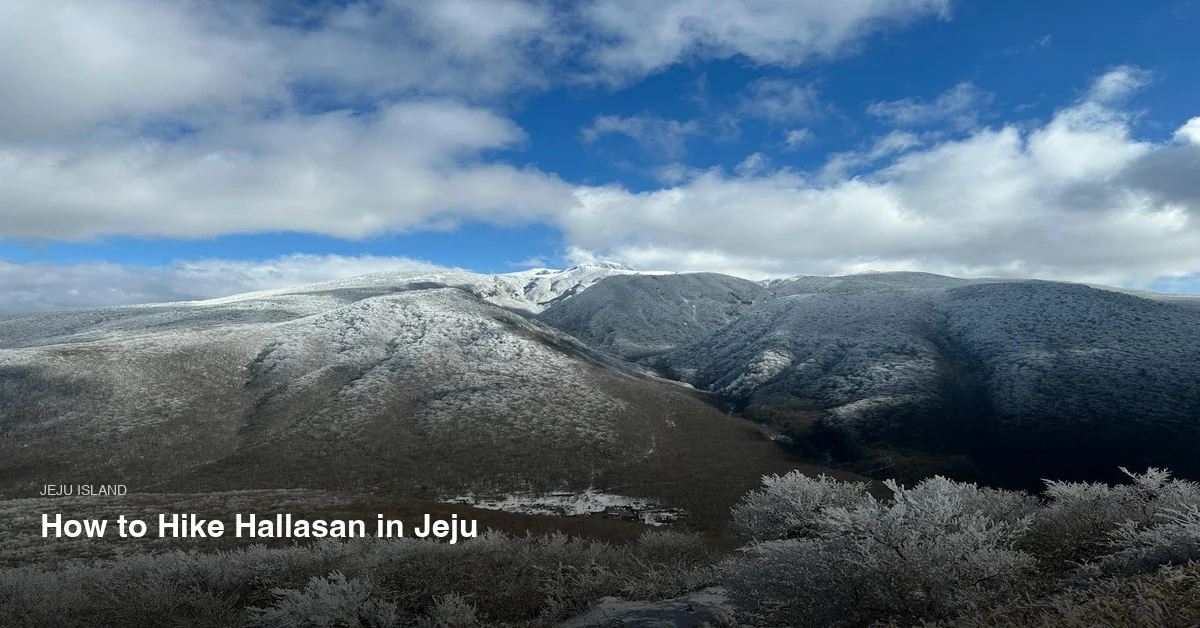
Hallasan (한라산) is South Korea's highest peak at 1,947 m — a dormant volcano at the center of Jeju Island and a UNESCO World Heritage Site. Two trails reach the summit: Seongpanak (성판악, moderate, 9.6 km one-way) and Gwaneumsa (관음사, strenuous, 8.7 km one-way). Both require a free advance reservation at visithalla.jeju.go.kr. Seongpanak takes most fit hikers 7–9 hours round-trip; Gwaneumsa typically runs 8–10 hours. Aim to start by 08:00 to give yourself comfortable margin at the mid-mountain checkpoint.
Trail Overview
Hallasan has five marked trails, but only two reach the summit crater lake, Baengnokdam (백록담). The other three — Eorimok (어리목), Yeongsil (영실), and Donnaeko (돈내코) — climb to the high plateau at approximately 1,700 m and require no reservation.
The choice between the two summit trails comes down to fitness level and what you want from the hike:
| Seongpanak | Gwaneumsa | |
|---|---|---|
| One-way distance | 9.6 km | 8.7 km |
| Round-trip time | 7–9 hours | 8–10 hours |
| Elevation gain | ~1,200 m | ~1,330 m |
| Difficulty | Moderate | Hard / Strenuous |
| Terrain | Forested boardwalk, gentle slope | Steep stairs, suspension bridge, open ridges |
| Best for | First-time Hallasan hikers | Experienced hikers; better descent scenery |
| Daily capacity | 1,000 hikers | 500 hikers |
| Checkpoint shelter | Jindallaebat (7.3 km) | Samgakbong (6 km) |
Most hikers recommend ascending via Seongpanak and descending via Gwaneumsa. Seongpanak's gentler gradient is easier on legs going up; Gwaneumsa's dramatic ridge views, suspension bridge over Tamnagyegok Valley (탐라계곡), and volcanic rock formations are better experienced on the way down when you have more time to look around. The total traverse distance is approximately 18.4 km.
Seongpanak Trail — The Easier Summit Route
Seongpanak is the standard recommendation for first-time Hallasan hikers. The trail starts at approximately 750 m elevation, which means less total elevation gain than Gwaneumsa. The gradient is notably gentler for the first 7 km.
The trail divides into three roughly distinct sections:
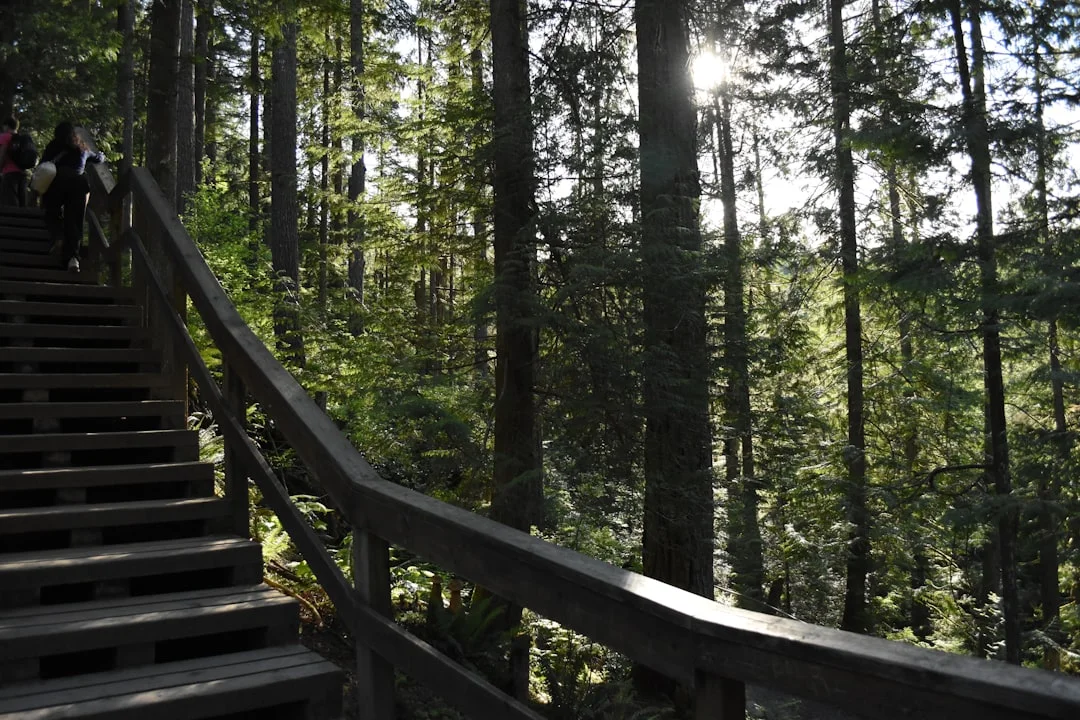
Section 1 (0–3.5 km): Relatively flat, rocky ground transitioning to wooden boardwalk under a dense forest canopy. The forest provides shade but also limits views. Sokbat Shelter (속밭대피소) at approximately 3.5 km has restrooms and benches — the last easy stopping point before the terrain changes.
Section 2 (3.5–7.3 km): The trail steepens, terrain becomes uneven with larger rocks, and the forest begins to thin out. Views open up progressively as you gain elevation.
Section 3 (7.3–9.6 km): The final 2.3 km is where the trail earns its keep. Wooden staircases, rocky scrambles, and a steeper pitch — this stretch takes approximately 1.5 hours for most hikers. Jindallaebat Shelter (진달래밭대피소) at 7.3 km is staffed, has restrooms, and is the last toilet before the summit. It is also the official checkpoint cutoff point: rangers enforce the seasonal cutoff times here.
In spring (mid-May), the azalea bloom around Jindallaebat is dense enough to turn the ridgeline pink — one of the more distinctive Jeju experiences at elevation.
Transport to trailhead: Bus 281 from Jeju City Bus Terminal takes approximately 30–40 minutes; first buses arrive around 06:30. For starts before 06:30, a taxi from Jeju City costs approximately 15,000–20,000 KRW (as of 2026), or approximately 25,000 KRW from the airport.
Gwaneumsa Trail — The Scenic Summit Route
Gwaneumsa is the harder trail — steeper, with more sustained vertical gain, and generally recommended for hikers with prior mountain experience. It starts lower than Seongpanak and climbs more.
The terrain is varied in a way Seongpanak is not: dense forest at the base gives way to open valley sections, a suspension bridge over Tamnagyegok, and then a long stretch of ascending staircases cut into volcanic rock. The final approach to the summit ridge involves some of the sharpest terrain on either trail.
Samgakbong Shelter (삼각봉대피소) at 6 km is the checkpoint shelter for Gwaneumsa — staffed but non-heated. Hikers who have not passed this point by the seasonal cutoff time are asked to turn back. In autumn, the combination of red and yellow foliage, volcanic rock formations, and open ridge views on this trail is hard to match.
Transport to Gwaneumsa trailhead is less straightforward than Seongpanak. Bus 475 requires a transfer — take Bus 281 or 212 to the university area, then transfer to Bus 475 for approximately 10 more minutes to the trailhead. First buses arrive around 06:30. Most hikers planning an early start on Gwaneumsa take a taxi from Jeju City center: approximately 15,000–17,000 KRW (as of 2026), roughly 20–25 minutes.
Non-Summit Trails — Yeongsil and Eorimok
Neither Yeongsil (영실탐방로) nor Eorimok (어리목탐방로) reaches Baengnokdam, but both reach the Witseoreum (윗세오름) plateau at approximately 1,700 m — the high alpine meadow area just below the summit zone. No reservation is required for either.
Yeongsil Trail is 3.7 km one-way and takes approximately 1.5–2.5 hours. It is the shortest trail with the best scenery-to-effort ratio on the mountain. The volcanic rock pillars at Yeongsilgiam (영실기암) are the visual highlight, and in April through June the royal azalea bloom along this section is the densest on the island. Accessible by Bus 240 from Jeju Terminal (approximately 60 minutes), plus a 2.5 km walk from the ticket office to the actual trailhead.
Eorimok Trail is 4.7 km one-way to Witseoreum Shelter and takes approximately 2.5–3 hours. The forest is dense and trail conditions are generally good — a reasonable option for first-time Hallasan visitors who want mountain views without the summit commitment. Eorimok and Yeongsil can be combined as a non-summit traverse across the plateau.
For hikers with limited time or who couldn't secure a summit reservation, Yeongsil in particular offers a high-quality experience in its own right.
How to Book Your Reservation — Step by Step
Reservations for Seongpanak and Gwaneumsa are mandatory and free. The booking system is at visithalla.jeju.go.kr — an English-language version is available.
When reservations open: The 1st business day of each month at 09:00 KST. On that date, you can book for the rest of that month plus the entire following month. For example, if you book on June 1st, slots are available through July 31st.
How fast they fill: For autumn weekends and public holidays, popular dates are gone within minutes of 09:00 KST. Spring weekends are also competitive. Weekday slots are easier to get. If you're targeting a specific weekend in October or November, set a phone alarm for 08:58 KST on the 1st and log in a minute early.
Step-by-step process:
- Go to visithalla.jeju.go.kr and select English.
- Register an account — you need a name and email address. No Korean phone number required for international visitors.
- Select your trail (Seongpanak or Gwaneumsa), date, and number of hikers.
- Complete booking and check your email inbox — and your spam folder. The confirmation email contains your QR code.
- On the day, show your QR code at the trailhead entrance along with a photo ID matching your reservation name. Passport is the most reliable option; check the official site for current ID requirements before your trip.
No-show and cancellation rules: If you cancel at least one day in advance, no penalty. A no-show on the first offense results in a 3-month reservation ban; a second offense is a 1-year ban. Transferring or selling QR codes is also prohibited and results in a 1-year ban. These rules are strictly enforced.
If reservations are sold out for your preferred date, check back regularly — cancellations do open up. As an alternative, Yeongsil and Eorimok remain open without reservations.
What to Bring
Shelters on Hallasan currently do not sell food, water, or ramyeon (instant noodles) — verify before your trip, but plan as though you are entirely self-sufficient once you leave the trailhead. Every shelter — Sokbat, Jindallaebat, Samgakbong — has restrooms and first-aid facilities, but nothing consumable for purchase.
Non-negotiables:
- Water: A minimum of 1.5–2 liters for the ascent alone, more in summer. There are no reliable water sources on the trail. Bring more than you expect to use.
- Food: Enough calories for 7–10 hours of sustained hiking, plus extra. Energy bars, sandwiches, trail mix, and whatever keeps you moving.
- Hiking boots: Proper ankle support is needed for volcanic rock terrain and uneven staircases. Sneakers are not suitable.
- Rain jacket and layers: Summit temperatures are approximately 10°C cooler than the Jeju coast, and wind chill adds to that. Even on a warm coastal morning, a waterproof jacket and at least one insulating layer are necessary. Weather changes quickly at elevation.
- QR code + photo ID: Required at the trailhead entrance. Passport is the safest option — verify current requirements at visithalla.jeju.go.kr before your trip.
- Trash bag: All waste must be carried out. There are no bins on the trail.
Winter additions (approximately November through March): Crampons (아이젠) are strongly recommended when snow and ice cover the upper sections, and conditions on some days make them effectively required to safely pass certain stretches. Rental is not available; purchase at the trailhead for approximately 8,000–25,000 KRW (as of 2026). Also bring thick waterproof layers, gloves, hat, and a neck warmer — summit temperatures can reach -15°C to -5°C in midwinter.
Optional but useful: Trekking poles (especially for the Gwaneumsa descent), gaiters for mud or snow, and spare socks.
Practical Tips
-
Aim to start by 08:00 on Seongpanak, by 07:00 on Gwaneumsa. The checkpoint cutoff is roughly noon in winter and 12:30–13:00 in summer. Most hikers who don't reach the summit do so not because they're unfit, but because they started too late. A 06:00–07:00 start gives comfortable margin for most fitness levels.
-
Take a taxi for early-morning starts. Buses to both trailheads don't arrive until approximately 06:30. If you're targeting a 05:30–06:00 start — which is a sound strategy, especially in autumn — a taxi from Jeju City is the only practical option. Budget approximately 15,000–25,000 KRW (as of 2026) depending on the trailhead.
-
Book on the 1st of the previous month at exactly 09:00 KST. For autumn weekends especially, this is not a soft recommendation — slots are gone within minutes. Log in before 09:00, have your details ready.
-
If you're doing the traverse, plan your return transport in advance. You finish at a different trailhead. Bus 475 connects Gwaneumsa trailhead back to Jeju City, but buses are infrequent — check the schedule before you go. A pre-arranged taxi between trailheads costs approximately 15,000 KRW (as of 2026).
-
Pack more food than you think you'll need. The 7–10 hour effort burns through supplies quickly. The shelters sell nothing — some hikers run out of energy on the descent for exactly this reason.
-
Check the official website the morning of your hike. All trails can close without advance notice due to typhoons, heavy rain, or snowfall. Call 064-713-9953 or check visithalla.jeju.go.kr if conditions look uncertain.
-
At the summit, expect a long queue for the iconic stone marker. The inscribed summit stone can have a photo queue of 45–60 minutes or more on busy autumn weekends — lines of 60–70 m are common. Additional wooden markers are available nearby with shorter waits. Budget this into your summit time, since you still need to begin your descent before the departure deadline (13:30–14:30 depending on season).
Frequently Asked Questions
Do I need a reservation to hike Hallasan? Yes — for the two summit trails (Seongpanak and Gwaneumsa), a free advance reservation through visithalla.jeju.go.kr is mandatory. You need to show a QR code and a photo ID matching the reservation name at the trailhead; passport is the safest option. The non-summit trails — Eorimok, Yeongsil, and Donnaeko — do not require reservations and can be hiked without booking in advance.
How difficult is the Hallasan hike? Seongpanak is rated moderate and is manageable for hikers with basic fitness — the slope is gradual for most of the route with a steeper final stretch. Gwaneumsa is rated strenuous, with sustained steep staircases and rougher terrain throughout. Seongpanak takes most hikers 7–9 hours round-trip; Gwaneumsa typically runs 8–10 hours. The descent is often harder on the knees than the ascent, particularly on Gwaneumsa.
What time should I start hiking to reach the summit? For Seongpanak, aiming to start by 08:00 works for most hikers; by 07:00 if you want comfortable margin. For Gwaneumsa, aim for 07:00 or earlier. The checkpoint cutoff is approximately noon in winter and around 12:30–13:00 in summer — hikers who haven't passed by then are turned back. Starting after 09:00 on Seongpanak makes the checkpoint timing tight.
Which trail is better — Seongpanak or Gwaneumsa? For first-timers: Seongpanak — it's a more gradual climb and easier to manage physically. For experienced hikers: Gwaneumsa offers more dramatic scenery throughout. The recommended approach for most hikers is to ascend via Seongpanak and descend via Gwaneumsa — you get the easier gradient on the way up when you need it most, and the better views on the way down when you can take them in.
Is it free to hike Hallasan? Yes. There is no entrance fee, and the reservation is also free. The only optional cost is the summit completion certificate — 1,000 KRW (as of 2026) — which you can purchase by uploading a GPS-tagged photo at the summit and printing at a trailhead kiosk after your descent.
Can I buy food or water at the shelters? Shelters on Hallasan currently do not sell food, water, or ramyeon — verify before your trip, but plan accordingly. The shelters have restrooms and first-aid equipment, but nothing for purchase. Bring all food and a minimum of 1.5–2 liters of water from the trailhead — more in summer.
Can I hike Hallasan in winter? Yes, but conditions are significantly more demanding. Crampons are strongly recommended from approximately November through March; on icy days they are effectively required to safely navigate certain sections. Summit temperatures can drop to -15°C. Daylight is limited and the checkpoint cutoff is earlier (noon). Some trail sections close without notice during heavy snow. Check the official website or call the park (064-713-9953) on the morning of your hike.
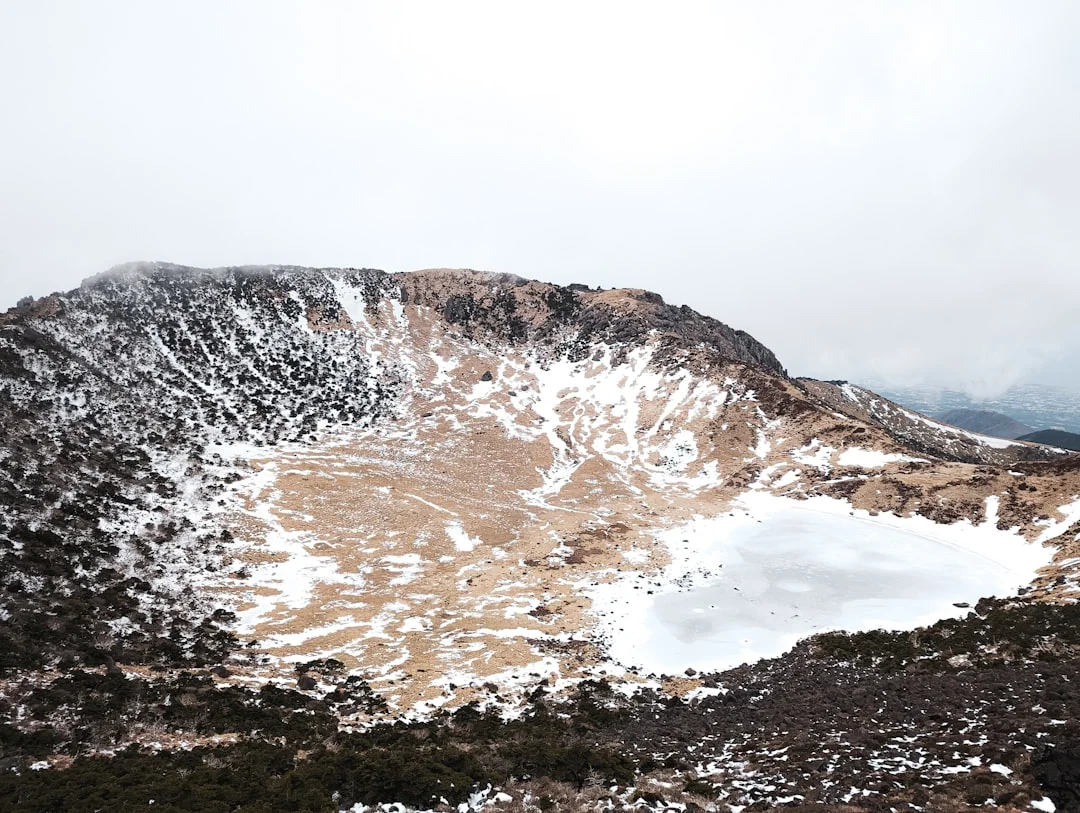
What is Baengnokdam crater lake like at the summit? Baengnokdam (백록담 — "White Deer Lake") is a seasonal volcanic crater lake at the 1,947 m summit. In wet seasons it appears as a blue-green pool amid mossy volcanic rock; in dry periods or winter it may be frozen or nearly empty. The summit area has a wooden boardwalk around the crater rim, a ranger hut, and the iconic inscribed stone marker. On clear days the view extends across the entire island. In cloud or fog, the crater itself may not be visible — accept this as part of the experience and not a reason to rush.