Best Things to Do in Busan for First-Time Visitors (2026 Guide)
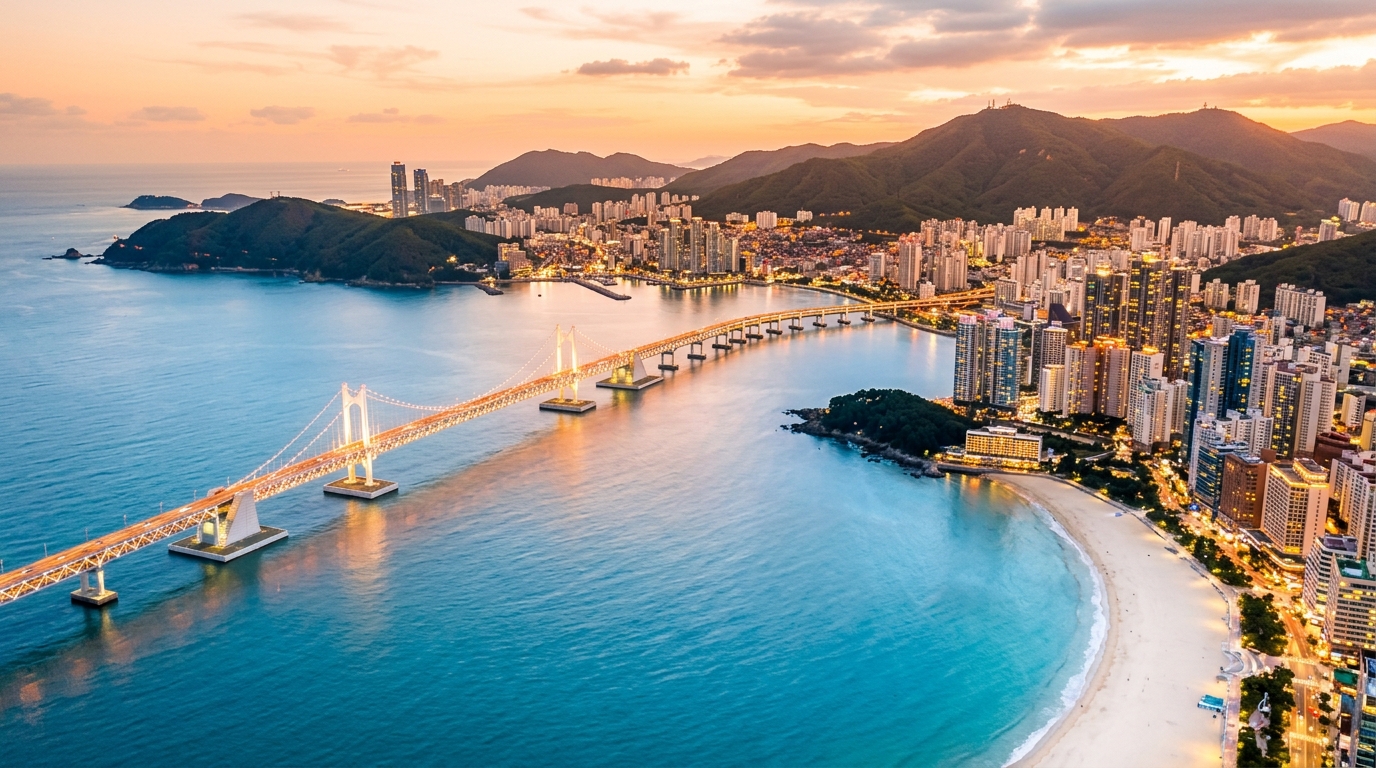
Busan is the kind of city that surprises most first-time visitors. They expect a beach town and find instead a place with a coastline, mountain temples, a sprawling fish market, colorful hillside villages, and some of the best seafood in Korea. Two to three days is the realistic minimum to cover the highlights. This guide focuses on what's actually worth your time — organized so you can build an itinerary without doubling back across the city.
Quick Answer
The must-do list for first-time visitors in Busan: Haeundae Beach for the classic Korea beach experience, Gamcheon Culture Village for the scenic hillside neighborhood, Jagalchi Fish Market for fresh seafood at the source, Haedong Yonggungsa Temple for a Buddhist temple built directly on the sea cliffs, and Gwangalli Beach at night for the Gwangan Bridge view. These five cover the range of what makes Busan different from Seoul and are all accessible by metro or short taxi ride.
The Full Answer
Beaches
Haeundae Beach Busan's most famous beach is 1.8km of white sand backed by a modern skyline. In summer (July–August) it's packed — upward of 100,000 visitors on a peak weekend day. The rest of the year it's far more manageable and genuinely pleasant. The beach road has a good range of cafes, restaurants, and convenience stores. Nearby: Dongbaekseom Island (a 20-minute walk along the coast) and Dalmaji Hill (10 minutes by taxi, known for its sea views and art galleries).
Metro: Haeundae Station (Line 2)
Gwangalli Beach Smaller than Haeundae (1.4km) and less international in crowd composition. The defining feature is the view of Gwangan Bridge at night — the suspension bridge is lit up in color across the water and visible from the entire beach road. The area behind the beach (Millak neighborhood) has a dense cluster of independent seafood restaurants, cafes with beach views, and bars. Worth visiting specifically at dusk or in the evening to catch the bridge lighting.
Metro: Gwangan Station or Millak Station (Line 2)

Songdo Beach and Songdo Cable Car Less visited than Haeundae or Gwangalli, Songdo is one of Korea's oldest public beaches and has a different character — quieter, more local, with an oceanfront promenade. The Songdo Sky Capsule cable car runs along the coastline above the water, offering views back toward the city. Tickets for the cable car are around 15,000 won round-trip. A good option if beach crowds are a concern or if you're already in the western part of the city.
Bus: From Jagalchi Station, bus routes connect to Songdo in about 15–20 minutes.
Culture and History
Gamcheon Culture Village A hillside neighborhood of narrow alleys, painted staircases, and small murals, built originally by refugees after the Korean War. The colorful houses cascading down toward the sea have made it one of Busan's most photographed spots. It's a genuine residential area — residents still live here — so quiet hours and respectful behavior in the lanes are expected. The entry map (available at the visitor center) guides you through the main murals and viewpoints. Budget 1.5–2 hours. Arrive before 10am or after 3pm to avoid tour group congestion.
Metro: Toseong Station (Line 1), then uphill walk (~15 minutes) or short taxi ride.
Haedong Yonggungsa Temple A Buddhist temple complex built on rocky sea cliffs in the northeastern part of Busan. Unlike most Korean temples, which sit in mountain interiors, Yonggungsa faces the East Sea directly — stone lanterns, pagodas, and the main hall are all positioned against a backdrop of ocean. Entry is free. The site is popular and can be crowded on weekends; early morning or weekday visits are significantly quieter. The walk from the bus stop takes about 10–15 minutes downhill to the temple (uphill on the return).
Transport: Bus from Haeundae area takes about 30–40 minutes. No direct metro access — taxi from Haeundae is approximately 20 minutes and 15,000–20,000 won.
Beomeosa Temple A large Buddhist temple complex at the base of Geumjeongsan mountain, in the northern part of Busan. Founded in 678 CE, it's one of the major historical temples in the region. The approach through a forested path sets it apart from more accessible urban temples. Entry is free. Hikers can continue up the mountain from the temple grounds to Geumjeong Fortress. Allow 2–3 hours including the walk from the metro station.
Metro: Beomeosa Station (Line 1), then shuttle bus or 20-minute walk to the temple.
Markets and Food
Jagalchi Fish Market Korea's largest seafood market, spread across a modern building and open-air stalls along the waterfront near Nampo. The ground floor of the indoor building has vendors selling live fish, shellfish, sea cucumber, and every variety of seafood available in Korean waters. Buy directly from a vendor, and they can prepare it (raw, grilled, or steamed) for a fee. The experience is best in the morning when the selection is at its peak. Weekdays are less crowded than weekends.
Metro: Jagalchi Station (Line 1)
Gukje Market (국제시장) A sprawling traditional market a short walk from Jagalchi. Originally established for refugees in the 1950s, it sells everything from clothing and tools to dried goods and street food. The adjacent Bupyeong Kkangtong Market is worth walking through for the range of prepared foods and the general atmosphere. Neither market is a tourist attraction in the polished sense — they're working markets where locals shop, which is partly why they're interesting.
Metro: Jagalchi Station (Line 1) or Nampo Station (Line 1)
BIFF Square The outdoor venue of the Busan International Film Festival, marked by celebrity handprints embedded in the pavement (similar to Hollywood's Walk of Fame). Lined with street food stalls — ssiat hotteok (seed-filled sweet pancake) is the local specialty here and worth trying. The square connects the Nampo neighborhood to the cinema district and is lively in the evenings year-round, not just during the October film festival.
Metro: Nampo Station (Line 1)
Nature and Scenery
Taejongdae A natural park on the southern tip of Yeongdo Island with dramatic sea cliffs, lighthouse views, and forested walking paths. The main viewpoint looks out over the Korea Strait toward Japan on clear days. A tourist train (the Danubi) loops through the park for those who don't want to walk the full circuit (approximately 4km). Entry to the park is free; the train is around 3,000 won. Getting there requires a bus from Nampo or Jagalchi — plan for a half-day visit.
Transport: Bus from Nampo Station area, approximately 30–40 minutes.

Oryukdo Skywalk A glass-bottomed walkway extending over sea cliffs on the southeastern coast of Busan, near where the city's coastline ends. The view down through the glass floor to the rocks below is the draw, though the experience itself is short (the walkway is not large). Entry is free. Combine with a walk along the nearby Igidae coastal trail for a longer half-day outing. Getting there requires a bus or taxi from Haeundae or Gwangalli.
Dongbaekseom Island A small wooded island connected to the Haeundae coast by a narrow isthmus, easily reached on foot from Haeundae Beach (about 20 minutes). The walking path around the island takes 30–40 minutes and offers views back toward the Haeundae skyline and out toward the sea. The APEC House — used for the 2005 APEC summit — is located here and open for visitors. Free to enter.
Urban and Modern
Shinsegae Centum City The largest department store in the world by floor area, located in the Haeundae district near BEXCO. Beyond shopping, it has a full-size ice skating rink, a spa (Spa Land), a cinema, and an extensive food hall. The spa alone (around 18,000 won on weekdays) is worth knowing about if you want a jjimjilbang-style experience in a newer facility. The building is hard to miss — visible from Centum City Station.
Metro: Centum City Station (Line 2)
Busan Cinema Center The main venue of the Busan International Film Festival, located in Centum City. The cantilevered roof structure is one of the most architecturally striking buildings in Korea — the LED lighting display on the underside of the roof runs after dark and is worth seeing even if you're not attending a screening. The surrounding outdoor plaza is a popular gathering spot in the evenings.
Metro: Centum City Station (Line 2)
Suggested Order by Area
Busan's attractions are spread across the city. Planning by area saves significant commuting time.
Day 1 — Nampo side (western Busan): Jagalchi Fish Market (morning) → Gukje Market → BIFF Square → Gamcheon Culture Village (afternoon)
Day 2 — Haeundae side (eastern Busan): Haedong Yonggungsa Temple (morning) → Haeundae Beach → Shinsegae Centum City / Busan Cinema Center → Gwangalli at night
Day 3 (if time allows): Beomeosa Temple or Taejongdae, depending on whether you prefer mountains or coastline
What You Need to Know
Busan is not walkable between major attractions. The metro is reliable and cheap (around 1,500–2,000 won per ride), but distances between Nampo, Haeundae, and Beomeosa are significant. Building your day around one geographic area saves time and frustration.
Haedong Yonggungsa requires extra transport. It is not directly accessible by metro — plan for a bus or taxi from Haeundae. Many visitors combine it with a morning in Haeundae and find the 30–40 minute bus ride reasonable.
Gamcheon is busiest 10am–3pm. If you have flexibility, arriving before 10am or after 3pm noticeably reduces crowds in the narrow alleys. The village looks good in both morning and afternoon light.
Jagalchi is best on weekday mornings. The selection is largest and freshest early in the day. Weekend afternoons bring tour groups and compressed aisle space.
Free entry is the norm for most major sites. Haedong Yonggungsa, Gamcheon Culture Village, Taejongdae park, Dongbaekseom, and Beomeosa are all free to enter. Budget your spending for food and transport rather than entry fees — Busan is significantly less expensive than Seoul for activities.
Practical Tips
- Start at Jagalchi early, then walk to Gukje Market and BIFF Square before the afternoon crowds. The Nampo area is compact enough to cover on foot in 3–4 hours.
- Take the metro to Haeundae, then taxi to Haedong Yonggungsa. The taxi from Haeundae Station takes about 20 minutes and costs around 15,000–18,000 won — easier than the bus for a first visit.
- Visit Gwangalli specifically at night. The beach itself is fine during the day, but the Gwangan Bridge view only comes into its own after dark. Allow 1–2 hours for dinner in the Millak area and a walk along the beach road.
- Buy the Gamcheon map at the visitor center (free). The alleys are genuinely confusing without it, and the map marks the key murals and viewpoints.
- The Songdo Cable Car books out on weekends. If this is on your list, reserve online in advance or visit on a weekday morning.
- T-money card covers all Busan Metro lines and city buses. No separate card needed — the same card you use in Seoul works throughout Busan.
- For Taejongdae, allow a half-day. It's further from the city center than it looks on the map, and the park itself warrants at least 2 hours once you're there.
Frequently Asked Questions
How many days do you need in Busan? Two full days cover the main highlights — one day on the Nampo/western side (Jagalchi, Gukje, BIFF Square, Gamcheon) and one on the Haeundae/eastern side (Haedong Yonggungsa, Haeundae Beach, Gwangalli). A third day allows for Beomeosa, Taejongdae, or a slower pace with more time for food and cafes.
Is Busan better than Seoul for tourists? They offer different experiences. Seoul has more museums, shopping, and cultural institutions. Busan has coastline, mountains closer to the city, and a more compact feel. Most visitors to Korea find that seeing both gives a more complete picture. Busan is generally considered easier to navigate and more relaxed in pace.
What is Busan most famous for? Internationally, Haeundae Beach, Jagalchi Fish Market, and the Busan International Film Festival are the most recognized. Within Korea, Busan is known for its seafood (particularly raw fish, pork soup rice — dwaeji gukbap — and noodles) and its strong local identity distinct from Seoul.
Is it safe to eat at Jagalchi Fish Market? Yes. The market is a functioning wholesale and retail market where locals buy seafood regularly. The indoor building has vendors on the ground floor and restaurants on the upper floors. Choose a vendor, select your seafood, and they'll prepare it. The standard preparation is hoe (raw sliced fish) served with ssamjang and vegetables. Prices are generally per 100g — confirm before ordering.
Can you do Busan as a day trip from Seoul? Technically yes, but it leaves very little time in the city. The KTX takes about 2 hours 15 minutes each way — a day trip results in roughly 5–6 hours in Busan including travel. That's enough for one area (Haeundae or Nampo, not both). Two nights is the recommended minimum for a proper visit.
Related Questions
- Best Area to Stay in Busan for First-Time Visitors — Where to base yourself depending on which attractions you're prioritizing.
- How to Get from Seoul to Busan — KTX, Flight, and Bus Compared — Getting to Busan from Seoul, with door-to-door time comparisons.
- How Much Does a Week in Korea Cost for a Budget Traveler? — Budgeting for Busan including accommodation, food, and transport.