How to Hike Hallasan — Trail Guide for First-Time Visitors
Updated for May 2026
How to Hike Hallasan — Trail Guide for First-Time Visitors
Quick Answer
Hallasan (한라산), South Korea's highest peak at 1,947m, sits at the center of Jeju Island and is open year-round at no entry fee. Five official trails exist, but only two — Seongpanak (성판악) and Gwaneumsa (관음사) — reach the summit crater lake. Both summit trails require an advance online reservation at visithalla.jeju.go.kr, which is free. For most first-time visitors attempting the summit, Seongpanak is the right choice: gentler gradient, better signage, and wooden boardwalks covering most of the climb.
The Full Answer
Hallasan is a dormant shield volcano and a UNESCO World Natural Heritage site — the same geological forces that shaped Jeju Island built its central peak over millions of years. At the summit sits Baengnokdam (백록담), a crater lake that fills with snow in winter and reflects cloud cover in summer. It is one of the more unusual landscapes you will encounter anywhere in Korea.
What draws people is not just the summit. The trails pass through dense Korean fir (구상나무) forest, volcanic rock formations, and high alpine plateaus with views that extend across the island to the coast. The hike is physically demanding but does not require any technical mountaineering skill — just solid fitness, the right footwear, and an early start.
The reservation system, introduced to protect the mountain's ecosystem, limits the number of hikers per day on the summit trails. Seongpanak accepts 1,000 hikers per day; Gwaneumsa accepts 500. Both fill up, particularly on autumn weekends, so planning ahead is not optional — it is the entire framework around which your hiking day is built.
The Five Trails — Which One to Choose
Seongpanak (성판악) — Best for First-Timers Attempting the Summit
Seongpanak is 9.6 km one way, with an elevation gain of approximately 1,158m from the trailhead at around 750m up to the 1,950m summit. Expect roughly 4 hours 30 minutes going up and 3–4 hours on the return — a full day's commitment at approximately 9 hours round trip.
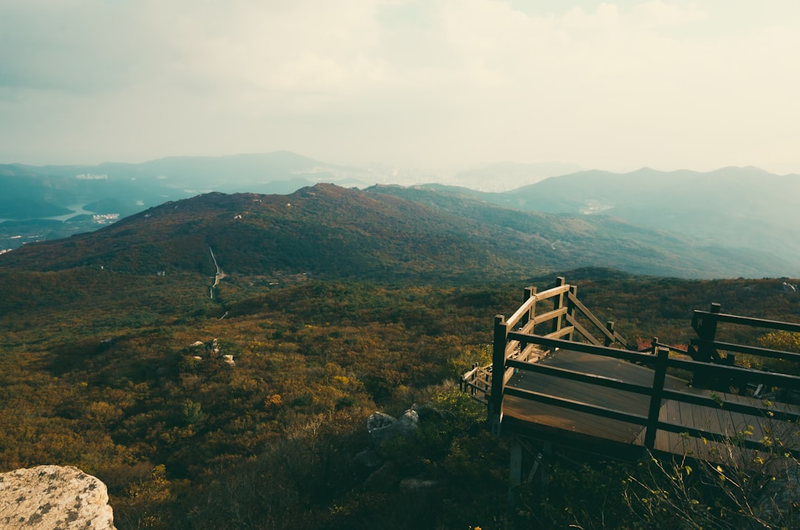
The character of this trail is what makes it manageable. For the first 7.3 km, up to Jindallaebat Shelter (진달래밭대피소), the gradient is steady rather than steep — wooden boardwalks and staircases through dense forest, well-signed, with restrooms at Sokbat Shelter (속밭대피소) and again at Jindallaebat. The final 2.3 km from Jindallaebat to the summit crater rim is genuinely steep and rocky, but most hikers who reach Jindallaebat in reasonable time find they can manage it.
Jindallaebat at 7.3 km is the critical checkpoint. Rangers enforce a seasonal cutoff time — if you arrive after the cutoff, you will be turned back regardless of conditions. The cutoff is 13:00 in summer (May–August), 12:30 in spring/autumn (March–April, September–October), and 11:30–12:00 in winter (November–February). Starting before 07:00 is the practical approach for most hikers; in winter, before 06:00 is safer.
Capacity: 1,000 hikers per day (800 in the 05:00–08:00 slot, 200 in the 08:01–11:30 slot).
Gwaneumsa (관음사) — For Experienced Hikers
Gwaneumsa is 8.7 km one way but gains approximately 1,565m in elevation — significantly more than Seongpanak. The terrain is steeper, rockier, and more than 50% unshaded in summer, which makes it significantly hotter and harder. Round trip is approximately 8.5–10 hours. The daily capacity is lower at 500 hikers, and the Slot 2 allocation (100 hikers for the 08:01–11:30 window) is particularly limited — Gwaneumsa reservations fill faster than Seongpanak.
The trail passes carved green valleys and volcanic rock formations that are genuinely dramatic, particularly in the mid-section. The descent on volcanic rock can be slick. This trail is better suited to experienced hikers.
One practical option for experienced hikers: ascend Seongpanak and descend Gwaneumsa (or the reverse) as a 17.9 km through-hike. This requires only a single reservation — on whichever trail you enter — because rangers only check at the entry point, not the descent.
Eorimok (어리목) — Best Non-Summit Option for Beginners
If the summit is not the goal, Eorimok is the most accessible trail. The trailhead sits at around 970m, which reduces the total elevation gain to approximately 680m to reach Witseoreum shelter (윗세오름대피소) at about 1,700m. The one-way distance is approximately 4.7 km, and the return takes around 5–6 hours total at a relaxed pace.
No reservation is required. The trail starts gently through dense forest and opens onto the Witseoreum alpine plateau with panoramic views across the island. The best combination: Eorimok up, Yeongsil (영실) down as a scenic traverse — though this requires a taxi waiting at the Yeongsil management office, since the two trailheads are on different sides of the plateau.
Yeongsil (영실) — Most Dramatic Non-Summit Scenery
Yeongsil starts at the highest trailhead elevation of any of the five trails, approximately 1,280m. The one-way distance to Witseoreum is roughly 3.7–5.8 km depending on the starting point, and the elevation gain is only around 420m. At 1.5–2.5 hours one way, it is the shortest route to high-altitude views and is manageable for children with reasonable fitness.
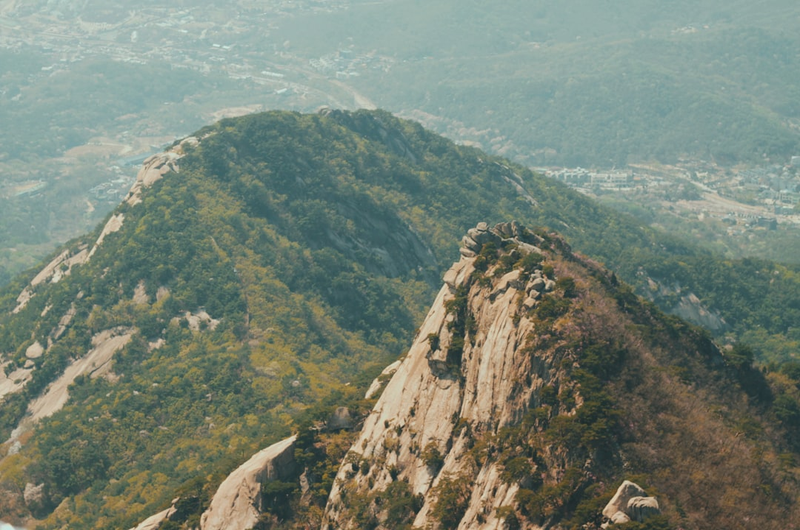
The trail passes through volcanic rock columns known as Yeongsil Rocks (영실기암) — a dramatic stretch of spires and ridgeline that is unlike anything else on Jeju. No reservation required.
One logistical note: the bus stop is 2.5 km from the Yeongsil management office — a 30-plus minute walk. A taxi is the practical way to reach the trailhead.
Donnaeko (돈내코) — Least Crowded, Most Demanding Non-Summit
Donnaeko sits on the southern side of Hallasan above Seogwipo (서귀포). The trail is 7.8 km one way to the Witseoreum junction, with an elevation gain of approximately 1,105m — the steepest among the three non-summit options. Expect around 4 hours one way and 7–7.5 hours for the full out-and-back. No reservation required.
This trail is best suited to hikers who want solitude and a rigorous workout without the summit permit system.
How to Make a Reservation
Reservations are required for the summit sections of Seongpanak and Gwaneumsa — specifically, the portions of these trails that lead up to the Baengnokdam crater. The three other trails — Eorimok, Yeongsil, and Donnaeko — have no reservation requirement.
Where to book: visithalla.jeju.go.kr
Phone: 064-713-9953
Cost: Free
Reservations open at 09:00 KST on the first business day of the month prior to your hiking month. In practice: if you want to hike in October, the booking window opens on September 1 (or September 2 if September 1 falls on a weekend or public holiday). Autumn weekends can be fully booked within hours of opening. Autumn (October–November) is peak season — be ready at the system the moment it opens.
Time slots (as of December 2025): - Slot 1: 05:00–08:00 - Slot 2: 08:01–11:30
Slot 1 is the right choice for almost all hikers. If you book Slot 2 in winter, you may not have enough time to reach Jindallaebat shelter before the cutoff — the math does not work. Slot 1 in summer gives you the best chance of summit conditions before afternoon clouds close in.
One reservation covers up to 4 hikers. After booking, a QR code is sent to your email. At the trailhead, each person in your group must present the QR code and their own original passport (or a clear photo or copy) — identity is verified individually, not just for the lead booker.
For visitors without a Korean phone number: The site offers an email verification option — use this rather than the Kakao or Naver account login. Check your spam folder; the verification email sometimes gets filtered.
No-show penalties: If you cannot make your reservation, cancel at least one day in advance on the website. Missing a reservation without canceling results in a 3-month booking ban for the first offense and a 1-year ban for the second. Plans change — cancel if needed.
Use only the QR code issued for your own reservation. Codes are non-transferable.
Getting to the Trailheads from Jeju City
Seongpanak (성판악):
Bus 281 or 181 from Jeju Intercity Bus Terminal (제주시외버스터미널) — approximately 40 minutes, fare approximately ₩1,200–1,400 (as of 2026). Buses run every 10–15 minutes. The first buses reach Seongpanak around 06:30 AM, which may be too late for hikers with a Slot 1 reservation aiming for the 05:00–06:00 entry window. For early starts, a taxi from Jeju City center takes 30–40 minutes and costs approximately ₩15,000–25,000 (as of 2026). Book the night before through your hotel or the Kakao T app.
Gwaneumsa (관음사):
Bus 475 from Jeju City, running approximately hourly. Taxi: approximately 20–25 minutes, approximately ₩15,000–20,000 (as of 2026).
Eorimok (어리목):
Bus 240 from Jeju City bus terminal — approximately 40–60 minutes, with a 15-minute walk from the bus stop to the trailhead entrance. Taxi: approximately 30–40 minutes, approximately ₩20,000–25,000 (as of 2026).
Yeongsil (영실):
Bus 240 is technically an option, but the bus stop is 2.5 km from the management office. Taxi is strongly recommended — approximately 45–60 minutes from Jeju City, approximately ₩30,000 (as of 2026).
Donnaeko (돈내코):
Closer to Seogwipo than Jeju City. Bus 611 or 612 from Seogwipo bus terminal, with a 15-minute walk from the stop to the visitor centre entrance. Taxi from Jeju City: approximately ₩50,000 (as of 2026). From Seogwipo: approximately ₩10,000–15,000 (as of 2026).
Seasonal Conditions
Autumn (October–November): Peak season. The Korean fir forest turns red and gold (단풍), the air is crisp, and visibility from the summit is typically excellent. Book reservations as early as the system allows for autumn weekends.
Spring (March–May): Cherry blossoms and azaleas along the trails, mild temperatures, and fewer crowds than autumn. A strong alternative to peak season.
Summer (June–August): The hottest and most humid window. Gwaneumsa trail is more than 50% unshaded, making it particularly demanding. Bring 3–4 liters of water for summit hikes. Start as early as possible — afternoon thunderstorms are common in late summer.
Winter (December–February): Snow covers the upper trails from approximately late November through March. Crampons (아이젠) are strongly recommended during icy conditions. Crampons can be rented at the Seongpanak trailhead for a small fee — check availability before relying on it. Daylight hours are short — trail access opens at 06:00 in winter, and the descent deadline is 13:30. The summit in snow is a genuinely different experience from the other seasons.
What to Pack
Footwear: Sturdy hiking boots with ankle support and good grip are non-negotiable. Volcanic rock is rough, uneven, and slippery when wet. Sneakers are not sufficient. In winter: waterproof boots plus crampons.
Clothing: Temperatures at the summit are significantly colder than at sea level, even in summer. Layered clothing and a waterproof or windproof outer jacket are necessary regardless of the weather forecast at the coast. Bring a hat, sunglasses, and long pants — UV exposure at altitude is higher than most visitors expect.
Water: A minimum of 1.5–2 liters for non-summit trails; 2–3 liters for Seongpanak; 3–4 liters for Gwaneumsa in summer. There is no potable water for sale anywhere on the trails. Some water taps exist near shelters but are unreliable — do not plan around them. Bring all water from the start.
Food: No food is sold on the summit routes — bring your own food and water from the start. Trailhead cafes at Seongpanak and Gwaneumsa sell kimbap (김밥), ramyeon, and snacks before you start. A practical approach: buy supplies in Jeju City the night before, pack kimbap or energy bars, and carry hot water in a vacuum flask if you want to eat cup noodles at a shelter.
Other essentials: An offline map or downloaded trail map (signal can be patchy at elevation), your original passport or a clear photo or copy, your reservation QR code as a screenshot on your phone, and a small trash bag — all waste must be carried out.
What You Need to Know
-
No food is sold on the summit routes. Bring your own food and water — there is no fallback once you are on the trail.
-
Discarding ramyeon broth on the trail is strictly prohibited. Cup noodles are allowed at designated shelters using your own vacuum flask, but all leftover broth must be carried out — pouring it on the ground is not permitted under any circumstances. Violations are subject to a fine of up to ₩200,000 (as of 2026). Bring a sealed container for liquid waste if you plan to cook on the trail.
-
Cutoff times are enforced — no exceptions. Rangers at Jindallaebat (Seongpanak) and Samgakbong (삼각봉대피소, Gwaneumsa) will turn back any hiker who arrives after the seasonal cutoff, regardless of how close to the summit you are. Treat the cutoff times as firm deadlines: 13:00 in summer, 12:30 in spring/autumn, 11:30–12:00 in winter.
-
Camping is strictly prohibited within Hallasan National Park. There is no overnight option on any trail.
-
Weather closures happen without warning. Heavy rain, typhoons, and strong winds can close trails at short notice. In winter, ice can make upper sections dangerous even with crampons. Check the official site before departing.
-
The summit certificate is optional but costs ₩1,000 (as of 2026). To get one: take a GPS-tagged photo within 1 km of the summit on the day of your hike. On your way out, submit the photo at the certificate kiosk near the trail entrance, pay ₩1,000, and collect the printed certificate. A minor keepsake, but one many first-time visitors find worth the stop.
-
Slot 2 reservations in winter may not give you enough time. The 08:01–11:30 entry window, combined with winter's earlier checkpoint cutoff (11:30–12:00 at Jindallaebat), leaves very little margin. Slot 1 (05:00–08:00) is the safe choice for any winter summit attempt.
Practical Tips
-
Book your reservation on the first business day of the month before your hiking month. The system opens at 09:00 KST and popular dates — particularly autumn weekends — fill within hours. For October hiking, be ready on September 1 (or the next business day if September 1 is a public holiday).
-
Take a taxi for any start time before 06:30. Buses to Seongpanak do not run early enough for a 05:00–06:00 start. A taxi from Jeju City center to Seongpanak takes approximately 30–40 minutes and costs approximately ₩15,000–25,000 (as of 2026). Book the night before through your hotel concierge or the Kakao T app.
-
Start no later than 07:00 on Seongpanak, 06:30 on Gwaneumsa. This gives most hikers enough time to reach the mid-mountain checkpoint before the seasonal cutoff, with some buffer for slower pace or rest stops. In winter, start earlier.
-
Bring more water than you think you need. The standard advice is 2 liters for Seongpanak. In summer or if you tend to sweat heavily, 3 liters is more practical. Water is genuinely unavailable on the trail — this is not a city hike where you can stop at a convenience store.
-
Each person in your group must carry their own ID. Rangers verify each hiker's identity against the reservation individually — not just the lead booker. Bring your original passport or a clear photo copy. A blurry screenshot will not pass.
-
Cancel your reservation at least one day in advance if your plans change. The no-show penalty — a 3-month booking ban — affects your ability to rebook the summit trails on a future visit. One day's advance cancellation removes the penalty entirely.
-
In winter, plan to use crampons. Ice persists on upper sections well into spring even when the forecast looks dry. Crampons are available for rent at the Seongpanak trailhead — verify rental availability before relying on it, and if conditions are uncertain, check trail status on the official site the morning you depart.
Frequently Asked Questions
Do I need a reservation to hike Hallasan?
Only for the summit trails — Seongpanak and Gwaneumsa. The other three trails (Eorimok, Yeongsil, and Donnaeko) do not require reservations and are open on a walk-in basis. Reservations for the summit trails are free and made at visithalla.jeju.go.kr.
How difficult is Hallasan for a beginner?
Seongpanak is manageable for a fit beginner who is comfortable with sustained uphill walking. The first 7.3 km is gentle — wooden boardwalks, steady gradient, dense forest. The final 2.3 km to the summit is steep and rocky, but no technical skill is required. The total round trip is approximately 9 hours. Good baseline fitness and proper hiking boots are the two non-negotiable requirements.
What time should I start hiking Hallasan?
For the Seongpanak summit trail, start no later than 07:00 — earlier if you are a slower hiker or hiking in winter. The mid-mountain checkpoint at Jindallaebat closes at 13:00 in summer, 12:30 in spring/autumn, and 11:30–12:00 in winter. Missing the cutoff means being turned back regardless of how far you have come.
Is hiking Hallasan free?
Entry is free. Reservations are free. The only optional cost is ₩1,000 (as of 2026) for a summit certificate — take a GPS-tagged photo within 1 km of the summit on the same day, present it at the kiosk near the trail entrance on your way out, pay the fee, and collect the printout.
What is the best trail to hike Hallasan for the first time?
For a summit attempt: Seongpanak — gentler gradient, better signage, and wooden boardwalks for most of the climb. For a non-summit scenic hike without a reservation: Yeongsil offers the most dramatic scenery in the shortest time. For an easy forest walk accessible by bus: Eorimok is the gentlest option.
Can I hike Hallasan in winter?
Yes, but crampons (아이젠) are strongly recommended when trails are icy, typically from late November through March. Crampons can be rented at the Seongpanak trailhead. Winter summit views, particularly after snowfall, are unlike any other season. The challenge is that daylight is short and cutoff times are earlier, so you need to start at trail opening time (06:00) to have a realistic shot at the summit.
Are there restaurants or cafes on the Hallasan trails?
No. No food is sold on the summit routes. Trailhead cafes at Seongpanak and Gwaneumsa sell kimbap, ramyeon, and snacks before you start. After that, nothing is available until you return. Buy all food and water at the trailhead or in Jeju City the evening before.
How do I get to Hallasan from Jeju City without a car?
For Seongpanak: Bus 281 or 181 from Jeju Intercity Bus Terminal, approximately 40 minutes, approximately ₩1,200–1,400 (as of 2026). For Eorimok: Bus 240, approximately 40–60 minutes. For early starts before 06:30, buses do not run in time — a taxi is the only practical option, costing approximately ₩15,000–25,000 (as of 2026) to Seongpanak.