Visiting Jeju Island Without a Car — Bus Routes, Taxis, and Getting Around
Quick Answer
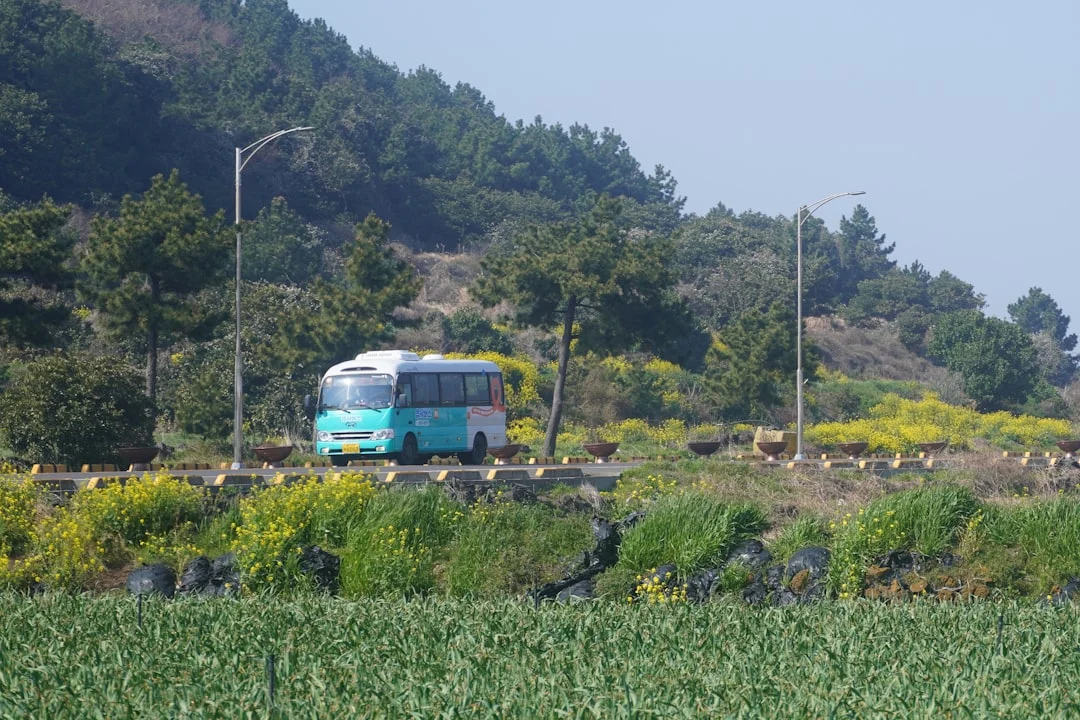
Yes, visiting Jeju Island without a car is genuinely practical for most popular attractions. The island has no subway or train — buses are the only public transport — but a major August 2024 reform significantly expanded the network (876 buses across 21+ intercity routes, as of August 2024). Major highlights like Seongsan Ilchulbong (성산일출봉), Hyeopjae Beach (협재해수욕장), and the Hallasan Seongpanak trailhead are all reachable by bus. The smartest approach is buses for main routes combined with occasional taxis for remote spots, keeping a 3-day total transport cost under ₩50,000 (as of 2026).

Getting Around Jeju Without a Car — The Basics
Jeju's reputation as a car-dependent destination is only partially deserved. That reputation was earned in an era when the bus network was sparse and schedules were hard to find in English. Both of those problems have been substantially addressed.
The 2024 bus reform restructured the entire island network, added frequency on key tourist corridors, and standardized English stop announcements across all routes. If you are traveling between the main visitor areas — Jeju City, the east coast, Seogwipo (서귀포), and the west coast — buses will cover the bulk of your movements.
One important note before you plan: a significant number of English-language travel guides still list Bus 112 as the route from Jeju International Airport (제주국제공항) to Seongsan. Bus 112 was discontinued in August 2024. The correct route is now Bus 111. This is worth knowing because outdated information on this specific route is widespread.
Where buses fall short — and they do fall short in certain areas — taxis fill the gap efficiently. Jeju taxis are metered, Kakao T (카카오T) works island-wide, and the fares are reasonable for short gap-filling rides. A car rental is genuinely unnecessary for a typical 3–5 day trip focused on the island's headline attractions.
Jeju's Bus System: How It Works
Jeju's buses are color-coded by function, which makes the system easier to read once you understand the logic.
Red buses (100s) are express intercity routes with minimal stops — the fastest option between major hubs. Blue buses (200s and 300s) are the main intercity lines covering coastal areas and the bulk of tourist destinations. Green buses (400s and 700s) serve local villages and are useful for filling in gaps on secondary routes. Yellow buses (810 and 820) are tourist circular routes covering midland attractions, with bilingual guide announcements. Limousine buses (600 and 800 series) connect the airport to major destinations and have luggage compartments — the practical choice when you have checked-baggage-sized luggage.
Fares are straightforward. The base fare is ₩1,150 with a T-money card or ₩1,200 in cash (as of 2026). Express buses run ₩2,000–3,000. A transfer discount gives you two free transfers within 40 minutes of alighting from your previous bus — meaning you can ride up to 3 buses on a single base fare. This matters on multi-leg journeys because it keeps costs low even on longer cross-island trips.
Payment is flexible. T-money cards work on all buses. Contactless Visa, Mastercard, Apple Pay, and Samsung Pay have been accepted on all Jeju buses since 2025 — tap your card or phone and go. Cash is also accepted. English stop announcements are standard across the network, and all buses have free Wi-Fi. Operating hours run approximately 05:30–22:00.
T-money cards are available at airport convenience stores — GS25, CU, and 7-Eleven all stock them. The card itself costs ₩3,000–5,000 (as of 2026) and is topped up with cash at the same convenience stores. If you already have a T-money card from Seoul, it works here.
Key Bus Routes for Tourists
From Jeju International Airport
| Destination | Bus | Travel Time | Fare (as of 2026) |
|---|---|---|---|
| Jeju City center | Express 101 / 102 | ~20 min | ₩2,000 |
| Seongsan Ilchulbong | Express 111 | ~70 min | ₩3,000 |
| Jungmun / Seogwipo | Limousine 600 | 50–80 min | ₩4,500–5,500 |
| Seogwipo Bus Terminal | Express 800 / 801 | ~75 min | ₩5,000 |
Main Intercity Routes
Bus 201 — East Coast connects Jeju City, Seongsan, and Seogwipo along the eastern coastline. It runs every 15–30 minutes and is the single most useful tourist route on the island. Stops include Woljeong-ri Beach (월정리해변) and Seongsan, making it the backbone of any east coast itinerary.
Bus 202 — West Coast runs Jeju City to Hyeopjae Beach, Aewol (애월), the café strip, and on to Seogwipo via the west coast. Frequency is every 15–25 minutes. This is the route for Hyeopjae Beach and the famous Aewol café strip.
Bus 251 — Southern Coast covers Sanbangsan (산방산), Songaksan (송악산), and Unjin Port (운진항) — the departure point for Marado Island (마라도). If Marado is on your list, this is the bus.
Yellow Bus 810 — East Midland Loop reaches Bijarim Forest (비자림) and Abureum (아부오름). Service is less frequent than the coastal routes — check the schedule before planning around it.
Yellow Bus 820 — West Midland Loop covers O'Sulloc Tea Museum (오설록) and Hallim (한림), among other midland stops. A 1-day pass costs ₩3,000 (as of 2026) and makes sense if you are spending a full day on western midland attractions.
Hallasan Trailheads by Bus
Getting to Hallasan (한라산) without a car ranges from easy to genuinely tricky depending on which trail you choose.
Seongpanak (성판악) trailhead is the straightforward option. Bus 281 from Jeju City takes approximately 31 minutes, runs every 14 minutes, and drops you directly at the trailhead. This is the recommended choice for car-free hikers — the logistics are simple.
Gwaneumsa (관음사) trailhead is more complex. Take Bus 281 to Sancheondan (산천단), then transfer to Bus 475. Bus 475 runs only once per hour — this is not a number to overlook. A missed connection means a 60-minute wait at a mountain junction. Plan your hike completion time around the Bus 475 schedule, not the other way around.
Eorimok (어리목) and Yeongsil (영실) trailheads have infrequent and less predictable bus service. A taxi from Jeju City is the realistic approach for these trails — approximately ₩25,000–35,000 each way (as of 2026).
Taking Taxis in Jeju
Jeju taxis are metered and regulated. The base fare runs ₩3,300–4,300 (as of 2026), with an additional ₩850 per 131 meters. A 20% night surcharge applies between midnight and 04:00. Black (deluxe) taxis have higher base rates — the standard orange or silver cabs are the practical choice for most trips.
For reference on common journeys: airport to Jeju City center runs approximately ₩8,000 (around $6, as of 2026). Jeju City to Seogwipo — a full cross-island run — costs ₩39,000–50,000 (as of 2026) and takes 40–50 minutes. For remote spots where a taxi fills a gap in bus coverage, the cost is usually reasonable relative to the time saved.
Kakao T works island-wide and accepts international phone numbers for registration. The app interface can be switched to English in settings. Payment goes directly to the driver in cash or card — there is no in-app payment required. In rural areas, wait times can be longer than in Jeju City or Seogwipo; give yourself extra buffer time if you are catching a bus or ferry connection.
Taxi charters are available if you want to cover multiple remote sites in a single day. Standard taxis run approximately ₩15,000 per 30 minutes (as of 2026); a half-day charter typically runs ₩80,000–120,000 (as of 2026). This can be cost-effective for a group of three or four people hitting several midland or remote west coast locations that would otherwise require multiple taxis and significant wait times.
Getting to Udo and Marado Without a Car
Udo Island (우도)
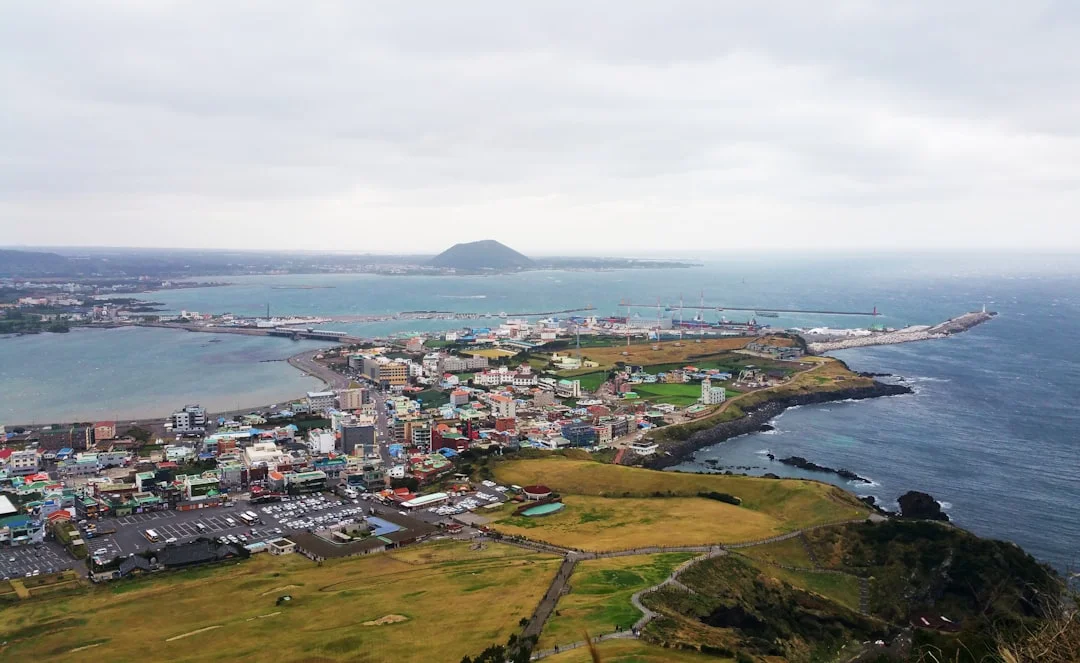
Udo is straightforward without a car. Take Bus 201, 211, or 212 to Seongsan Port (성산포항), then board the ferry — the crossing takes approximately 15 minutes and costs approximately ₩20,000 round trip (as of 2026). On Udo itself, an island shuttle bus runs every 15 minutes; a 1-day pass costs ₩6,000. This is genuinely one of the easier day trips to do on public transport.
Marado Island (마라도)
Take Bus 251 to Unjin Port. The ferry crossing to Marado takes approximately 25–30 minutes and costs approximately ₩18,000 round trip (as of 2026). Ferries run from 09:20 to 16:10.
One practical note: Unjin Port and Songaksan Port (송악산항) are 3.5 kilometers apart. Some operators advertise Marado ferries from Songaksan Port. Confirm which port your ferry departs from before booking — they are not interchangeable on foot.
Places That Are Difficult Without a Car
Honesty matters here. Some parts of Jeju are genuinely inconvenient without personal transport, and knowing this in advance lets you plan around it rather than discover it on the day.
Eorimok and Yeongsil Hallasan trailheads — as noted above, bus service is infrequent. A taxi is the practical solution.
Remote west coast cafes beyond Hyeopjae — Bus 202 serves Hyeopjae and Aewol well, but some of the more scattered café areas further along the coast require a 20–30 minute walk from the bus stop or a short taxi ride.
Arte Museum (아르떼뮤지엄) — reaching this requires multiple bus transfers followed by a 15–20 minute walk. Not impossible, but time-consuming enough that a taxi directly from Jeju City or from a nearby bus stop makes more sense.
Bijarim Forest (비자림) — Bus 810 serves this, but the yellow tourist buses run infrequently. Confirm the schedule before building a day around it.
Some Jeju Olle Trail (제주 올레길) section endpoints — certain sections end or begin at points where bus pickup is infrequent or requires a walk to the nearest stop. Check the specific section's endpoint bus access before setting out.
Cost Comparison: Bus vs Taxi vs Rental Car
The numbers below reflect a 3-day trip (as of 2026).
| Transport Option | Estimated 3-Day Cost | Notes |
|---|---|---|
| Rental car | ₩90,000–450,000 | Off-peak: ₩30,000–45,000/day; peak summer (July–August): ₩60,000–200,000+/day |
| Bus only | ₩15,000–20,000 | Extremely low cost; works well if itinerary stays on main corridors |
| Bus + taxi hybrid | ₩40,000–80,000 | Realistic best option for most travelers |
The bus-only option is achievable if your itinerary covers Seongsan, Hyeopjae, and Seogwipo without detours into midland or remote areas. The bus-plus-taxi hybrid — buses for the major legs, taxis for two or three gap-filling trips — keeps costs well below a rental car while covering nearly everything a typical 3–5 day Jeju trip includes.
Rental cars make sense if you are traveling with a group of four or more, plan to cover remote areas on a tight timeline, or are visiting in the off-peak season when daily rates drop to ₩30,000–45,000 (as of 2026). At peak summer rates, the cost equation shifts considerably in favor of public transport.
What You Need to Know
Use Naver Map or Kakao Map for bus routing — not Google Maps. Google Maps has historically unreliable Jeju bus data. Naver Map and Kakao Map pull from the same data sources as the official Jeju transit system. If you are routing a multi-leg journey, these two apps will give you accurate transfer timing and current schedules. This is not a minor preference — incorrect Google Maps data can result in missed connections on routes where buses run infrequently.
Cross-check app times with posted schedules at bus stops. For tourist circular buses (810, 820) and village green buses, the apps are generally accurate, but a quick look at the physical schedule board at the stop takes 30 seconds and catches any discrepancies.
For Hallasan early starts, the first Bus 281 services toward Seongpanak depart at approximately 06:30. The Seongpanak trail has a summit cutoff time — arrive early enough to complete the round trip within the permitted window, and build your morning bus departure around that cutoff rather than guessing.
Data connectivity is essential. Real-time bus apps only function if your phone has a data connection. An eSIM purchased before departure or a SIM card from the airport is not optional — it is a functional requirement for bus travel on Jeju.
Luggage delivery (짐 배송) is available between hotels for approximately ₩15,000 per suitcase (as of 2026). If you are moving accommodations mid-trip, this lets you travel by bus without managing large bags at bus stops or on board.
Practical Tips
- Base your accommodations in Jeju City for the first portion of your trip and Seogwipo for the second — this keeps most destinations within reasonable bus range and minimizes backtracking.
- Load Naver Map or Kakao Map before you arrive; test a sample route search so you understand the interface.
- Get a T-money card at the airport before leaving the arrivals area — GS25, CU, and 7-Eleven all stock them. Top it up with ₩10,000–20,000 (as of 2026) to start.
- If you have a contactless Visa or Mastercard, tap-to-pay works on all buses since 2025 — no T-money card strictly required, though T-money is still marginally cheaper per ride.
- For Seongsan Ilchulbong, take Express Bus 111 directly from the airport rather than routing through Jeju City — it saves approximately 40 minutes.
- Plan any Gwaneumsa Hallasan hike around the Bus 475 schedule at Sancheondan — the bus runs once per hour, and this schedule drives the day's timing more than anything else.
- When heading to Marado, confirm whether your ferry departs from Unjin Port or Songaksan Port before leaving — they are 3.5 kilometers apart.
- Keep Kakao T installed for ad-hoc taxi needs; it is more reliable for finding available drivers than hailing on the street in less-trafficked areas.
Frequently Asked Questions
Can you visit Jeju Island without renting a car? Yes. The August 2024 bus reform significantly expanded the network, and major attractions including Seongsan Ilchulbong, Hyeopjae Beach, Jungmun, and the Seongpanak Hallasan trailhead are all directly accessible by bus. A bus-plus-taxi hybrid approach covers nearly everything a typical 3–5 day trip includes at a fraction of the car rental cost.
How much does the bus cost in Jeju? The base fare is ₩1,150 with a T-money card or ₩1,200 in cash (as of 2026). Express buses run ₩2,000–3,000. A free transfer is applied when you board a second or third bus within 40 minutes of alighting, which keeps multi-leg journey costs low.
Which bus goes from Jeju airport to Seongsan Ilchulbong? Express Bus 111. The journey takes approximately 70 minutes and costs ₩3,000 (as of 2026). Note: many older guides list Bus 112 — that route was discontinued in August 2024. Bus 111 is the current correct route.
How do I get from Jeju airport to Jungmun by bus? Take Limousine Bus 600 from the airport. The journey to Jungmun and Seogwipo takes 50–80 minutes depending on traffic, and the fare is ₩4,500–5,500 (as of 2026). The limousine buses have luggage compartments, which makes them practical for airport transfers.
Can I get to Hallasan without a car? Yes, for the Seongpanak trail. Bus 281 from Jeju City takes approximately 31 minutes and runs roughly every 14 minutes. For the Gwaneumsa trailhead, take Bus 281 to Sancheondan and transfer to Bus 475 — which runs once per hour, so plan your hike timing around that connection. Eorimok and Yeongsil trailheads have infrequent bus service; a taxi is the practical option for those.
Is Kakao T available on Jeju Island? Yes. Kakao T operates island-wide and accepts international phone numbers for registration. The app can be switched to English in settings, and payment goes directly to the driver. Expect longer wait times in rural or remote areas compared to Jeju City or Seogwipo.
How do I get to Udo Island without a car? Take Bus 201, 211, or 212 to Seongsan Port, then board the ferry — approximately 15 minutes crossing, approximately ₩20,000 round trip (as of 2026). On Udo, a shuttle bus runs every 15 minutes; a 1-day pass costs ₩6,000.
What places in Jeju are hard to reach without a car? The Eorimok and Yeongsil Hallasan trailheads have infrequent bus service. Arte Museum requires multiple transfers plus a 15–20 minute walk. Some remote west coast cafes beyond Hyeopjae are a 20–30 minute walk from the nearest bus stop. Bijarim Forest is served by the infrequent Bus 810. These gaps are fillable with taxis, but they do require advance planning.