Drinking in Korea: Complete Guide for Tourists 2026
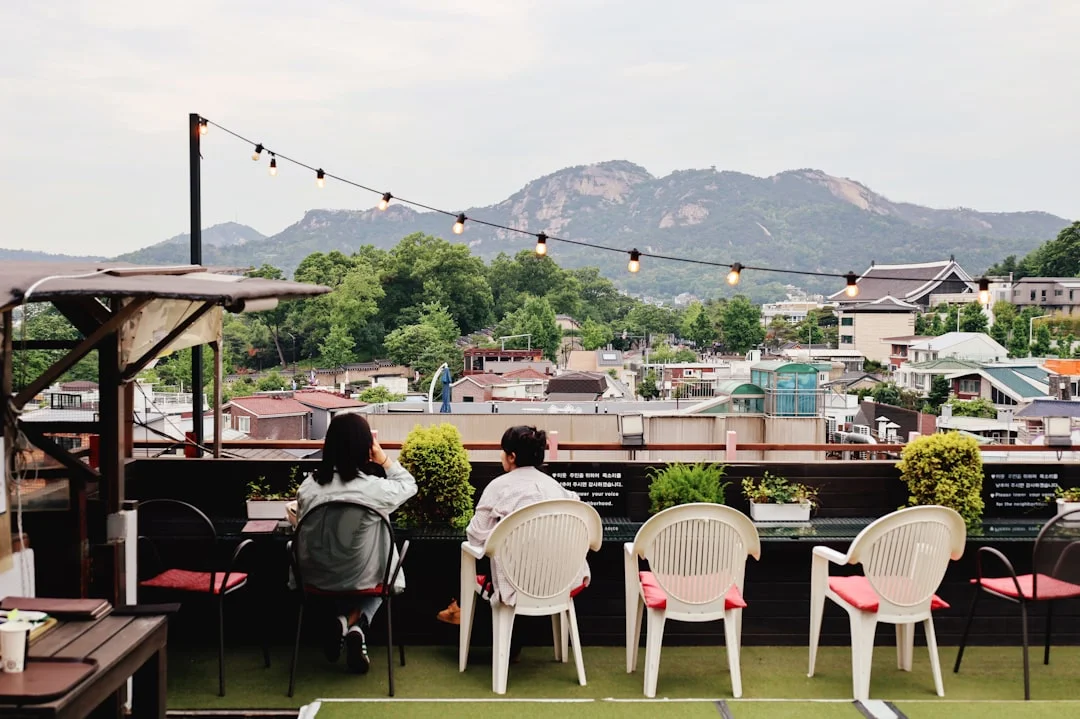
Photo by Evgeniya Pron on Unsplash
Korea has one of the world's most socially embedded drinking cultures, and for most visitors, experiencing it is genuinely one of the highlights of the trip. This guide covers everything you need to know — what to drink, where to drink it, what the rules actually are, and how to behave without accidentally insulting the table.
Five things to know before you start: - Drinking age is 19 by international age (birth year, not birthday) - Public drinking is legal and normal — parks, riversides, convenience store sidewalks - A bottle of soju costs ₩1,900 at a convenience store - Always pour for others, never just for yourself - Fines of ₩50,000–₩100,000 apply near children's playgrounds since 2024
Quick Answer
Drinking in Korea is legal at 19 (birth year, not birthday) and outdoor drinking is permitted in most public spaces. The main restriction since 2024: no-drinking zones (금주구역) around children's playgrounds carry fines up to ₩100,000. A bottle of soju costs ₩1,900 at a convenience store.
Korean Alcohol: What to Know Before You Order
Soju (소주)
Soju is the default drink of Korea — the world's best-selling spirit for over 23 consecutive years. The flavor is clean, neutral, and slightly sweet — often described as a lighter vodka. Modern commercial soju uses diluted ethanol from sweet potatoes or tapioca rather than the traditional rice base.
ABV ranges by type: - Standard commercial (Chamisul Fresh, Chum Churum, Chochorom): 16–17% - Classic/stronger versions (Chamisul Classic): approximately 20.1% - Flavored soju (fruit varieties): 13–14%
Green grape (청포도) tops most consumer rankings among flavored soju; all varieties are still 13–14% ABV despite the approachable taste.
Price benchmarks (as of 2026): - Convenience store (편의점): ₩1,900 per 360ml bottle - Hypermarket (대형마트, E-Mart): ₩1,340 per bottle - Pojangmacha or casual restaurant: ₩4,000–₩5,000 - Hongdae bars: ₩4,000–₩5,000 - Itaewon bars: ₩5,000–₩8,000 - Gangnam bars: ₩8,000–₩15,000
Somaek (소맥) — soju mixed with beer — is the most common combination at Korean tables. The standard ratio is 3 parts soju to 7 parts beer, producing a drink around 7–9% ABV. Pour soju into a beer glass and stir with a chopstick, or drop a shot glass directly into a pint. Use diluted commercial soju (Chamisul Fresh), not a premium distilled variety.
Makgeolli (막걸리) and Dongdongju (동동주)
Makgeolli is Korea's oldest alcoholic drink — unfiltered fermented rice wine, milky white, slightly carbonated, sweet-sour-earthy. Shake before serving. Commercial ABV is 6–8%; artisan versions reach 10–12%.
At convenience stores, a 750ml bottle costs approximately ₩1,850–₩2,200 (as of 2026). At a traditional restaurant or pojangmacha, a brass kettle (주전자) holding 3–4 glasses runs ₩3,000–₩5,000. Artisan producers charge ₩8,000–₩120,000 per bottle at specialty bars.
Dongdongju (동동주) is barely filtered — rice grains float visibly on the surface, making it slightly stronger than makgeolli. Not sold in bottles; available only at traditional restaurants and pojangmacha.
The traditional pairing is haemul pajeon (해물파전, seafood pancake) — and Koreans widely believe makgeolli tastes best when it rains. That is not a myth; it is standard behavior.
The Jongno 3-ga (종로3가) area has clusters of traditional makgeolli bars. Anssi (안씨막걸리) on Gyeongnidan-gil in Itaewon is the first traditional liquor bar in Korea to earn Michelin recognition; the menu changes monthly.
To understand Korean drinking culture more broadly — the hierarchy, the pouring rituals, the significance of each drink — the Korean Drinking Culture Guide covers soju, makgeolli, and etiquette in fuller depth.
Beer (맥주) and Craft Beer
Cass Fresh (카스) (4.5%) has led the market since 2011; Terra (테라) (4.6%) is a close second. Kloud (클라우드) at 5.0% uses 100% malt — noticeably fuller than the standard lagers.
Convenience store prices (as of 2026): - Cass, Terra, or Hite 500ml can: ₩2,800 - Craft beer (Jeju Beer Pellong Ale 500ml): ₩4,200 - Imported beer (Heineken, Stella, Guinness 500ml): ₩3,900–₩4,500
Korea's craft beer scene expanded significantly after homebrewing regulations relaxed in 2014. Notable spots: Magpie Brewing (매기 브루잉) in Itaewon and Mangwon, White Rabbit Tap House (화이트 래빗) in Itaewon with 26 taps, and Mikkeller Bar Seoul on Garosu-gil in Gangnam.
Other Drinks Worth Knowing
Bokbunja-ju (복분자주): Sweet dark wine from Korean black raspberries. ABV 13–15%. Served cold; frequently appears as a premium gift item.
Maesil-ju (매실주): Tart-sweet plum wine, lower ABV, often served as a digestif.
Cheongju (청주): Filtered, refined rice wine — transparent and smooth, comparable to Japanese sake. ABV 12–16%. More ceremonial; used in formal dinners and traditional rituals.
Sikhye (식혜): Despite being a fermented rice drink sold at every convenience store, sikhye is completely non-alcoholic. It is a sweet rice punch served as dessert — not a low-ABV drink.
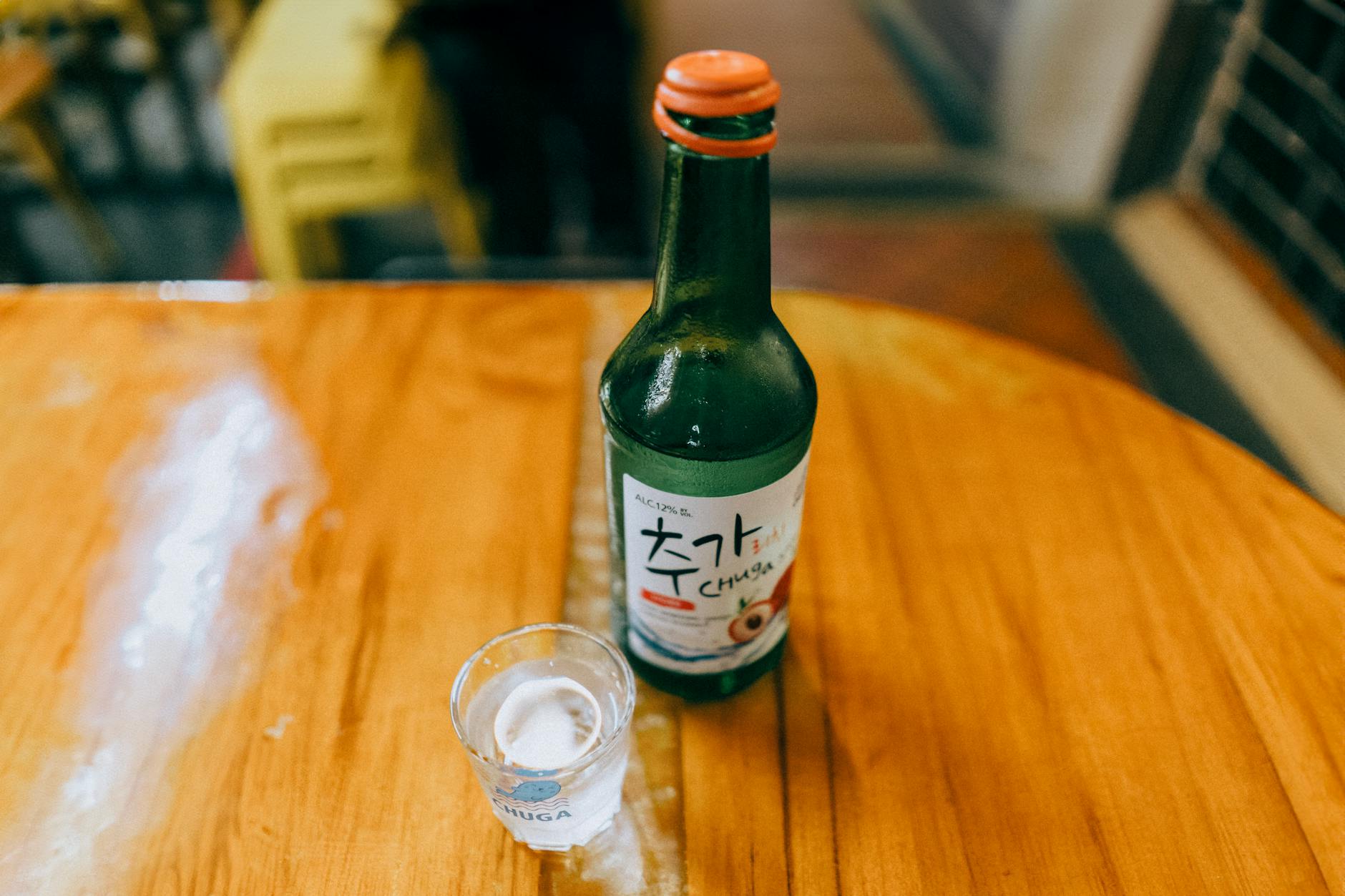
Photo by Dee Onederer on Pexels
Where to Drink in Korea
Convenience Stores (편의점)
The cheapest and most culturally accessible way to drink in Korea is buying from a convenience store and sitting outside. GS25 and CU each have approximately 17,000 locations nationwide. It is a standard social activity — not a budget compromise.
The Korean Convenience Store Guide covers what to buy, what to eat with it, and how to navigate the experience as a first-time visitor.
Han River Parks (한강공원)
Han River parks are one of the best settings for outdoor drinking in Seoul. The four most visited parks each have a distinct character:
| Park | Character | Nearest Subway |
|---|---|---|
| Yeouido (여의도 한강공원) | Most popular, best facilities, crowded weekends | Yeouinaru, Line 5 |
| Mangwon (망원 한강공원) | Most local, quieter, near Mangwon Market | Mangwon, Line 6 |
| Ttukseom (뚝섬 한강공원) | Views of Lotte Tower, near Seongsu | Ttukseom Resort, Line 7 |
| Banpo (반포 한강공원) | Rainbow Fountain views at night | Express Bus Terminal, Lines 3/7/9 |
Convenience stores inside each park sell cold drinks and snacks. Delivery apps — Coupang Eats and Baemin — accept international credit cards and deliver directly to park locations (as of 2026). Picnic mat rentals run ₩15,000–₩25,000 for a 4-hour package.
The classic Han River combination is chimaek (치맥) — fried chicken plus beer — ordered via delivery or from stalls near convenience stores. Tents must have both sides open and be cleared by 7:00 PM.
Seoul has discussed banning drinking at Han River parks but has not done so as of 2026. See the Han River Parks & Picnic Guide for more.
Pojangmacha (포장마차) — Street Stalls
Pojangmacha are traditional orange-and-red tarpaulin street tents that serve food alongside soju, beer, and makgeolli. They are the closest thing Korea has to outdoor pub culture.
The three main locations in Seoul:
-
Jongno 3-ga (종로3가) — One of Seoul's most well-known pojangmacha areas, approximately 200 meters between subway Exits 5–6. Walk toward Exit 13 for stalls operating 20+ years. Hours: 6 PM–2 AM weekdays, until 3–4 AM weekends.
-
Euljiro Nogari Alley (을지로 노가리골목) — Famous for dried pollack (노가리) with draft beer. Hours: 7 PM–2 AM. ⚠️ Under redevelopment through September 2026; check Naver Map before visiting.
-
Mapo Pocha Street (마포 포차거리) — Near Mapo Station, quieter and more neighborhood-oriented.
Pojangmacha prices (as of 2026): - Soju bottle: ₩4,000–₩5,000 - Draft beer (생맥주): ₩3,500–₩5,000 - Haemul pajeon (해물파전): ₩8,000–₩12,000 - Per person average: ₩15,000–₩30,000
Practical notes: Most pojangmacha are cash only — withdraw ₩30,000–₩50,000 beforehand. Always check menu prices before sitting. Sharing a table with strangers is normal.
The Korean Street Food Guide covers pojangmacha food in detail.
Bars, Hof, and Bar Districts
Hof (호프집) — Traditional Korean beer houses — are the most casual bar format. Beer-focused, with soju available and snacks like dried squid and fried chicken. Lower prices than clubs, neighborhood atmosphere.
Hongdae (홍대): Seoul's most affordable bar district. Young, student, and indie-music crowd; open until 5–6 AM weekends. Cover charges ₩5,000–₩15,000; cocktails ₩8,000–₩12,000 (as of 2026). The Hongdae Nightlife Guide covers the best venues.
Itaewon (이태원): The most internationally oriented district — high English proficiency, options ranging from dive bars to craft beer taprooms. Cocktails ₩12,000–₩18,000 (as of 2026).
Gangnam (강남): Premium clubs with enforced dress codes. Club entry ₩20,000–₩30,000; cocktails ₩15,000–₩25,000; table service from ₩300,000 (as of 2026).
Rooftop Bars
- KLOUD Bar — AC Hotel Gangnam, 21st floor, panoramic Gangnam views. Cocktails ₩18,000–₩25,000 (as of 2026).
- Privilege Bar — Mondrian Seoul Itaewon hotel. Cocktails ₩17,000–₩24,000 (as of 2026).
- Rooftop Floating — L7 Myeongdong Hotel, 21st floor, Namsan Mountain views. Cocktails ₩13,000–₩18,000 (as of 2026).
The Best Rooftop Bars & Sky Lounges in Seoul guide covers more options.
Norebang (노래방) — Karaoke
Norebang — private karaoke rooms — is a standard second or third stop on a Korean drinking night. You rent a room by the hour, order drinks at the counter, and sing with your group — no audience, no judgment. Hongdae rates typically run ₩10,000–₩15,000 per person per hour (as of 2026). The Norebang Guide Seoul explains how it works for first-timers.
Bottom line: Convenience stores and Han River for casual; Hongdae for nightlife on a budget; Itaewon for variety; Gangnam for a splurge.

Photo by Red Shuheart on Unsplash
Drinking Laws and Public Rules
Legal Drinking Age
The legal drinking age is 19 by international age — calculated by birth year, not your actual birthday. Korea adopted international age in June 2023; the drinking cutoff remains calendar-year based. This applies equally to foreigners. US military personnel on US bases follow US law (age 21).
ID requirements: Passport is the most reliable form of ID for foreigners — alien registration cards work too, but foreign driver's licenses are often rejected at nightclubs. Carry the physical document; a photo is often not accepted.
Public Drinking and No-Drinking Zones
Outdoor drinking is mainstream in Korea — the only restrictions since 2024 are designated no-drinking zones (금주구역):
| District | Zone | Fine |
|---|---|---|
| Gwangjin-gu (광진구) | Children's parks | ₩100,000 |
| Jungnang-gu (중랑구) | Myeonmok Station Plaza | ₩50,000 |
| Goyang (고양시) | 148 children's parks + 196 playgrounds | up to ₩50,000 |
| Seoul Metropolitan | 22 Seoul-managed parks | fines apply |
Authority comes from 2021 revisions to the National Health Promotion Act; enforcement began January 2024.
Han River parks remain legal for public drinking as of 2026. If you are near a playground, check for signs.
For the full breakdown — including subway rules and behavior standards — see Can You Drink Alcohol on the Street in Korea?
DUI Rules
Korea's DUI threshold is strict: 0.03% BAC. Refusing a breathalyzer is a criminal offense. For foreigners, a conviction can trigger visa revocation and deportation.
Being drunk while walking is not illegal. Obstructing police while intoxicated (공무집행방해) is a criminal charge.
Drinking Etiquette
Korean drinking etiquette is rooted in Confucian hierarchy — age and status determine behavior at the table. As a foreigner, you will not be expected to know all of it, but the basics earn immediate goodwill.
Essential — do these at any Korean table:
-
Never pour your own drink. You pour for others; others pour for you.
-
Pour and receive with two hands. Hold your glass with both hands when receiving; hold the bottle with two hands when pouring for someone older.
-
Turn away when drinking in front of seniors. Turn your head slightly away and cover the glass with your free hand — a sign of respect that earns goodwill from Korean hosts.
-
Wait for the most senior person to drink first.
Good to know — cultural context:
-
Keep others' glasses full. Leave your own glass partially full to slow down — an empty glass invites a refill.
-
"Geonbae" (건배) means cheers. "Wihayeo! (위하여!)" is the more enthusiastic version.
-
The Black Knight (흑기사) system. Anyone can volunteer to take a penalty drink on behalf of someone who doesn't want more — a face-saving mechanism.
If you want to stop: Cover your glass and say "괜찮아요" (gwaenchanayo — "I'm fine"). Clear, polite, and universally understood.
For more on table rituals and pouring hierarchy, the Korean Drinking Culture Guide covers the social and historical context.
Bottom line: Two-handed pour and turning away to drink will earn more goodwill than anything else. The rest you can pick up at the table.
Anju: What to Eat While Drinking
Anju (안주) is not just a snack — it is fundamental to Korean drinking culture. Ordering drinks without food is unusual, even at casual settings.
The core pairings:
| Drink | Classic Anju | Why It Works |
|---|---|---|
| Soju (소주) | Samgyeopsal (삼겹살, grilled pork belly), bossam (보쌈, steamed pork), hwe (회, raw fish) | Pork fat mellows the spirit's edge |
| Makgeolli (막걸리) | Haemul pajeon (해물파전, seafood pancake), kimchi pancake | Traditional pairing — earthy flavors complement |
| Beer (맥주) | Fried chicken (치킨), tteokbokki (떡볶이, spicy rice cakes), twigim (튀김, mixed fried snacks) | Carbonation cuts through fried food |
| Somaek (소맥) | Samgyeopsal, golbaengi muchim (골뱅이무침, spicy sea snail salad), Korean fried chicken | Greasy foods balance the carbonation |
Chimaek (치맥) — fried chicken plus beer — is a national institution, not a tourist concept. The crispy Korean double-fried chicken pairs with cold beer the way chips pair with a cold lager in other cultures. The Han River is the natural setting; it is equally at home delivered to your apartment at 11 PM. The Korean Fried Chicken Guide explains the styles and best spots.
For samgyeopsal and soju, see the Korean BBQ Guide — how to order, cook at the table, and what to do with the soju.
Convenience store anju — for Han River or sidewalk drinking — includes squid jerky (오징어채), dried anchovies with peanuts (멸치볶음), Kkokkalcorn (꼬깔콘), corn dogs (핫도그), and spicy rice cake cups (컵떡볶이).
Practical Tips
-
Bring cash to pojangmacha. The cash-only rule is real. Withdraw ₩30,000–₩50,000 before heading to Jongno 3-ga or any pojangmacha street.
-
Start cheap before scaling up. Convenience store seats are genuinely how most Koreans begin a drinking night. Save bar and rooftop spending for later.
-
Keep your passport on you for clubs. Carry the physical document — photos and foreign driver's licenses are often rejected at Hongdae and Itaewon clubs.
-
Learn three Korean phrases. "소주 한 병 주세요" (Soju han byeong juseyo — one bottle of soju, please), "건배!" (Geonbae — cheers), and "괜찮아요" (Gwaenchanayo — I'm fine / no thank you).
-
Check for no-drinking zone signs before opening a bottle. Fines apply near children's playgrounds. Han River parks remain legal as of 2026.
-
Use delivery apps at Han River. Coupang Eats and Baemin accept international credit cards and deliver directly to park locations. Set a landmark pin; a rider will find you.
-
Pace with food, not willpower. Order anju before or with drinks. The system exists for a reason.
Frequently Asked Questions
What is the legal drinking age in South Korea? 19 by international age, calculated by birth year — not your actual birthday. Bring your passport to clubs; foreign driver's licenses are typically rejected.
Is it rude to refuse a drink in Korea? No — cover your glass and say "괜찮아요" (gwaenchanayo, "I'm fine"). Most Koreans will not push, and refusing a specific round is far less of an issue than travel content suggests.
What Korean drinking games should I know? The most common: 3-6-9 (삼육구), where anyone whose number contains a 3, 6, or 9 must clap instead of speaking — miss it and drink; the bottle cap game (병뚜껑 게임), where the twisted strip under a soju cap is flicked until someone knocks it off; and Baskin-Robbins 31, where players call consecutive numbers and whoever says 31 drinks. Games exist for inclusion and laughter — refusing to play is fine, and the penalty is usually just one shot.