Jeju Haenyeo: Everything You Need to Know Before You Visit
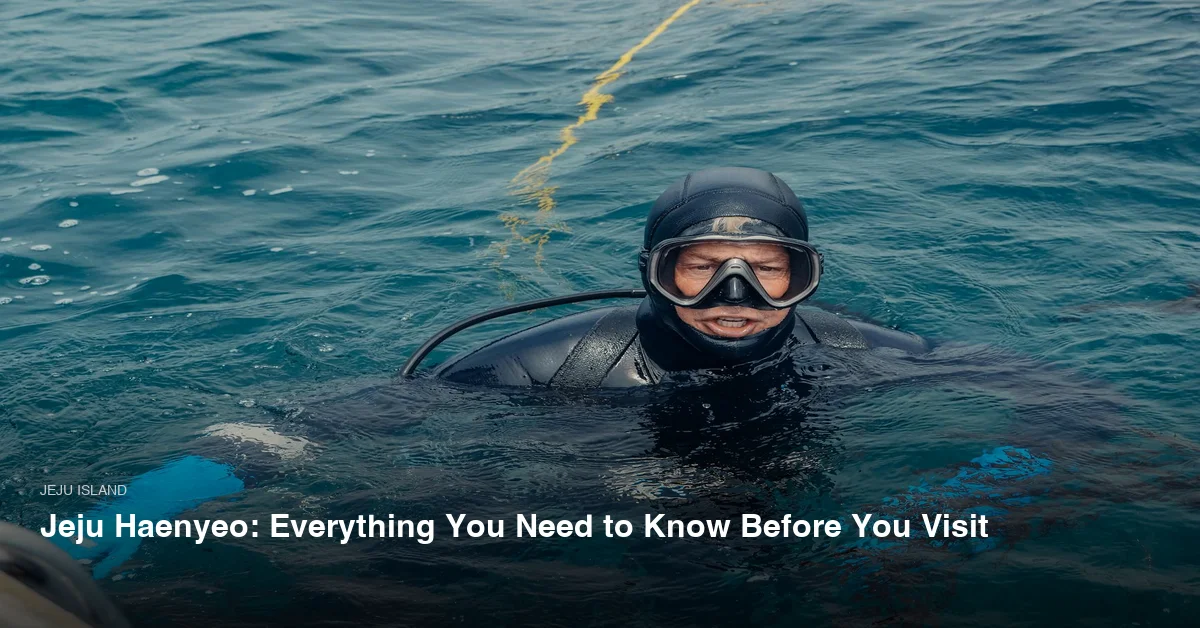
Photo by Kindel Media on Pexels
Quick Answer
Jeju haenyeo (해녀) are female free divers who harvest seafood without any oxygen equipment — a tradition stretching back over 1,000 years. Today approximately 2,700 remain, down from a peak of 23,000 in 1965. UNESCO recognized haenyeo culture as intangible cultural heritage in 2016. You can watch demonstrations at Seongsan Ilchulbong daily at 1:30pm and 3:00pm, or spot active divers along the east coast villages most mornings.
The Full Answer
The word haenyeo translates directly as "sea woman" — and the practice is exactly that. Women of Jeju Island dive into the ocean without oxygen tanks, sometimes reaching 20 meters depth, and bring up abalone, sea urchin, turban shell, sea cucumber, and octopus by hand. They have done this for over a millennium.
The dominance of women in this work was not arbitrary. Scholars and diving physiologists point to several factors: women's body fat distribution gives them better thermal insulation in cold water; they were historically exempt from the taxes and military service obligations that kept men on land; and social structures that developed around the practice — including communal profit-sharing through village cooperatives — reinforced female participation over centuries. By the Joseon period (1392–1897), haenyeo were major contributors to Jeju's economy and its tax base.
At their peak in 1965, there were 23,081 registered haenyeo. The FAO counted approximately 2,700 in 2023. More than 90% are over age 60, and fewer than 6 are under age 30. The government has invested ₩27.3 billion (as of 2026) in preservation programs, including a safety app that reported zero deaths in its first 10 months among 300 enrolled users — a meaningful figure given the physical demands of the work.
The 2024 Apple TV+ documentary "The Last of the Sea Women" brought significant international attention to the community's survival, though the divers themselves have mixed feelings about that kind of exposure.

UNESCO's 2016 designation and the 2023 FAO Global Important Agricultural Heritage Systems (GIAHS) listing recognized not just the diving itself but the entire cultural ecosystem: the knowledge transmission between generations, the village cooperative structures, and the community practices that surround the work.
What Haenyeo Actually Do
A haenyeo dives between 5 and 20 meters — the average working depth is approximately 10 meters — and holds her breath for 1 to 3 minutes per dive. A full working day runs 5 to 7 hours, though actual in-water time is broken by surface intervals. They work roughly 90 days per year; weather and ocean conditions determine the rest.
The sumbisori (숨비소리) is the sound haenyeo make when they surface — a distinctive whistling exhale described as "hwoi hwoi." It serves a physiological function, helping the body expel carbon dioxide rapidly and equalize pressure after a dive. UNESCO noted it specifically as a cultural element. Once you hear it in person, you recognize it immediately.
Equipment has evolved considerably. Traditional gear included the mulsojungi (물소중이) and muljeoksam (물적삼) — cotton undergarments that provided minimal insulation. The rubber wetsuit (고무옷, gomuot) was introduced in the 1970s and extended working seasons significantly. The tewak (테왁) is the orange buoy every diver trails on the surface; attached to it is the mangsari (망사리), a net bag for the catch. For prying abalone from rocks, divers use the bitchang (빗창), a flat metal lever.
Skill grades fall into three tiers. Hagun (하군) are beginners, working shallower water. Junggun (중군) are intermediate divers. Sanggun (상군) are masters — the strongest divers who work the deepest water. Reaching sanggun status takes approximately 30 years of practice.
The bulteok (불턱) is a stone-walled enclosure near the shore where haenyeo warm up before and after dives, share meals, and pass knowledge between generations. Approximately 70 bulteok remain around Jeju. They are more than functional structures — they function as the social core of haenyeo community life.
Harvesting is organized through the eochon-gye (어촌계), village fishing cooperatives. There are over 100 of these around Jeju. Catch is typically distributed equally among active members, regardless of individual haul — a system that has maintained community cohesion for centuries.
Where to See Haenyeo in Jeju
Seongsan Ilchulbong is the most accessible spot for visitors. Demonstrations take place daily at 1:30pm and 3:00pm on the coastal path below the crater — this path is free to walk and does not require the ₩5,000 (as of 2026) entrance ticket for the crater itself. Arrive by 1:15pm to find a good viewing position. On days when the divers have finished work early, a haenyeo singing performance may replace the diving demonstration. Take Bus 701 or 702 from Jeju Intercity Bus Terminal — the ride takes approximately 70 minutes. Full details on getting to Seongsan are in the Seongsan Ilchulbong guide.
East coast villages — particularly Sehwa-ri (세화리), Hado-ri, and Jongdal-ri in Gujwa-eup — offer the most authentic viewing. These are working haenyeo, not demonstration performers. The best window is 8:00am to 10:00am. An orange tewak floating offshore means a diver is below. Keep your distance and observe quietly from the shore. I arrived at Sehwa-ri on a weekday morning and counted eight tewak in the water within 200 meters of the shore.
Udo Island is a 15-minute ferry ride from Seongsan Port. Round-trip tickets run ₩9,000–₩11,000 (as of 2026). Haenyeo are active on the east coast of Udo, and several haenyeo restaurants operate on the island. The combination of an Udo day trip with haenyeo seafood lunch is one of the better half-day itineraries near Seongsan.
Jeju Olle Trail connections: Course 1 passes through Udo, and Course 20 runs along the east coast between Gimnyeong and Hado — both routes take you through active haenyeo territory. The Jeju Olle Trail guide covers route logistics.
The Jeju Haenyeo Museum
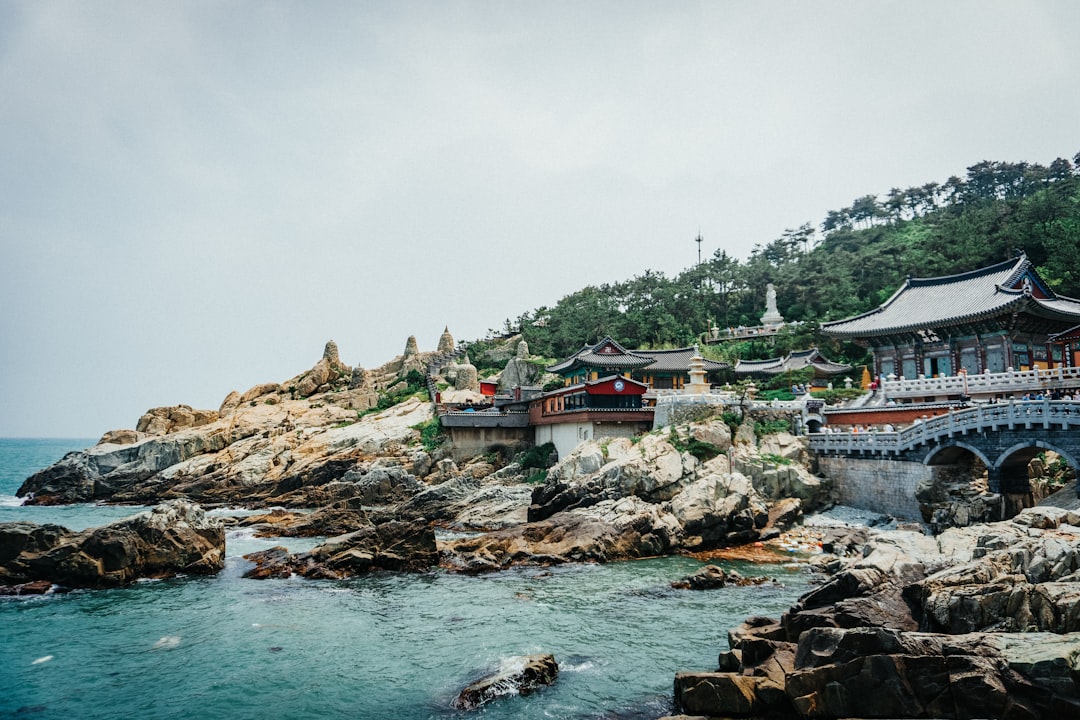
The Jeju Haenyeo Museum (제주해녀박물관) is the most thorough introduction to haenyeo culture available in English. It sits at 26 Haenyeobangmulgwan-gil in Gujwa-eup, approximately 300 meters from the Bus 701 "Haenyeo Museum" stop (roughly 75 minutes from Jeju City terminal).
Hours: 9:00am–6:00pm, last entry at 5:00pm. Closed on the first Monday of each month, plus New Year's Day, Seollal (Lunar New Year), and Chuseok. Confirm hours before visiting if you are traveling around a Korean public holiday.
Admission (as of 2026): ₩1,100 for adults, ₩500 for teenagers, free for children under 12.
The museum contains four exhibition halls covering history, equipment, village cooperative structures, and the current preservation situation. There is a full-scale bulteok replica and a video room with documentary footage. An English audio guide is available — use it, because the exhibit text alone does not convey the full context. I spent approximately 90 minutes here and found the equipment hall and the video footage the most informative sections.
The museum is worthwhile as a standalone visit or as a stop on the way to the east coast diving villages. If you are visiting Seongsan Ilchulbong, the two sites pair well in a single day.
Haenyeo Restaurants (해녀의 집)
Eating seafood harvested by haenyeo is a straightforward way to connect with the culture and support the divers directly. The restaurants you want are called haenyeo-ui jip (해녀의 집) — "haenyeo house" — and they operate near dive sites along the coast.
What to order:
- Abalone porridge (전복죽): ₩12,000–₩20,000 (as of 2026). The abalone is simmered into a rice porridge — mild, savory, and less intimidating than raw preparations. Good starting point.
- Sea urchin rice (성게밥): ₩15,000–₩25,000 (as of 2026). Sea urchin mixed into hot rice with seaweed and sesame oil. I paid ₩20,000 for this at a spot near Sehwa-ri and considered it a fair price.
- Grilled turban shell (소라구이): ₩15,000–₩30,000 (as of 2026). Cooked in the shell over a flame, served with a soy-based dipping sauce. Chewy texture, strong ocean flavor.
- Sashimi platter (회): ₩87,000+ (as of 2026). If you are eating with a group, a full raw seafood platter is worth considering — but prices vary significantly depending on the catch that day.
Haenyeo Kitchen (해녀키친) operates locations in Jongdal-ri and Bukchon. The format combines a short theatrical performance about haenyeo culture with a haenyeo seafood buffet. The founder comes from a haenyeo family. It is more curated than a roadside haenyeo-ui jip but gives context alongside the meal. Reservations are recommended.
Prices at working coastal restaurants are generally lower than at tourist-oriented spots in Jeju City. For a broader picture of Jeju food costs and how haenyeo restaurants fit into a travel budget, see the Jeju Island budget guide.
What You Need to Know
- Photography requires permission. Many haenyeo dislike being photographed, particularly during or immediately after dives. Always ask before raising a camera. At demonstration sites, photography is generally accepted; at working dive sites, the calculus is different.
- The demonstration may not involve actual diving. If haenyeo have completed their working dives for the day by the time the Seongsan demonstration starts, the program may switch to a singing performance instead. This is not a cancellation — it reflects the actual working rhythm of haenyeo life.
- No tourist dive programs exist. There are no programs that allow visitors to join actual haenyeo harvesting dives. Safety regulations and fishing laws prohibit it. Experiences marketed as "haenyeo diving" are snorkeling programs, not the actual practice.
- East coast villages are early-morning territory. Active haenyeo in Sehwa-ri, Hado-ri, and Jongdal-ri are generally in the water from around 8:00am. By mid-morning, many have finished for the day. Arriving late means the water is empty.
- Haenyeo are working, not performing. At non-demonstration sites, you are watching people at their job. Keep your distance, stay quiet, and do not approach or interrupt.
- The culture is in active decline. With 90%+ of divers over 60 and fewer than 6 under 30, the timeline of this tradition is real. The respectful way to engage with it reflects that.
Practical Tips
- Arrive at Seongsan by 1:15pm for the demonstration. The 1:30pm show fills the viewing area quickly on weekends. I arrived at 1:10pm on a Tuesday and found a spot easily. Weekends are more crowded — earlier arrival is safer.
- Combine the Haenyeo Museum with east coast village visits in one day. The museum is in Gujwa-eup, and the active diving villages of Sehwa-ri and Hado-ri are nearby. Bus 701 connects both. Build a full east coast day rather than making a dedicated museum trip.
- Bring cash for haenyeo restaurants. Many small coastal haenyeo-ui jip spots are cash-only or have unreliable card terminals. ₩30,000–₩50,000 (as of 2026) per person covers a solid seafood meal.
- Check the museum closure schedule before traveling. The Jeju Haenyeo Museum is closed on the first Monday of each month and all major Korean public holidays. A wasted trip is easily avoided with a quick check of the current calendar.
- Watch for the orange tewak from the road. On the east coast, you can spot active diving sessions from the coastal road without leaving your car. Pull over safely when you see clusters of orange floats — this is a reliable indicator of active haenyeo within the hour.
- Watch "The Last of the Sea Women" (2024) before your trip. The Apple TV+ documentary provides context that makes on-the-ground observation significantly more meaningful. Even 30 minutes of the film changes how you read what you are seeing at a dive site.
Frequently Asked Questions
Can tourists try haenyeo diving? No program allows visitors to participate in actual haenyeo harvesting dives. Fishing regulations and safety protocols prohibit it. What you will find marketed as haenyeo diving experiences are standard snorkeling or free-diving courses — legitimate activities, but unrelated to the actual haenyeo practice. If you want to learn free-diving on Jeju, those courses exist independently. The haenyeo harvest involves specific underwater terrain knowledge, equipment technique, and physical conditioning built over years that cannot be transferred in a tourist session.
How old are most haenyeo today? Over 90% of currently registered haenyeo are above age 60. The FAO's 2023 count placed total numbers at approximately 2,700, down from a peak of 23,081 in 1965. Fewer than 6 active divers are under 30 years old. Recruitment and retention is the central challenge for preservation programs funded by the Jeju provincial government, which has committed ₩27.3 billion (as of 2026) to sustaining the practice. Government initiatives focus on training stipends and safety technology rather than mandatory participation.
Is the Seongsan haenyeo demonstration free? The coastal path where demonstrations occur is free — you do not need to pay the ₩5,000 (as of 2026) Seongsan Ilchulbong crater entrance fee to access it. The demonstration itself has no admission charge. Demonstrations are scheduled daily at 1:30pm and 3:00pm. On some days, when haenyeo have finished working dives, the demonstration is replaced with a traditional singing performance. The path is accessible year-round, though weather and sea conditions can occasionally affect the schedule.
What is the difference between Jeju haenyeo and Japanese ama divers? Both are traditional female free-diving cultures, but several distinctions exist. Jeju haenyeo are exclusively female; Japanese ama diving has historically included some male participants. Jeju's grading system has three tiers (hagun, junggun, sanggun); ama typically uses a two-tier system. Jeju haenyeo culture has UNESCO Intangible Cultural Heritage status (awarded 2016); ama diving does not. The Jeju government's institutional support and cooperative structure is also more formalized than the ama equivalent, which may partly explain the stronger international visibility of the haenyeo community.
Where is the best place to see haenyeo actually working (not a demonstration)? The east coast villages of Sehwa-ri, Hado-ri, and Jongdal-ri in Gujwa-eup are the most reliable spots. Arrive between 8:00am and 10:00am on a calm day. Orange tewak floats offshore indicate active divers. Udo Island is also productive — the east coast of Udo has active haenyeo most mornings, and the island is accessible via a 15-minute ferry from Seongsan Port. These are working environments, not performance spaces, so quiet observation from shore is the appropriate approach.
How deep do haenyeo dive and how long do they hold their breath? Working dives typically reach 5 to 20 meters, with the average working depth around 10 meters. Breath-hold duration per dive runs 1 to 3 minutes. A full working day is 5 to 7 hours, though not all of that time is in the water — surface intervals for breathing recovery and sumbisori (the distinctive whistling exhale) are built into the rhythm. Haenyeo work approximately 90 days per year; the rest of the calendar is governed by weather, sea conditions, and seasonal restrictions designed to protect marine stock.