Jeju Island Travel Budget Guide: How Much Does a Trip Cost in 2026?
Quick Answer
A 3-day trip to Jeju Island costs approximately $327–$389 per person including round-trip flights from Seoul — based on a budget guesthouse, shared rental car, and local restaurant scenario. Budget travelers (buses, hostel, markets) can manage $200–$250 all-in. Without flights, typical daily spend runs $52/day on a tight budget or $107–$150/day for a standard independent trip. The biggest variables are whether you rent a car and how many paid attractions you plan to visit (as of 2026).
What Does a Jeju Trip Actually Cost?
Jeju Island is South Korea's most popular domestic destination, and for foreign travelers it presents a fairly straightforward cost structure: flights from Seoul are cheap and frequent, accommodation ranges from budget hostels to five-star resorts, and a large number of the island's top attractions are free.
The challenge is transport. Jeju's sights are scattered across a volcanic island roughly 73km wide — not walkable, and only partially served by buses. Whether you rent a car or rely on public buses has a significant effect on both your daily budget and how much of the island you actually see.
The other major variable is season. Jeju prices for flights, accommodation, and rental cars drop 30–50% between November and February compared to peak season in summer or during the cherry blossom period in late March and April.
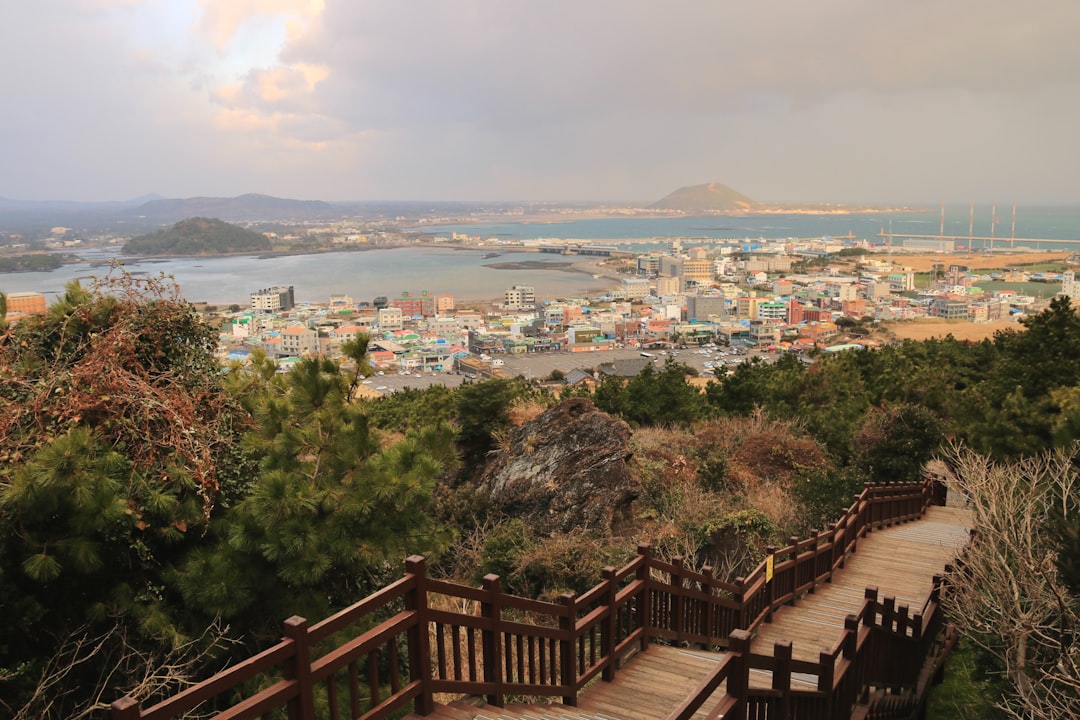
Photo by Hongbin on Unsplash
Getting There: Flights from Seoul
The standard route is Seoul Gimpo (GMP) to Jeju International Airport (CJU) — a 55-minute flight operated by multiple carriers daily.
Low-cost carriers (LCCs) dominate this route. Jeju Air (제주항공) runs approximately 139 daily flights and holds the largest market share. T'way Air (티웨이항공), Jin Air (진에어), Air Busan, and Eastar Jet all operate the route as well. With advance booking, one-way fares start as low as $19–$24 (as of 2026). Typical prices run $42–$55 one-way. Round-trip fares from Seoul start around $54, though prices spike significantly during school holidays and autumn foliage season.
Korean Air full-service starts from approximately $114 one-way (as of 2026) — more than double the LCC price for the same 55-minute flight. For most travelers, the premium is hard to justify for a short domestic flight.
Booking from Incheon (ICN): Flights from Seoul Incheon to Jeju exist but are less frequent. Gimpo is closer to central Seoul and generally the better option for domestic connections.
Cheapest month to fly: January. Book at least 3 weeks in advance for the best LCC fares.
Accommodation: What to Expect
Jeju has a wide range of accommodation, from ₩24,000/night hostel dorms to oceanfront resorts starting at $282/night. The price difference between Jeju City (north) and Seogwipo (south) is also meaningful — equivalent properties in Seogwipo typically run about 15% cheaper.
| Type | Price Per Night (as of 2026) |
|---|---|
| Hostel dorm bed | ~$18 (~₩24,000) |
| Budget guesthouse (private room) | $22–$39 (~₩30,000–53,000) |
| Mid-range hotel (3-star) | $39–$90 (~₩53,000–121,000) |
| Pension / minbak (민박) | ₩50,000–₩120,000 |
| Airbnb | ₩50,000–₩150,000+ |
| Luxury resort (e.g. Grand Hyatt Jeju) | $282+ (~₩381,000+) |
Coastal village guesthouses in areas like Aewol (애월) often offer private rooms with kitchenettes and outdoor BBQ setups at mid-range prices — a practical option for groups who want to cook some meals and manage food costs.
The clearest savings lever is timing: book weekdays and travel November through February. Peak season (July–August and cherry blossom period) pushes prices toward the upper end of every category.
Food Costs in Jeju
Average daily food spending on Jeju runs approximately $28/day (~₩41,000) per person, based on aggregated traveler data (as of 2026). That average covers a mix of local sit-down meals and occasional convenience store stops — not fine dining, but not budget-scraping either.
Typical meal costs:
| Item | KRW | USD |
|---|---|---|
| Gogi guksu (고기국수 — pork noodle soup) | ~₩9,000 | ~$6 |
| Local Korean set meal / haejang-guk | ₩8,000–₩12,000 | $6–$9 |
| Black pork BBQ (흑돼지 — heukdwaeji), 1 portion | ~₩22,000 | ~$16 |
| Seafood at a local market restaurant | ₩15,000–₩30,000 | $11–$22 |
| Iced Americano at an ocean-view café | ₩5,500–₩7,000 | $4–$5 |
| Convenience store meal (GS25, CU, 7-Eleven) | ₩4,000–₩7,000 | $3–$5 |
Standard sit-down meals at local restaurants run ₩12,000–₩15,000 per person — that is the baseline you can plan around for breakfast and lunch. Black pork BBQ (흑돼지) is the food Jeju is most associated with, and at ₩22,000 per portion it is not expensive for a full meal with side dishes, but it is not a ₩10,000 bowl of noodles either.
For lower food costs, Dongmun Market (동문시장) in Jeju City is the right place: night stalls offer seafood, local snacks, and fresh abalone at prices well below restaurant level. Convenience stores are a reliable fallback for quick meals.

Photo by makafood on Pexels
Getting Around Jeju: Transport Costs
Rental Car
For most independent travelers, renting a car is the practical choice. Jeju's major attractions — Seongsan Ilchulbong on the east coast, Hallasan in the center, the Hyeopjae and Hamdeok beaches on opposite coasts — are too spread out to cover efficiently by bus.
Economy cars (Kia Morning class) start from approximately ₩27,000/day (~$20) when booked in advance online, with average daily rates running $31–$43 (as of 2026). Mid-size cars with full insurance in shoulder season run ₩120,000–₩160,000/day (~$90–$120). Peak season prices are significantly higher — this is one cost category where booking 3+ weeks ahead makes a real difference.
Note on insurance: Basic car rental insurance is typically separate from the base rate. Full coverage adds meaningful cost; factor this into your comparison rather than going by the headline daily price.
For two to four travelers splitting the cost, a rental car almost always works out cheaper per person than relying on taxis, and it removes the scheduling constraint of bus timetables.
Public Bus
Jeju's bus network covers the island reasonably well on the main coastal routes. The standard fare is ₩1,150/ride with a T-money card or contactless payment, or ₩1,200 cash (as of 2026).
2026 update: All Jeju buses now accept contactless Visa, Mastercard, and UnionPay cards — you tap your card or phone on the reader when boarding and exiting. A T-money card (티머니) is no longer required for foreign tourists, which removes what was previously a common friction point.
Key routes: - Bus 201: east coast loop, runs every 15–30 minutes - Bus 202: west coast loop, runs every 15–25 minutes
Express intercity buses run ₩2,000–₩3,000 per trip. Free transfers apply within 40 minutes when paying by card.
The bus is a workable option if your itinerary is structured around the main coastal circuit, but journey times are long and less-visited inland spots are not well served.
Taxi
The taxi meter starts at ₩3,800 for the first 2km, then approximately ₩1,000 per additional km (as of 2026). From Jeju International Airport to central Jeju City — roughly 3–4km — runs about ₩9,000 in a regular taxi or ₩16,200 in a deluxe taxi (모범택시). A night surcharge applies between midnight and 4am. Taxis accept cash, credit card, and T-money.
Taxis work well for occasional trips or airport transfers, but are not cost-effective as a primary mode of transport across the island.
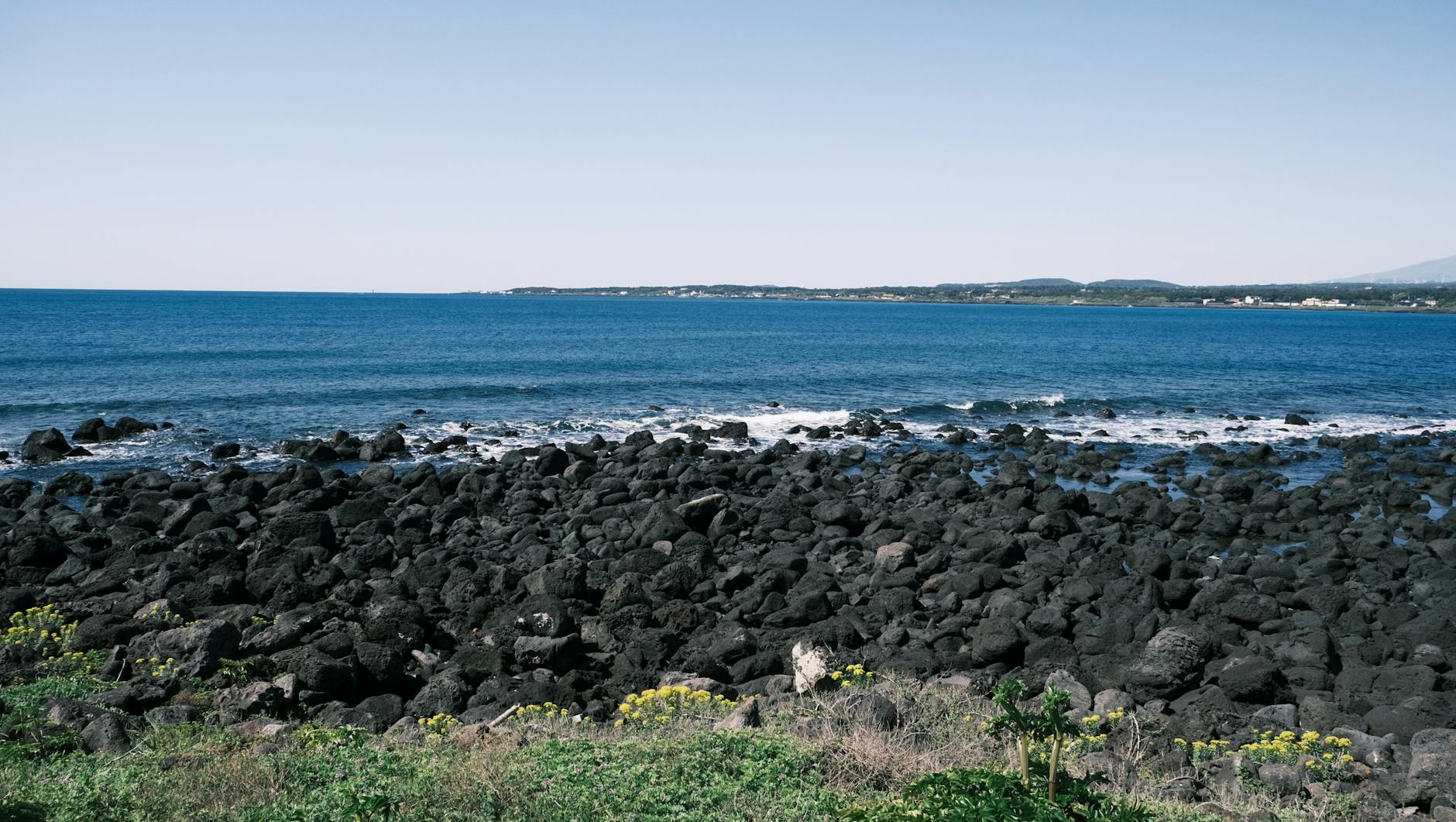
Photo by nana liu on Pexels
Activities and Entrance Fees
A notable feature of Jeju's attractions is how many are free. The major beaches — Hamdeok (함덕) on the northeast coast, Hyeopjae (협재) on the west — have no entry fee. Seopjikoji (섭지코지), Yongduam Rock (용두암 — Dragon Head Rock), and O'Sulloc Tea Museum (오설록 티뮤지엄) all charge no admission. Hallasan National Park hiking is free, though the Baengnokdam summit route requires an advance online reservation (bookings open on the 1st of each month at visithalla.jeju.go.kr).
| Attraction | Adult Entry (as of 2026) |
|---|---|
| Seongsan Ilchulbong (성산일출봉) | ₩5,000 (~$3.70) |
| Hallasan National Park (hiking) | Free — reservation required for summit |
| Udo Island ferry, round-trip | ₩8,900 adult / ₩4,900 child (~$6.60 / $3.60) |
| Manjanggul Lava Tube (만장굴) | ₩4,000 adult / ₩2,000 child (~$3 / $1.50) |
| Jeju Folk Village (민속촌) | ₩11,000–₩15,000 adult (~$8–$11) |
| Cheonjiyeon Waterfall (천지연폭포) | ₩2,000 adult / ₩1,000 child (~$1.50 / $0.75) |
| Seopjikoji (섭지코지) | Free |
| Yongduam Rock (용두암) | Free |
| Hamdeok Beach (함덕해수욕장) | Free |
| Hyeopjae Beach (협재해수욕장) | Free |
| O'Sulloc Tea Museum (오설록 티뮤지엄) | Free — food and drinks purchased separately |
| Haenyeo (해녀) performance near Seongsan | Free — daily beach performance |
Note on Jeju Folk Village: Entry fees vary by source — approximately ₩11,000–₩15,000 for individual visitors, with group discounts. Check the official site before visiting.
A well-planned 3-day itinerary can include multiple free or low-cost sites alongside one or two paid attractions, keeping activity costs under $25 total.
Daily Budget Breakdown
All figures are per person, per day, excluding flights.
| Category | Budget (~$52/day) | Mid-Range (~$143/day) | Comfortable (~$290/day) |
|---|---|---|---|
| Accommodation | Hostel dorm ~$18 | Guesthouse $39–$60 | Hotel/pension $80–$120 |
| Food | Convenience store + market ~$15–$18 | Mix of local restaurants ~$28–$35 | Restaurant meals incl. black pork ~$50–$70 |
| Transport | Bus only ~$3 | Car rental (split) or taxis ~$25–$35 | Rental car with full insurance ~$90 |
| Activities | 1 paid + free sites ~$5 | 2–3 paid attractions ~$15–$20 | Guided tours or premium experiences ~$30–$50 |
| Daily total | ~$41–$52 | ~$107–$150 | ~$250–$330 |
Luxury travelers — five-star resort ($282+/night), fine dining ($80–$150/person), private transfers — should budget $431+/day (as of 2026).
Sample 3-Day Budget
Based on a mid-range solo traveler flying from Seoul. All prices as of 2026.
| Item | USD | KRW (approx.) |
|---|---|---|
| Round-trip flight GMP ↔ CJU (LCC) | $80–$110 | ₩108,000–₩149,000 |
| 2 nights guesthouse (~$40/night) | $80 | ₩108,000 |
| Food — 3 days × $28/day | $84 | ₩113,000 |
| Rental car — 2 days (split with travel partner) | $43–$60 | ₩58,000–₩81,000 |
| Entrance fees — 3–4 attractions | $20–$25 | ₩27,000–₩34,000 |
| Miscellaneous (snacks, transport, small purchases) | $20–$30 | ₩27,000–₩41,000 |
| Total estimate | ~$327–$389 | ~₩441,000–₩525,000 |
A budget traveler staying in a hostel dorm, eating from markets and convenience stores, and using the bus can reduce this to approximately $200–$250 all-in including flights. A comfortable traveler who upgrades accommodation and adds a nicer dinner each evening should plan for $400–$600.
What You Need to Know
-
Rental car prices vary significantly by season. The figures above are for shoulder season. In July, August, and during the cherry blossom period (late March–April), rental car rates spike — sometimes doubling. Book 3 weeks ahead and compare Skyscanner, Klook, and Korean car rental sites directly.
-
Basic car rental insurance is usually not included in the headline price. LCC-style pricing on rental cars is common in Jeju. The ₩27,000/day figure often covers liability only. Full coverage typically adds ₩20,000–₩40,000/day (as of 2026). Read the inclusions before booking.
-
Hallasan summit reservations open on the 1st of each month. The Baengnokdam crater trail requires an advance booking at visithalla.jeju.go.kr — walk-in access is not permitted for the summit route. Plan this at least a month ahead if it is a priority.
-
Jeju Folk Village entry fee has two figures in circulation. ₩11,000 (group/advance) and ₩15,000 (individual on-site) have both been reported. Verify on the official site before visiting.
-
All prices are as of 2026 and subject to change. Operating hours and entrance fees for Jeju attractions are updated seasonally. Check individual attraction sites before your visit.
-
Off-season travel (November–February) offers the clearest savings. Fewer crowds, lower prices across all categories, and fewer booking complications. Weather is cooler and some outdoor cafes close, but all major attractions remain open.
Practical Tips
-
Book LCC flights at least 3 weeks ahead. Same-week fares on the GMP–CJU route can run 2–3× the advance price. Set a price alert on Skyscanner or KAYAK and book as soon as you have your dates confirmed.
-
Visit November through February for 30–50% lower costs. Accommodation, flights, and rental cars all drop significantly outside peak season. The island is also considerably less crowded.
-
Tap your contactless card directly on Jeju buses. As of 2026, all Jeju buses accept Visa, Mastercard, and UnionPay tap-to-pay. No need to buy a T-money card (though T-money at ₩3,000–₩5,000 works fine if you already have one).
-
Split the rental car cost with a travel partner. At $31–$43/day for an economy car, two people splitting transport costs pay roughly $15–$22 each per day — far cheaper than taking taxis across the island and far more flexible than buses.
-
Eat lunch at Dongmun Market (동문시장) rather than tourist-area restaurants. The night stalls and day vendors offer local seafood, snacks, and Jeju specialties at prices noticeably below what you will pay at the same food around Seongsan or Hallasan trailheads.
-
Build your itinerary around free attractions. Hallasan hiking, Hamdeok Beach, Hyeopjae Beach, Seopjikoji, Yongduam Rock, O'Sulloc Tea Museum, and the Haenyeo performance near Seongsan are all free. You can fill two of three days with zero entrance fees and still see the island's most recognizable landscapes.
-
Book the Hallasan summit reservation on the 1st of the month. The Baengnokdam trail reservation system at visithalla.jeju.go.kr opens monthly slots on the 1st. If your trip dates fall in a popular season, this fills within hours. Log in before 9am KST on reservation day.
Frequently Asked Questions
How much does it cost to fly from Seoul to Jeju? One-way flights from Seoul Gimpo (GMP) to Jeju (CJU) start around $19–$24 with budget carriers like Jeju Air, T'way Air, or Jin Air when booked in advance (as of 2026). Typical prices run $42–$55 one-way. Round-trip fares start from approximately $54. Korean Air full-service starts around $114 one-way — more than double the LCC price for the same 55-minute flight.
Do I need a rental car in Jeju? For many independent travelers, a rental car is the most convenient option. Jeju's main attractions are spread across a large island, and buses — while affordable at ₩1,150/ride — involve long journey times and don't reach all areas. Economy cars start at approximately $20–$43/day (as of 2026). For two to four people splitting the cost, a rental car is almost always cheaper per person than taxis. That said, travelers whose itinerary stays along the main coastal bus routes can manage perfectly well without one.
What is the cheapest time to visit Jeju Island? November through February — prices for accommodation, flights, and rental cars are 30–50% lower than peak season. Avoid May (spring break), July–August (summer school holidays), and October (autumn foliage season). January is typically the cheapest month to fly.
Is Jeju Island expensive compared to mainland Korea? Jeju is slightly more expensive than most mainland Korean cities for accommodation and food, but broadly comparable to Seoul. The largest cost differentiator for foreign travelers is transport — renting a car adds $30–$90+/day depending on the vehicle and insurance level.
What is free to do in Jeju Island? Hallasan hiking (advance reservation required for the summit), Seopjikoji, Yongduam Rock (Dragon Head Rock), Hamdeok Beach, Hyeopjae Beach, O'Sulloc Tea Museum (entry only), the daily Haenyeo performance near Seongsan, and most beaches on the island. A full day of Jeju sightseeing is easily achievable with zero entrance fees.
How much should I budget for a 3-day trip to Jeju? A mid-range 3-day trip including round-trip flights from Seoul costs approximately $327–$389 per person (as of 2026). Budget travelers — hostel, buses, local markets — can do it for $200–$250 all-in. Comfortable travelers upgrading accommodation and adding nicer meals should plan for $400–$600.
Can I use a credit card on Jeju buses? Yes — as of 2026, all Jeju buses accept contactless Visa, Mastercard, and UnionPay. Tap your card or phone on the reader when boarding and again when exiting. A T-money card is no longer required for foreign tourists, though it works if you already have one.
How much does food cost per day in Jeju? Average daily food spending is approximately $28/day (~₩41,000) per person based on 2025–2026 traveler data. Budget eating — local restaurants and market stalls — runs ₩12,000–₩15,000 per meal. Black pork BBQ (흑돼지) costs around ₩22,000 per portion. Convenience stores offer full meals for ₩4,000–₩7,000.