Soju Guide: Types, ABV, Brands, and How to Drink It in Korea (2026)
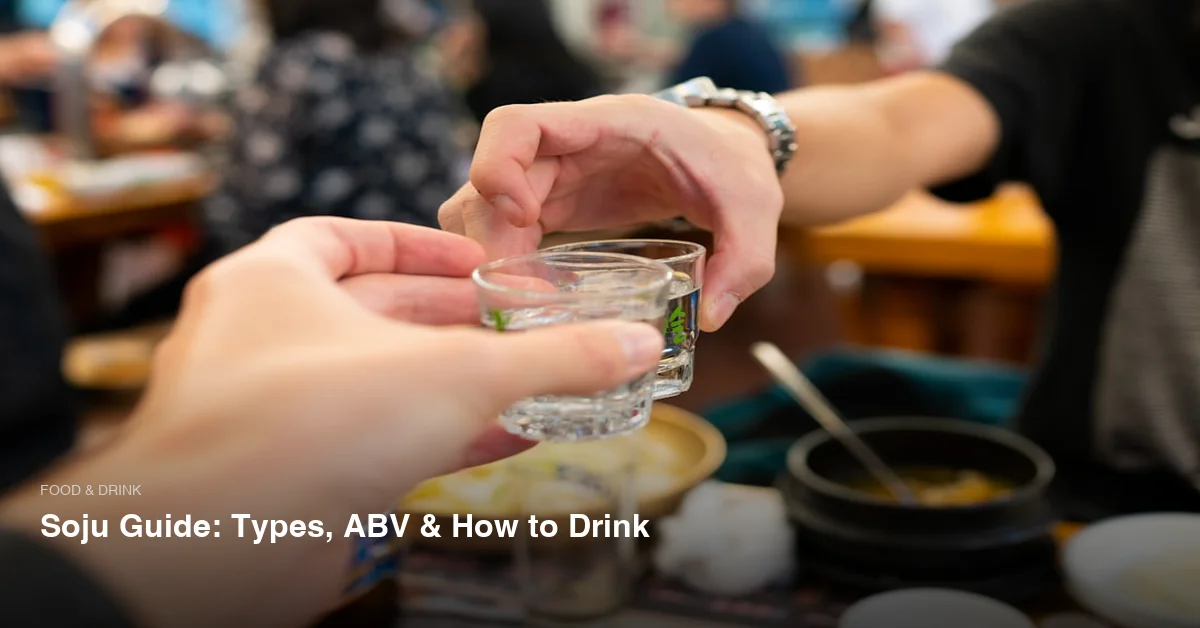
Photo by The Creativv on Unsplash
5 things to know before you read: - Mainstream soju now sits at 15.5–16% ABV — down from 25% in the 1990s - Jinro is the world's best-selling branded spirit, outselling whisky, vodka, and rum combined - There are two fundamentally different types: diluted (mass-market green bottles) and traditionally distilled (premium) - A standard bottle costs approximately ₩1,800–₩2,000 at convenience stores (as of 2026) - Drinking soju in public — parks, riverbanks, convenience store benches — is completely legal in Korea
Quick Answer
Soju (소주) is Korea's national spirit — a clear, mild liquor that outsells every other branded spirit in the world. Mainstream brands sit at 15.5–16% ABV as of June 2026, roughly twice beer but far lighter than whisky. A bottle costs ₩1,800–₩2,000 at any convenience store. There are two fundamentally different types: the ubiquitous green-bottle diluted soju and a premium traditionally distilled category with far more complexity.
What Is Soju?
The word soju translates literally to "burned liquor" — a reference to the heat used in distillation. Its origins trace to the 13th century Goryeo Dynasty (고려 왕조), when Mongol invaders introduced Persian-derived distillation techniques to the Korean peninsula during the Yuan occupation. Andong (안동) in North Gyeongsang Province is widely regarded as the birthplace of Korean soju, as one of the original Mongol distillery sites.
For most of its history, soju was made from rice and was expensive enough to be considered a luxury. That changed in 1965 when the South Korean government, responding to post-war grain shortages, banned rice-based distillation entirely. Manufacturers switched to cheaper starches — sweet potato, tapioca, cassava — giving birth to modern diluted soju (희석식 소주). The rice distillation ban was lifted in the 1990s, prompting a slow revival of premium distilled versions.
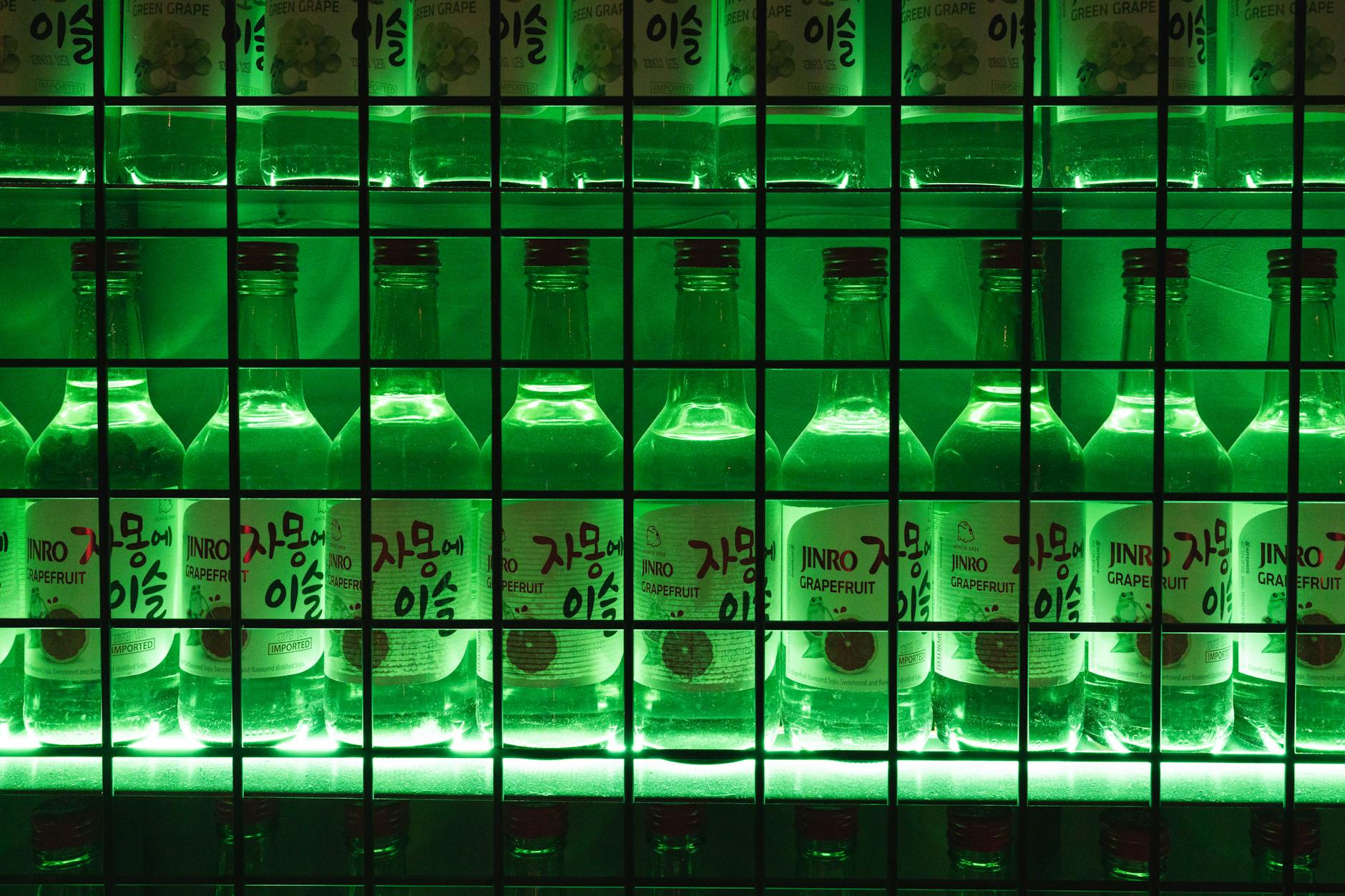
Photo by Valentin Ilas on Pexels
Diluted vs. Distilled: The Two Types of Soju
This distinction matters more than brand. Most visitors encounter diluted soju without realizing it is not actually made from rice.
Diluted soju (희석식 소주) is the green-bottle variety you see everywhere. Industrial ethanol is produced by fermenting starches at high volume, then diluted with water to the target ABV — typically 15.5–16% as of 2026 — and sweetened with aspartame, stevia, or citric acid. Production can be completed in as little as one day. The result is neutral-tasting, consistent, and very affordable. Every major mass-market brand uses this method: Chamisul, Chum Churum, Jinro Is Back, Good Day.
Traditional distilled soju (증류식 소주) starts from locally sourced grain — usually rice — fermented with nuruk (누룩), a traditional grain-based yeast starter, then distilled in pot stills. The process takes months, retains natural flavor compounds from the grain, and produces something that tastes closer to a quality grain spirit than the green-bottle variety. No artificial sweeteners. Price reflects this: anywhere from ₩15,000 to over ₩100,000 per bottle (as of 2026).
If you order soju at a standard Korean restaurant, you are getting diluted soju. If you want the traditional version, you have to ask for it specifically — or seek out a specialty sool bar (술집).
Soju ABV and Brand Comparison
Korea's drinking market has been in a sustained low-ABV transition. Mainstream ABV dropped from 25% in the 1990s to 23% in 1998, below 20% as the dominant category after 2007, and as of June 2026, Chamisul Fresh broke what Korean media called the "16-degree barrier" by lowering to 15.7%. This is the clearest signal of where the market is heading.
The Main Three Brands
Chamisul (참이슬) by HiteJinro — Jinro holds approximately 50–51% of the Korean soju market and has been the world's best-selling branded spirit multiple years running, with around 3.2 billion bottles sold annually. Chamisul Fresh, at 15.7% ABV as of June 2026, is the standard choice at virtually any Korean restaurant or pojangmacha (포장마차). It is filtered through bamboo charcoal four times, giving a clean finish with a mild ethanol burn. The stronger variant, Chamisul Original (20.1% ABV), has more bite and is preferred by drinkers who find the mainstream versions too diluted.
Chum Churum (처음처럼) by Lotte Chilsung — The name means "like the first time." Launched in 2006, it quickly became the second-most popular national brand. Made with alkaline mineral water from Gangwon Province, it has a noticeably softer, rounder mouthfeel than Chamisul — less sharp on the palate, slightly sweeter. Available in several variants: Mild (16%), Regular (16.9%), and Rich (21%).
Jinro Is Back (진로이슬로) — A retro throwback bottle launched by HiteJinro with a blue toad logo. At 15.5% ABV, it is one of the lowest among mainstream brands. The flavor is notably clean and mild, which makes it well-suited to pairing with lighter foods like sashimi rather than heavy BBQ.
Brand ABV Quick Reference (as of 2026)
| Brand | ABV | Key Feature |
|---|---|---|
| Chamisul Fresh (참이슬 후레쉬) | 15.7% | Bamboo charcoal filtered x4; market leader |
| Jinro Is Back (진로이슬로) | 15.5% | Retro blue bottle; mild finish |
| Chum Churum Mild (처음처럼) | 16% | Alkaline water; softer mouthfeel |
| Chum Churum Regular | 16.9% | Standard version |
| Good Day (좋은데이) | 16.9% | Jirisan mineral water; pioneered low-ABV |
| Chamisul Original (참이슬 오리지널) | 20.1% | Classic, stronger version |
| Hallasan Mild (한라산) | 17% | Jeju volcanic spring water |
| Hallasan Original | 21% | Full-strength Jeju version |
| Andong Soju (안동소주) | 45% | Traditional distilled; premium |
Flavored Soju — The Entry Point for Most Visitors
Flavored soju emerged in the early 2010s and now accounts for the majority of international soju sales. The ABV typically sits between 12–14%, the sweetness masks most of the alcohol burn, and the variety means there is likely at least one flavor you will enjoy. It is genuinely the most accessible starting point for anyone unfamiliar with the taste of standard soju.
Worth knowing: Koreans themselves mostly drink classic unflavored soju. Flavored varieties are consumed more by younger Koreans and foreign visitors. The in-country popularity does not match the international sales composition.
Most popular flavors, ranked (April 2026): 1. Green Grape (청포도) — balanced sweetness, most versatile for mixing 2. Peach (복숭아) — soft, aromatic; the most popular flavor among female drinkers in Korea 3. Strawberry (딸기) — bright, berry-forward 4. Grapefruit (자몽) — refreshing, slightly tart; popular in summer 5. Yogurt (요구르트) — best for cocktail mixing; distinctive creamy character 6. Plum (매실) — sweet but complex, with floral notes; considered the most sophisticated of the fruit variants 7. Lychee (리치) 8. Blueberry (블루베리)
A 2025–2026 trend worth noting: zero-sugar (제로슈거) variants of flavored soju have launched across multiple brands, targeting health-conscious drinkers.
Regional Soju — What to Drink Where
Korean drinking culture is notably regional. Locals typically drink their home province's brand, and switching to the "wrong" brand at a local restaurant in certain cities will occasionally earn a raised eyebrow. For travelers, trying the regional brand is one of the more interesting ways to connect with local culture.
| Region | Brand | ABV | Notes |
|---|---|---|---|
| Seoul / National | Chamisul, Jinro Is Back | 15.5–20.1% | National default everywhere |
| Gangwon Province | Chum Churum | 16–21% | Alkaline water from Gangwon mountains |
| Busan | C1 (씨원) | 18% | Local pride; smooth finish; Samgaksan bedrock water |
| Gwangju / South Jeolla | Yipsejoo (잎새주) | 17.5–19% | Canadian maple syrup added |
| Ulsan / South Gyeongsang | Good Day (좋은데이) | 16.9% | The brand that pioneered low-ABV soju nationally |
| Daegu / North Gyeongsang | Delicious Charm (맛있는참) | 16.9% | Xylitol sweetener |
| Daejeon / Chungcheong | O2Linn (O2린) | 16.9% | Marketed on dissolved oxygen content |
| Jeju Island | Hallasan (한라산) | 17–21% | Jeju volcanic spring water; charcoal filtered |
If you are traveling around Korea rather than staying in Seoul, picking up the local brand at a convenience store in each city is worth doing. The differences in water source and sweetening affect the taste in ways that are subtle but real.
Premium and Traditionally Distilled Soju
The premium segment is small but growing. If you have any interest in Korean spirits beyond the green bottle, these are worth knowing.
Hwayo (화요) is the reference point for modern premium distilled soju. Produced by the Kwangjuyo Group in Yeoju, Gyeonggi Province, it is made from 100% domestic rice fermented with nuruk and distilled and aged in ceramic onggi (옹기) pots. The product line ranges from Hwayo 17 (17% ABV) through to Hwayo 53 (53% ABV), with the 41% and 53% variants drawing comparisons to quality grain whisky. Hwayo 19 Gold — a new addition launched in 2025 — is the brand's first new product in a decade. Prices run approximately ₩15,000–₩100,000+ depending on variant (as of 2026). Available at premium restaurants, department store liquor sections, and Incheon Airport duty-free.
Andong Soju (안동소주) is produced in Andong, where soju's Korean history began. At 45% ABV, it is dramatically stronger than anything in the diluted category and uses centuries-old methods — it is designated an Important Intangible Cultural Asset. The flavor is sharp, clean, and notably earthy. It is often bought as a premium gift item rather than for casual drinking.
Won Soju (원소주) is a newer craft entrant, founded by Korean rapper Zico and made from 100% rice using non-pressurized distillation. Priced at approximately ₩12,900 per bottle (as of 2026), it is available at GS25 convenience stores when in stock — it sold out quickly at launch and has maintained consistent demand.
How to Drink Soju — Etiquette That Actually Matters
Korean drinking culture is shaped by Confucian hierarchy (유교), and the etiquette rules are not merely ceremonial — they are the actual social norms you will encounter.
Pouring rules: Never pour your own drink. Someone else at the table pours for you, and you pour for others — especially for anyone older or senior to you. Use both hands when pouring for an elder, or support your pouring arm at the wrist or elbow with your other hand. When receiving a pour from someone older or higher-ranking, hold the glass with both hands.
Reading the table: Keep an eye on others' glasses. If someone's glass is empty, that is your cue to offer a refill. An empty glass at a Korean table means someone is not paying attention.
The first round: The first shot (첫 잔) is traditionally downed together as a group. Common toasts are "Geonbae" (건배, the standard Korean toast) and "One shot" (원샷). After that, sipping at your own pace is fine.
Drinking with someone older: Turn your head slightly to the side — roughly 30–45 degrees — before drinking in the presence of an elder or superior. This is a traditional Confucian gesture of deference, and while younger Koreans sometimes skip it in casual settings, it is noticed when you do it correctly.
A practical tip for limiting yourself: If you do not want more alcohol, leave your glass slightly full rather than empty. Koreans traditionally do not refill a full glass. An empty glass signals readiness for another pour.
Soju is served cold — ideally 4–8°C — and always with food. Drinking on an empty stomach is genuinely frowned upon in Korean culture. Anju (안주) — the food eaten alongside drinking — is not optional etiquette; it is standard practice.

Photo by Daniel on Unsplash
Somaek — How to Make the Soju-Beer Bomb
Somaek (소맥) is the combination of soju (소주) and maekju (맥주, beer). It is not a novelty — it is one of the most common ways Koreans actually drink, particularly at restaurants and pojangmacha. The result is lower ABV than straight soju, carbonated, and significantly easier to drink than either component alone.
The standard ratio: 3 parts soju to 7 parts beer — known colloquially as the "golden ratio" (황금비율). This is not a casual suggestion; Koreans take the ratio seriously enough that it comes up in conversation.
How to make it: Pour a shot of soju into a shot glass. Fill a beer glass approximately two-thirds with beer. Drop the shot glass into the beer glass (called poktanju, 폭탄주, or "bomb shot" style) and drink. Alternatively, mix directly in the beer glass. Some drinkers place a chopstick in the glass and spin it quickly to create a brief whirlpool before drinking — this is stylistic rather than functional, but you will see it done.
The beer used is almost always a light Korean lager (Cass, Hite, Terra) rather than craft beer. The lighter the beer, the more the mix approximates the traditional somaek flavor.
Where to Buy Soju and What to Pay
Convenience stores (편의점): GS25 (GS25 편의점), CU, 7-Eleven, Emart24, and Ministop each have thousands of locations across Korea — GS25 and CU alone each operate approximately 17,000 stores nationally. A standard 360ml bottle of mainstream soju costs approximately ₩1,800–₩2,000 (as of 2026). Most convenience stores have outdoor benches or tables where you can sit and drink legally.
Supermarkets (마트): E-Mart, Homeplus, and Lotte Mart typically price bottles at ₩1,300–₩1,900 (as of 2026) — slightly cheaper than convenience stores. Better selection of regional and premium brands.
Pojangmacha and pocha: At outdoor tent stalls or retro-style indoor bars, expect to pay approximately ₩4,000–₩6,000 per bottle (as of 2026), with anju dishes running ₩7,000–₩15,000. Notable pojangmacha areas in Seoul include Jongno 3-ga Pocha Street (종로3가 포차거리) near exits 5–6 of Jongno 3-ga station, Mapo Pocha Street (마포 포차거리), and Euljiro 3-ga Nogari Alley (을지로3가 노가리골목). Cash is often preferred at these spots.
Restaurants: ₩5,000–₩7,000 per bottle at a standard Korean restaurant (as of 2026). Upscale restaurants and hotel bars charge ₩10,000–₩20,000 or more.
Duty-free: Premium brands including Hwayo and Andong Soju are available at Incheon Airport duty-free — a practical option if you want to bring home a quality bottle without the hassle of carrying it through your trip.
Hangover Recovery
Korea has a dedicated commercial category for hangover remedies, stocked at every convenience store. These are sold as pre-emptive or morning-after drinks rather than miracle cures.
Commercial hangover drinks (숙취해소음료): - Condition (컨디션): One of the oldest brands; contains Oriental raisin tree seeds (헛개나무), lotus seeds, and herbal extracts. Typically taken before drinking. - Hut Gae Su (헛개수): 100% Oriental raisin tree fruit extract — the most widely available single-ingredient option. - Ready Q (레디큐): Prickly pear cactus extract combined with green tea extract and vitamins. Can be taken before or during drinking. - Morning Care (모닝케어): Amino acids and vitamins; designed for the morning after.
Prices run approximately ₩1,500–₩3,000 per bottle or sachet at convenience stores (as of 2026).
Food-based remedies: Haejang-guk (해장국, "hangover soup") is the standard Korean morning-after meal — bean sprout soup (콩나물국) being the lightest and most stomach-friendly version. Korean pear juice and honey water (꿀물) are common home remedies backed by some evidence that fructose helps the body metabolize acetaldehyde. Sikhye (식혜), a sweet rice punch, is used to replenish sugars.
None of these remedies are clinically proven to eliminate hangover symptoms. Hydration — water between drinks — remains the most evidence-backed preventive measure.
What You Need to Know
- Public drinking is legal. Unlike most countries, drinking in public outdoor spaces — Han River parks, convenience store benches, pojangmacha sidewalk tables — is completely legal in Korea. Some designated areas prohibit it, but these are clearly signed.
- Legal drinking age is 19 Korean age (만 19세), which roughly corresponds to 18 by international reckoning. Convenience stores may ask for ID.
- Standard bottle is 360ml. A standard soju shot glass (소주잔) holds approximately 50ml, meaning one bottle yields about 7 shots.
- Never refuse the first drink. In Korean social settings, declining the first drink offered is considered rude. If you want to stop after that, leaving your glass slightly full is the accepted signal.
- Soju itself is generally vegan. The anju that accompanies it often contains pork or seafood — ask if you have dietary restrictions.
- Tipping is not expected. No tipping culture at pojangmacha, Korean bars, or restaurants.
Practical Tips
-
Start with flavored soju if you are new to it. Green grape (청포도) or peach (복숭아) at 13% ABV are significantly more approachable than standard soju at 16%. The convenience store has both, usually in a 360ml bottle for the same price as the classic version.
-
Try the regional brand wherever you travel. Busan: ask for C1 (씨원). Jeju: Hallasan (한라산). Gwangju: Yipsejoo (잎새주). Drinking the local brand is one of the more low-effort ways to engage with regional identity, and locals genuinely notice.
-
Make somaek with the 3:7 ratio. Pour soju into a shot glass, fill a beer glass two-thirds with Korean lager, drop the shot glass in. The golden ratio (황금비율) is a real thing — the 3:7 balance makes the drink noticeably better than guessing.
-
Use both hands when pouring for someone older. You do not need to know all the etiquette rules, but this one is visible and specific enough that doing it correctly leaves a noticeably good impression.
-
Serve and drink soju cold. Most convenience stores keep soju refrigerated. If you are at a pojangmacha, ask for it cold (차갑게 주세요, "cha-gap-ge ju-se-yo"). Room-temperature soju is considerably less pleasant.
-
Buy hangover drinks before you start, not after. Convenience stores stock Condition and Hut Gae Su at the checkout counter. They are most effective taken before or during drinking, not the morning after.
-
If you want premium soju, go to Incheon Airport duty-free or a department store. Hwayo and Andong Soju are not consistently available at standard convenience stores. Department store liquor sections (Lotte, Shinsegae) or specialty sool bars in Insadong (인사동), Itaewon (이태원), or Hongdae (홍대) are reliable sources.
Frequently Asked Questions
How strong is soju compared to beer and wine? Mainstream soju in 2026 sits at 15.5–16% ABV — about twice the strength of standard Korean beer (4.5–5%) and roughly comparable to a full-bodied wine. Traditional distilled soju ranges from 25% to 53% ABV. The flavored varieties, at 12–14% ABV, sit closer to wine than spirits.
What is the difference between Chamisul and Chum Churum? Both are diluted soju, but the base water differs: Chamisul uses bamboo charcoal-filtered water; Chum Churum uses alkaline mineral water from Gangwon Province, which gives it a softer, rounder mouthfeel. Most drinkers find Chamisul crisper and Chum Churum smoother. The ABV difference is small — 15.7% vs. 16% or 16.9% depending on the Chum Churum variant.
What is the best soju for someone who has never tried it? For a first experience, green grape (청포도) or peach (복숭아) flavored soju at 13% ABV is the most accessible entry point. If you want to try classic soju, Jinro Is Back (15.5% ABV) is the mildest among the mainstream unflavored options, with a clean finish that does not overpower.
Is it safe to buy soju at a convenience store and drink it outside? Yes. Public drinking is legal in most outdoor spaces in Korea — parks, riverbanks, convenience store benches — and convenience stores sell soju cold. This is not a grey area; it is standard practice. Some specific designated zones prohibit it, but these are the exception rather than the rule.
What food should I eat with soju? Soju pairs with almost any Korean food, but the classic combinations are samgyeopsal (삼겹살, pork belly), Korean BBQ in general, spicy stews like kimchi jjigae (김치찌개) or doenjang jjigae (된장찌개), and grilled fish. Drinking without food — known in Korean culture as eating "naked" — is genuinely frowned upon. If you are at a convenience store, even a bag of dried squid or chips counts as anju.
Related Questions
- Drinking in Korea: Complete Guide for Tourists 2026 — the pillar page covering all Korean alcohol, bar culture, and drinking laws
- Jeju Island Itinerary: 3-Day and 5-Day Options for First-Timers — includes Hallasan soju in the local food and drink section
- Korean Drinking Etiquette Guide for Foreigners