Korean Drinks You Must Try Beyond Soju — Sikhye, Banana Milk, Boricha, and More

Quick Answer
Korea's drinks go well beyond soju. Boricha (보리차) — roasted barley tea — arrives free at nearly every restaurant instead of water. Sikhye (식혜) is a sweet cold rice drink with grains at the bottom. Binggrae banana milk (바나나맛 우유) costs approximately ₩1,800 at any convenience store. Milkis (밀키스) is a creamy yogurt soda. Makgeolli (막걸리), the milky rice wine, rounds out the essentials. Most are available at GS25, CU, or 7-Eleven for under ₩2,000 (as of 2026).
The Full Answer
The first thing many visitors notice in a Korean restaurant is that nobody brings water. Instead, a jug of brownish-gold liquid arrives at the table — sometimes lukewarm, sometimes cold. Some travelers flag down the server, concerned the water has gone bad. It has not. That is boricha (보리차), roasted barley tea, and Korea has been drinking it for over 2,000 years. It costs nothing and comes in unlimited refills, and it is one of the most telling markers of how different Korean drink culture is from anything in the West.
Korean drinks fall into a few clear categories: traditional beverages with roots in royal court cuisine or folk medicine, convenience store icons that have been on shelves since the 1970s and 1980s, and everyday street and restaurant staples that most visitors walk past without knowing what they are. Each category is worth knowing before you go — not because you have to try all of them, but because understanding what is in front of you makes the experience considerably less confusing.
This guide covers the non-alcoholic drinks in depth, with a brief section on makgeolli for travelers who want the full picture. Soju and beer are covered elsewhere.
At Every Korean Restaurant: Boricha (보리차)
Boricha is made from roasted barley grains steeped in hot water — the same grain Korea has been cultivating for more than 2,000 years. The result is a drink that tastes faintly of toasted bread with a nutty, slightly earthy finish. Cold, it is refreshing. Warm, it reads more like a gentle herbal tea.
The color is the issue for most first-time visitors: a clear golden-brown that looks nothing like still water and nothing like a standard tea either. The drink contains zero caffeine and zero calories, and Korean restaurants provide it freely — you are not expected to order it, and you are not expected to pay for it. Refills arrive without asking.
It is not served everywhere in the same form. Some restaurants use a clear plastic pitcher and serve it chilled. Others bring a small stainless-steel kettle of the warm version. In both cases, the taste is similar and the expectation is the same: this replaces water as the default table drink.
If you want a bottle to take away, Black Bori (블랙보리) by Hite is the most common convenience store version — approximately ₩1,800 for 520ml (as of 2026), sold at CU and other chains. Damtuh sells teabag versions if you want to make it yourself. Neither is particularly necessary unless you have developed a specific taste for it, which some visitors do.
The short version: when the brownish drink arrives with no explanation, drink it. It is the default table beverage in most Korean restaurants.
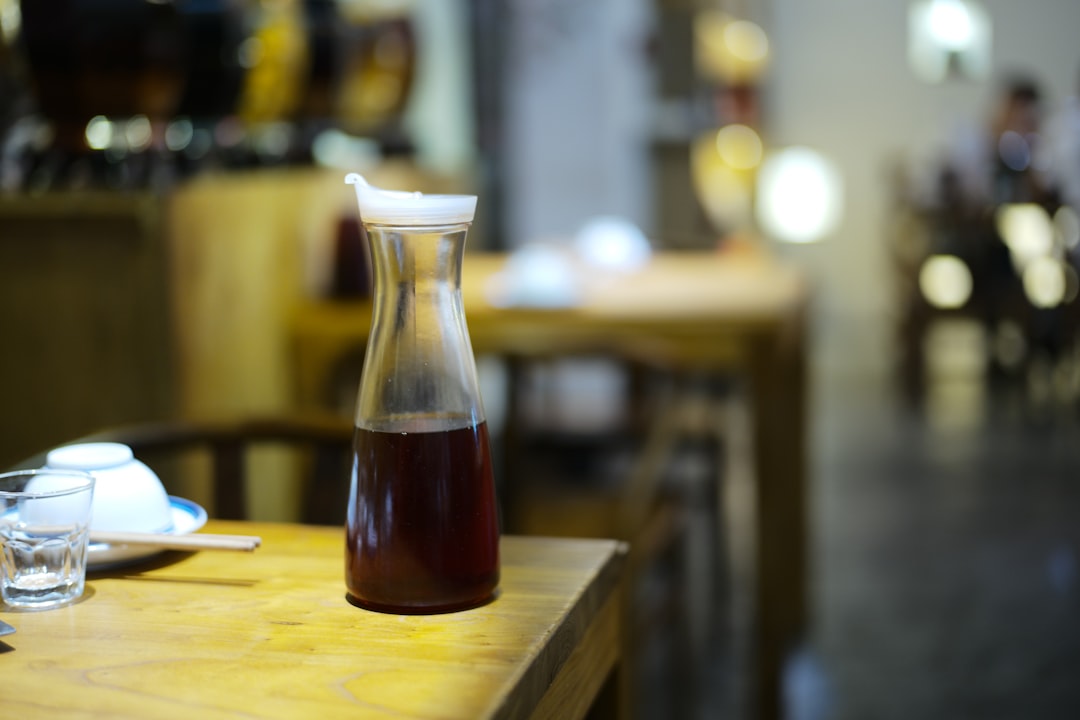
Photo by Fenghua on Unsplash
At Every Convenience Store: Banana Milk (바나나맛 우유)
Binggrae banana milk is one of those products that looks designed for children, is purchased by adults, and has outlasted multiple generations without changing its packaging. The pot-shaped bottle — flat-bottomed, slightly bulging at the sides, with a narrow neck — has been on Korean shelves since 1974, when Binggrae (then operating under a different name) developed it to encourage milk consumption during a period of government-led nutritional policy. Banana was chosen because it was expensive and aspirational — a status fruit in postwar Korea.
More than 6 billion bottles have sold since launch. Current production sits at over 500,000 bottles per day. The bottle shape, modeled loosely on traditional Korean celadon pottery, has not changed in 52 years.
The taste is sweet artificial banana — closer to banana-flavored candy than actual banana, and clearly distinct from what any banana ever tasted like. That is part of the appeal. It is 240ml, heavily associated with childhood nostalgia for Korean adults, and widely enough recognized that it appears on merchandise, cafes, and as a default "this is Korea" photo subject. Price is approximately ₩1,800 per bottle (as of 2026), available at every GS25, CU, and 7-Eleven in the country.
Look for it in the refrigerated drinks section. It is hard to miss — the shape is unlike anything else on the shelf. If the banana version does not appeal, Binggrae also produces sweet potato and melon variants, though neither has the same cultural weight.
The Traditional Sweet Rice Drink: Sikhye (식혜)
Sikhye is harder to categorize. It is made from malted barley and cooked rice, fermented at warm temperatures for four to eight hours until the starches convert to sugars. The result is sweet, clean-tasting, and slightly malty — not sour, not fizzy, and not particularly complex in flavor. It has been made in Korea since at least the Three Kingdoms period (57 BCE–668 CE) and appeared regularly at Joseon royal court banquets as a digestive drink.
The thing that surprises most people is the texture: there are cooked rice grains sitting at the bottom of the cup or can. This is not a manufacturing defect. The grains are intentional, traditional, and are meant to be consumed — you either drink them or use a spoon. The visual is genuinely unfamiliar if you have never encountered it before, and many visitors assume the product has spoiled.
Birak Sikhye (비락 식혜), produced by Paldo, is the most common canned version — approximately ₩1,400–₩1,500 for 340ml (as of 2026), sold at convenience stores nationwide. Some Korean restaurants serve it as a complimentary end-of-meal drink, similar to how Japanese restaurants might bring green tea.
One important note: Andong sikhye (안동 식혜) is a completely different product that shares the same name. Made in North Gyeongsang Province, it includes radish, carrot, and chili powder, ferments for several days, and tastes spicy and funky rather than sweet. If someone offers you Andong sikhye and you are expecting the sweet version, the experience will be disorienting.
The Creamy Fizzy One: Milkis (밀키스)
Milkis is a carbonated beverage produced by Lotte Chilsung (롯데칠성음료) since 1989 — fizzy water combined with a sweet, milky yogurt-like flavor. The combination does not exist in most Western markets, which makes it the most frequently Googled Korean drink by visitors who have tried it and want to find it back home.
The flavor profile is somewhere between a yogurt drink, cream soda, and a very light lychee soda — sweet, slightly tangy, and smoother than standard carbonated drinks because of the dairy component. It comes in at under 150 calories per can, and the variety is extensive: strawberry, melon, banana, mango, peach, apple, and original are all standard options at most convenience stores.
Price is approximately ₩700–₩1,500 for a 250ml can (as of 2026), depending on the retailer. It is available at CU, GS25, 7-Eleven, and major supermarkets. For travelers who do not drink alcohol but want something more interesting than water with their Korean BBQ, Milkis functions reasonably well as a meal companion — particularly the original or melon varieties.
The Nutty Grain Drink: Misugaru (미숫가루)
Misugaru is less commonly known outside Korea but has been around for over a millennium. It is a powder made from roasted and ground mixed grains — typically a combination of glutinous rice, barley, black rice, black beans, oats, sesame, and as many as 17 different grains depending on the brand. The powder is stirred into water or milk, sweetened to taste, and drunk as a meal substitute or a snack drink.
The flavor is distinctly nutty — toasted grains, slightly earthy, with a density that makes it more filling than most beverages. Mixed with milk rather than water, it becomes noticeably creamier and richer. Some cafes in Seoul now serve it as a latte, usually sweetened with honey. It is positioned as a health drink: high in protein, fiber, and various micronutrients, with enough caloric density to function as a light meal.
At convenience stores, look for canned or pouched versions — most common in summer. Powder versions in larger bags are sold at supermarkets and are a practical option if you are staying somewhere with kitchen access.
The Traditional Cinnamon Punch: Sujeonggwa (수정과)
Sujeonggwa is a dark reddish-brown punch made from cinnamon, ginger, sugar, and water, traditionally garnished with dried persimmon (곶감) and pine nuts (잣). It is served cold, functions as a dessert drink, and appears most frequently at traditional Korean restaurants, particularly after Korean BBQ.
The taste is strongly cinnamon-forward, with a ginger warmth underneath and a mild sweetness from the persimmon that surfaces at the end. It is not subtle — if you do not enjoy cinnamon, this is not the drink for you. If you do, it is one of the more distinctive things on any traditional Korean drink menu.
Canned versions from brands like 하늘청 (Haneul-cheong) are available at some convenience stores and supermarkets, typically priced around ₩1,500–₩2,000 (as of 2026). In restaurants, it is most often provided complimentarily at the end of a traditional meal — similar to the role sikhye plays.
The Instant Coffee Everyone Drinks: Maxim Coffee Mix (맥심 커피믹스)
Korea invented the coffee sachet. Dongsuh Foods (동서식품) created the first commercially available coffee mix — coffee, powdered cream, and sugar in a single packet — in 1976. The format was so successful that it defined Korea's coffee culture for decades and still does.
Maxim Mocha Gold Mild (모카골드 마일드) is the flagship product. In 2025, Maxim sold approximately 5.3 billion sticks — roughly 170 sachets per second, as reported by Korea Times. Korean adults consume an average of 512 cups of coffee annually, and a substantial portion of that is still instant mix, despite the proliferation of high-quality specialty coffee shops in Seoul and other cities.
You will encounter Maxim in places that have nothing to do with coffee culture: hospital waiting rooms, subway station kiosks, office kitchenettes, hotel rooms at every price point, university buildings. The self-serve instant coffee machine — which dispenses a cup for approximately ₩150–₩200 (as of 2026) — is one of the more characteristically Korean sights in public spaces.
Preparation is straightforward: tear the sachet, pour into a small cup, add approximately 120ml of hot water, stir. The result is sweet, milky, and distinctly different from espresso-based drinks — not a substitute, but its own category. If you want to understand Korean coffee culture in its broadest form rather than just the specialty segment, trying a Maxim is worth the ten seconds it takes.
The Lemon-Lime Soda with 76 Years of History: Chilsung Cider (칠성사이다)
Chilsung Cider (칠성사이다) is Korea's version of a lemon-lime soda — similar to Sprite in flavor but with a slightly lighter sweetness. Lotte Chilsung launched it in May 1950, making it older than most of the brand names that dominate the Korean beverage market today. "칠성 (Chilsung)" refers to the Big Dipper constellation and the seven founders who combined to create the original product.
It is not a particularly complex drink, but it is ubiquitous — paired with fried chicken as a non-alcoholic alternative to beer, used as a mixer with soju, and widely available at every convenience store and restaurant. Canned versions sell for approximately ₩1,700 per can (as of 2026, per Korea.net). The glass bottle version, recognizable by its green tint and distinctive shape, is increasingly rare but still exists.
The Street Icon: Yakult (야쿠르트) and the Yakult Aunties
Korea Yakult (한국야쿠르트) began selling fermented dairy drinks door-to-door in 1971, deploying a network of female sales representatives who became known as "야쿠르트 아줌마 (Yakult Ajumma)" — literally Yakult aunties. The model worked: the sales representatives became a cultural fixture, recognizable by their white carts or, since 2015, the CoCo — a refrigerated electric cart that travels at approximately 8km/h.
The product itself is a small 75ml bottle of sweetened fermented milk — not thick like full yogurt, but not as watery as most probiotic drinks either. It is sweet, slightly tangy, and functions more as a daily wellness ritual than a thirst-quenching beverage. The carts carry up to 12 different fermented milk products, not just the classic yakult.
You will encounter the Yakult aunties near subway exits, outside office buildings, and along pedestrian streets. Buying from the cart is a different experience from buying the same product at a convenience store — the aunties are a genuine fixture of Korean street life, and the interaction is part of what makes it interesting.
The Hangover Drink: Korean Pear Juice (갈아만든 배)
If you plan to drink alcohol during your trip, the pear juice cans in Korean convenience stores are worth knowing about. "갈아만든 배 (gala man deun bae)" — ground Korean pear — is a 340ml can made from Asian pear puree (Pyrus pyrifolia). A 2013 study published via PubMed found that Korean pear juice can accelerate alcohol metabolism and reduce blood acetaldehyde concentrations, with hangover symptoms reduced by approximately 16–21% compared to a control group.
The critical detail: it needs to be consumed before drinking, not after. Drinking it the morning after appears to have minimal effect. Price is approximately ₩1,400–₩1,500 per can (as of 2026).
The flavor is refreshing and lightly tart — closer to a functional health drink than a sweet fruit juice. Some visitors find it useful; others are skeptical of the science. The research is real, the price is low, and the taste is not unpleasant. Worth trying on the evening before a long night out.
A Note on Makgeolli (막걸리)
Makgeolli is the oldest alcoholic drink in Korea — a milky white fermented rice wine made from steamed rice, water, and nuruk (누룩, a traditional fermentation starter). It predates soju by centuries, with records going back to the Three Kingdoms period. It is not the same thing as soju in any respect: it is opaque, typically 6–8% ABV for commercial versions, and has a subtly sour, slightly sweet, gently fizzy character that owes more to natural fermentation than distillation.
The most important detail for first-time drinkers: tilt the bottle gently two or three times before opening to mix the rice sediment at the bottom. Do not shake it vigorously — the natural carbonation will cause it to overflow.
Convenience store options include Iseul Tokki (이슬톡톡) and Jipyeong (지평), priced at approximately ₩1,600–₩4,000 for a 750ml bottle (as of 2026). For the full picture — types, brands, how to drink it, and where to find craft versions — see the complete makgeolli guide.
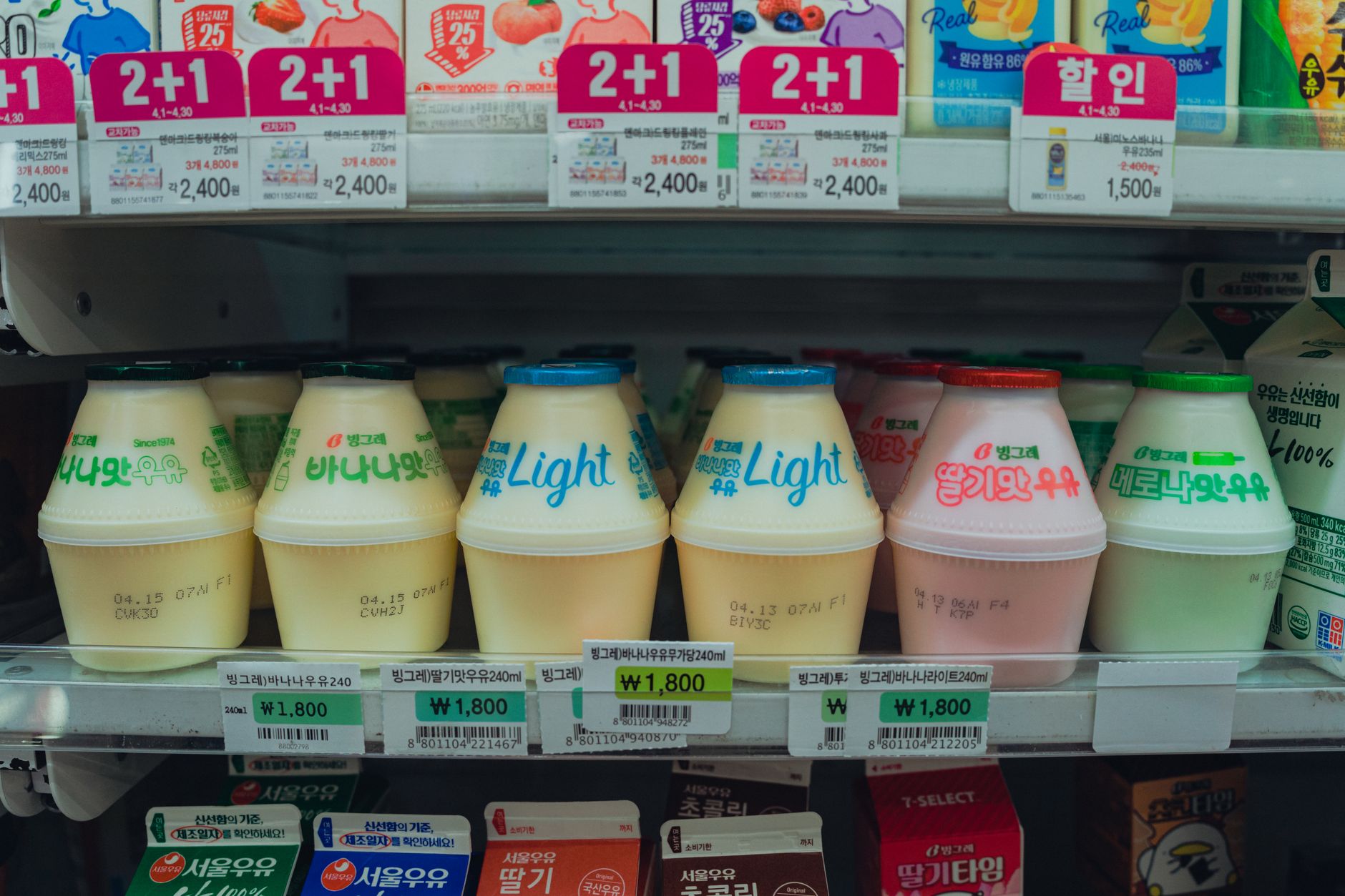
Photo by Theodore Nguyen on Pexels
What You Need to Know
-
Boricha at restaurants is free and unlimited, but it is not water. The golden-brown tea that arrives without ordering is barley tea — caffeine-free, zero calories, and expected to be consumed throughout the meal. Asking for plain water is fine but often means getting a glass from a self-serve dispenser rather than table service.
-
Sikhye contains rice grains at the bottom — this is correct. First-time drinkers sometimes assume the can has spoiled. The grains are intentional and are part of the traditional drink. Swirling the container before drinking or using a spoon to consume the grains is normal.
-
Andong sikhye (안동 식혜) is not the same as regular sikhye. It contains chili powder and tastes completely different — spicy and fermented rather than sweet. They share a name but are entirely distinct products.
-
Makgeolli is not soju. The two drinks are frequently confused by visitors who know soju and assume all Korean alcohol is similar. Makgeolli is milky, low-ABV, and has a fermented character. Soju is clear and distilled. Ordering one expecting the other is a common mistake.
-
The pear juice hangover drink works before drinking, not after. A 2013 PubMed-cited study showed 16–21% reduction in hangover severity when consumed before alcohol. Drinking it the morning after is a common misunderstanding of how the mechanism works.
-
Banana milk is for adults too. The pot-shaped bottle and sweet flavor tend to register as a children's product to visitors from markets where flavored milk is positioned that way. In Korea, it is a mainstream beverage purchased by all age groups, and the six billion bottle figure reflects that.
Practical Tips
-
Start your convenience store tour at the refrigerated drink section, not the snack aisle. The cold drinks section at any GS25 or CU contains most of the drinks covered in this guide — banana milk, sikhye, Milkis, Chilsung Cider, pear juice, and makgeolli are all typically within two or three shelf sections of each other.
-
Try boricha before deciding you do not like it. The visual is unfamiliar, but the taste is mild — nutty, slightly toasty, and genuinely refreshing cold. Many visitors who initially decline it end up drinking it freely by day three.
-
If you are at a Korean BBQ restaurant after dark, check the menu for sikhye or sujeonggwa. Both are traditional digestive drinks and are often provided at the end of a meal, sometimes free. Asking for them is not unusual.
-
For pear juice, buy it before you go out rather than the next morning. The science suggests pre-drinking consumption is where the hangover-reduction effect is. One can before a night of makgeolli or soju is the intended use case.
-
Look for the Maxim vending machines in public buildings. Train stations, hospital lobbies, and university halls frequently have self-serve instant coffee machines that dispense a paper cup of Maxim coffee mix for approximately ₩150–₩200 (as of 2026). It is one of the more genuinely local drinking experiences available in any public space.
-
If you see a Yakult cart, the standard small bottle is what to try first. The aunties also sell a range of larger probiotic drinks and yogurt products, but the original 75ml bottle is the most iconic and the easiest introduction to Korea's fermented dairy drink culture.
-
Misugaru is a good option for travelers who want a filling drink rather than a snack. The grain powder drink is sold in ready-to-drink pouches at convenience stores, particularly in summer, and functions as a light meal — useful for long travel days where proper meals are logistically inconvenient.
Frequently Asked Questions
What should I drink in Korea if I don't like alcohol? Non-alcoholic options are plentiful. Boricha is served free at virtually every restaurant. Sikhye and sujeonggwa are traditional sweet drinks available at convenience stores. Banana milk, Milkis, Chilsung Cider, and misugaru are all widely sold. None of these require seeking out specialty shops — all are available at standard convenience stores.
What is the brownish drink served at Korean restaurants? That is boricha (보리차) — roasted barley tea. It is served in place of water at most Korean restaurants, is caffeine-free, and costs nothing. The color varies from light golden to darker amber depending on how long the barley was roasted. It is one of the most common drinks in Korean daily life.
What is the sweet rice drink with grains at the bottom? That is sikhye (식혜) — a traditional Korean rice drink made from malted barley and cooked rice. The grains at the bottom are normal and intentional. Birak Sikhye by Paldo is the most widely sold canned version, available for approximately ₩1,400–₩1,500 at most convenience stores (as of 2026).
Where can I buy banana milk in Korea? Binggrae banana milk (바나나맛 우유) is available at every GS25, CU, and 7-Eleven in Korea — which collectively cover most populated areas of the country. Price is approximately ₩1,800 per 240ml bottle (as of 2026). It is in the refrigerated drinks section. The distinctive pot-shaped bottle makes it easy to identify.
What is that creamy fizzy drink I see in Korean convenience stores? That is Milkis (밀키스), made by Lotte Chilsung since 1989. It combines carbonated water with a sweet, creamy yogurt-like flavor. The original variety is the most commonly stocked, though strawberry and melon versions are also standard. Approximately ₩700–₩1,500 per 250ml can (as of 2026).
What do Koreans drink for hangovers? Korean pear juice — specifically "갈아만든 배 (gala man deun bae)" — is the most referenced hangover drink. A 2013 study found it reduces hangover symptoms by approximately 16–21% when consumed before drinking. It is sold at convenience stores for approximately ₩1,400–₩1,500 per can (as of 2026). The effect appears to work before alcohol consumption, not after.
Is makgeolli the same as soju? No. Makgeolli is an unfiltered fermented rice wine — milky white, 6–13% ABV, with a naturally sour and lightly fizzy character. Soju is a distilled spirit — clear, 16–25% ABV, and significantly stronger in effect. They are made from similar base ingredients but through entirely different processes and taste completely different.
What is the Korean instant coffee in individual sachets? That is Maxim Coffee Mix (맥심 커피믹스), made by Dongsuh Foods. Korea developed the single-sachet coffee mix format in 1976 — coffee, powdered cream, and sugar in one packet. Maxim Mocha Gold Mild is the flagship variety and sells approximately 5.3 billion units per year. It is available at convenience stores, supermarkets, and from self-serve vending machines in most public buildings.