Korean Traditional Spirits Guide: Jeontongju Types, Where to Try, and How to Buy
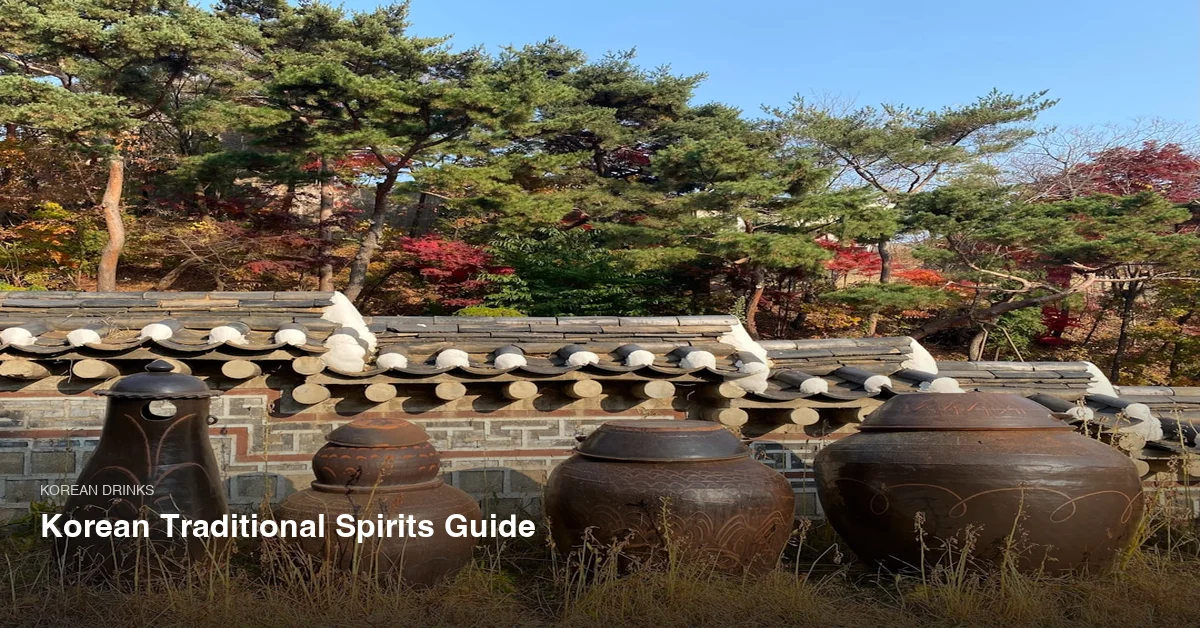
Photo by Jungjin Moon on Unsplash
Quick Answer
Korean traditional spirits — collectively called jeontongju (전통주) — are fermented or distilled beverages brewed with nuruk (누룩), an indigenous grain-based yeast starter, using recipes that predate mass-produced soju by centuries. They range from filtered rice wines at 13% ABV to pot-distilled spirits reaching 53%. The best place to try them in Seoul is The Sool Gallery (전통주갤러리) near Anguk Station — free entry, free monthly tastings, and English tours daily at 2pm and 4pm.
The Full Answer
Most visitors to Korea encounter one version of the country's drinking culture: green-bottled commercial soju, cold beer, and convenience store makgeolli. These are genuinely part of daily Korean life. But they represent the industrial tier of a far deeper tradition — and that tradition is currently undergoing its most significant revival in over a century.
Simply put: jeontongju is to commercial soju what craft whisky is to cheap blended spirit. It's made from actual Korean grains using traditional fermentation — not industrial ethanol. Flavors range from light, floral rice wines at 13% ABV to bold pot-distilled spirits at 45–53%, each tied to a specific region and recipe.
The jeontongju market reached 147.5 billion won in 2023. Seoul now has more than 120 specialty retail shops dedicated exclusively to traditional spirits, up from a handful before the pandemic. Trendy bars in Itaewon and Mapo serve Andong Soju-based cocktails alongside jeontongju pairing menus. A new generation of Korean drinkers — and, notably, the Korean government — has been actively investing in this revival through tax benefits, direct-to-consumer online sales privileges, and retail expansion funding that no other alcohol category in Korea receives.
For tourists, this creates a genuine opportunity. Trying one traditional spirit is one of the most underrated food experiences available in Korea — one that most visitors entirely miss because it requires knowing where to look.
What Is Jeontongju (전통주)?
Jeontongju (전통주, 傳統酒) literally means "traditional alcohol." The term covers any alcoholic beverage brewed or distilled using methods and ingredients passed down through generations — principally nuruk, Korean-grown rice or other grains, and pure water.
Korea's brewing culture spans thousands of years — during the Joseon Dynasty, noble families maintained their own private recipes. The Japanese colonial period (1910–1945) nearly wiped it out: home brewing was banned, licenses were monopolized, and traditional techniques almost disappeared. The jeontongju revival you see today is only a few decades old.
The contrast with commercial soju is fundamental. Chamisul and Jinro — the bottles you see everywhere — are made from industrial ethanol (typically derived from sweet potato or tapioca), diluted with water to approximately 16–17% ABV, heavily processed, and uniform in flavor across every bottle. Jeontongju is fermented or distilled from actual Korean grains using nuruk fermentation; flavors vary by region, brewer, and season, and ABV ranges from 4–6% in makgeolli to 45–53% in some distilled spirits.
The Main Types of Korean Traditional Spirits
New to jeontongju? Start here. Three options are consistently the easiest entry points for first-timers: - Baekseju — ginseng herb rice wine, ~13% ABV, available at most convenience stores (~4,000 KRW for 375ml) - Bokbunja-ju — Korean black raspberry wine, sweet and fruity, 13–15% ABV, also at convenience stores - Igangju 25% — pear, ginger, and cinnamon spirit; the most approachable distilled option for unfamiliar palates
All three are available at The Sool Gallery in Seoul, where you can taste before buying. The deeper dives follow below.
Cheongju and Yakju (청주 / 약주)
Both terms refer to clear, golden-filtered rice wine drawn from fermented rice mash. Cheongju tends to denote cleaner, more refined productions with a modern focus; yakju traditionally emphasizes herbal infusions — ginseng, chrysanthemum, pine — and the earthier complexity that comes from nuruk fermentation.
ABV runs from 13–18%. The flavor profile is fruity and floral with a subtle sweetness — often compared to Japanese sake, but with more textural complexity and a slightly earthier or more mushroom-like character from the nuruk versus the cleaner koji used in sake production. Yakju pairs well with seafood (saengseon-hoe 생선회), Korean beef tartare (yukhe 육회), seasoned vegetables (namul 나물), and grilled meats.
Notable options include Solsongju (솔송주), a pine-infused cheongju from Jirisan that pairs well with light seafood, and Baekseju (백세주) — a commercially successful fermented glutinous rice wine with ginseng and herbs, ABV approximately 13–15%, and widely available even in convenience stores. A 375ml bottle of Baekseju runs approximately 4,000 KRW (as of 2024–2025, verify on visit). Craft yakju from specialty producers can range from 10,000 KRW to 50,000 KRW and above (as of 2026).
Andong Soju (안동소주)
Korea's most celebrated traditional distilled spirit comes from Andong (안동), the capital of North Gyeongsang Province — a city the Korean government has designated as the "Capital of Korean Spiritual Culture." Andong Soju holds the status of Important Intangible Cultural Property (중요무형문화재), recognized for its unbroken lineage through aristocratic yangban (양반) households who maintained the recipe as private home brew.
The production method matters here: rice is fermented with nuruk and then pot-distilled — the same process used in high-end Scotch whisky or Irish poitín, rather than the industrial ethanol dilution used in commercial soju. The initial distillate comes out at 45% ABV and is then either bottled at that strength or diluted to various entry levels.
The ABV range is wide: 19.8% and 21% (Il-poom entry level), 22% (standard), 40% (Il-poom premium), 45% (traditional standard), and 53% (top-of-range). The flavor is clean and smooth for its strength — subtle grain sweetness, a long finish, and no artificial sweeteners. At 45%, it is genuinely different from anything labeled "soju" at a convenience store.
Entry-level bottles in Korea start at approximately 5,000 KRW (as of 2024–2025, verify on visit); premium ceramic bottle versions can reach 50,000 KRW and above (as of 2026). The Il-poom 40% expression is also available internationally through Co-Ho Imports and Total Wine & More in the United States.
Bokbunja-ju (복분자주)
A fruit wine from Gochang (고창) in North Jeolla Province, made from bokbunja (복분자) — the Korean black raspberry (Rubus coreanus). The name comes from a folk legend: the berries were said to have made a man urinate so forcefully he overturned his chamber pot. Whether or not you find that detail persuasive, it has given the drink a reputation as something of a vitality tonic.
The practical details: deep ruby-red color, sweet and tart with notes of blackcurrant and blueberry, medium body with slightly herbal undertones. Wine drinkers often compare it to a port-berry liqueur hybrid. ABV ranges from 13–19% depending on brand and style — Bohae (보해) at 15% is the dominant commercial version, richer and slightly astringent; Myungjak (명작) at 13% is sweeter and fruitier.
Bokbunja-ju is one of the more accessible jeontongju for visitors unfamiliar with rice wine — the fruit flavors are immediately recognizable, and it pairs well with Korean BBQ and galbi (갈비). In Korea it is available at major convenience stores (GS25, CU, 7-Eleven), supermarkets, and The Sool Gallery.
Munbae-ju (문배주)
Munbae-ju holds the designation of Important Intangible Cultural Property No. 86-1 (중요무형문화재 제86-1호). The most striking thing about it: the spirit smells unmistakably of wild pear (munbae 문배나무, a type of Korean wild pear or crabapple), yet contains no pear whatsoever. The aroma comes entirely from a specific combination of wheat, hulled millet (기장), and sorghum (수수) fermented with nuruk.
Its origins trace to the Goryeo Dynasty (고려시대), and the recipe was preserved in Pyongyang — in what is now North Korea — before being brought south after the Korean War. At approximately 40% ABV, it is high-proof by most standards, but the finish is surprisingly smooth. The aroma makes it genuinely unlike anything else in the jeontongju lineup.
Munbae-ju is a specialty product. It is not widely available outside specialist sool shops in Seoul and The Sool Gallery. Availability outside Korea is limited.
Igangju (이강주)
A premium infused spirit from Jeonju (전주) in North Jeolla Province, designated Important Intangible Cultural Property No. 6 (전라북도 무형문화재 제6호). The base is traditional distilled grain spirit, infused with Asian pear (배), ginger (생강), cinnamon (계피), turmeric (울금), and honey (꿀). The result is golden-colored and bursts with fruit and spice on the nose.
Three ABV expressions: 19% (lightest), 25% (standard — pear sweetness upfront, ginger heat behind, clean finish), and 38% (premium, aged 3 or more years, deeper and more complex aroma). The 25% expression is considered the most widely sold and the most approachable for visitors unfamiliar with traditional spirits — the pear-ginger-spice combination is immediately legible even to drinkers who have never tried Korean traditional alcohol.
Igangju is available at Incheon Airport T1 and T2 duty-free, at Total Wine & More and BSW Liquor in the United States, and at specialty shops in Seoul. Jeonju itself — approximately 3.5 hours from Seoul — is where the spirit is produced, and the Jeonju Traditional Liquor Museum (전주 전통술박물관) in the Hanok Village area offers exhibits and hands-on brewing experiences.
Baekseju (백세주)
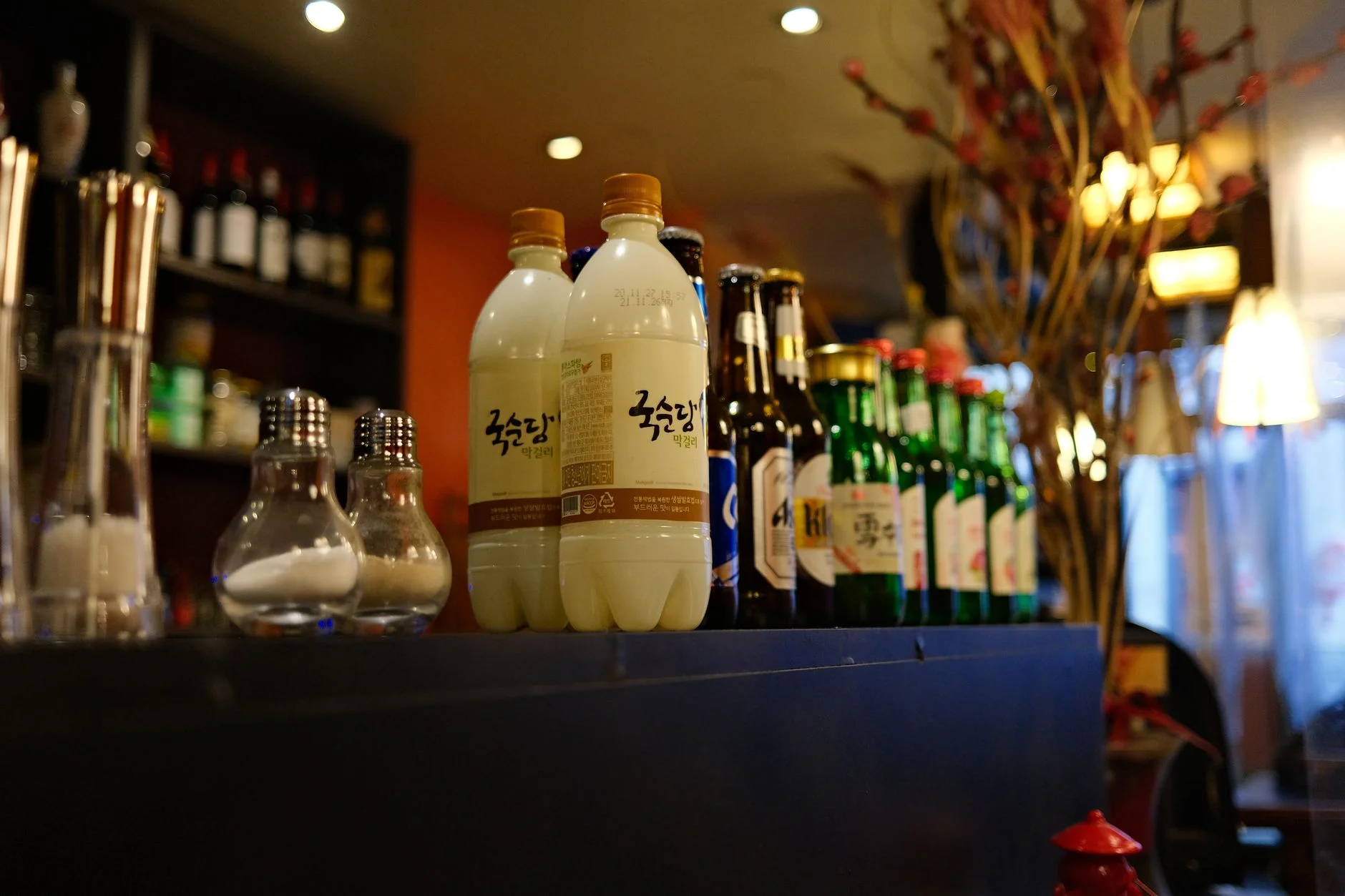
Technically a category of yakju rather than a separate spirit type, Baekseju (백세주, literally "100-year wine") deserves separate mention because it is the most commercially accessible traditional-style drink in Korea. Made by Kooksoondang (국순당) from fermented glutinous rice with ginseng and herbal ingredients, it is sold in convenience stores throughout the country. At approximately 13–15% ABV and a 375ml price point of around 4,000 KRW (as of 2024–2025), it functions as a practical entry point for visitors who want to try something with historical roots without visiting a specialty shop.
Where to Find Traditional Spirits in Korea
The Sool Gallery (전통주갤러리)
The single most useful destination in Seoul for visitors interested in jeontongju. Located near Anguk Station (안국역) on Line 3, in the traditional Bukchon area close to Insadong, The Sool Gallery is a government-operated tasting room and retail shop.
Key details: entry is free (verify on visit), generally open Tuesday through Sunday 10am to 8pm — check their website before going as hours can vary. English-guided tours are typically available at 2pm and 4pm daily — reservation is recommended, by email. Free monthly "Alcohol of the Month" themed tastings are also held. The retail selection rotates and covers makgeolli, soju, yakju, cheongju, and fruit wines. Brewing workshops are available.
For a visitor with a few hours in the Bukchon or Insadong area, this is the practical choice for getting a structured introduction to jeontongju without traveling outside Seoul.
Specialty Shops and Department Stores
Aejoo Geumho (애주금호), near Geumho Station (금호역) on Line 3, carries a wide assortment of makgeolli, cheongju, yakju, soju, and fruit wines and is well regarded among locals interested in traditional alcohol.
Major department stores — Lotte, Shinsegae, Hyundai — maintain well-stocked traditional liquor sections. Large supermarkets (E-Mart, Homeplus) carry broader selections including some premium yakju. Sooldamhwa (술담화) operates as a delivery service within Korea, offering approximately 2,000 kinds of traditional liquor — a useful option for those staying long enough to receive a delivery.
Convenience Stores (Accessible Options)
For visitors who want to try something without visiting a specialty shop: Baekseju (ginseng rice wine, ~13–15%), some Bokbunja-ju variants, and basic makgeolli are available at GS25, CU, and 7-Eleven locations throughout Korea.
Incheon Airport Duty-Free
Both T1 and T2 duty-free shops carry Andong Soju (often in traditional ceramic bottle versions) and Igangju — practical for purchasing before departure if you did not manage to shop elsewhere during your trip.
Taking Korean Spirits Home
The practical logistics of bringing jeontongju home are worth knowing before you arrive at the airport.
For bringing alcohol into Korea (the rules that apply when you arrive): as of March 21, 2025, the previous two-bottle cap was removed. The current rule allows duty-free treatment for combined volume of 2 liters or less AND combined value of $400 USD or less. Amounts exceeding 1 liter are subject to customs duties and taxes regardless of value. All alcohol must be declared at customs.
For carry-on versus checked luggage: bottles under 24% ABV can go in your carry-on. Bottles between 24% and 70% ABV — which includes Andong Soju at 45%, Munbae-ju at 40%, and Igangju at 38% — must go in checked luggage, with a maximum of 5 liters per person. Bottles at 70% ABV or above are not allowed in carry-on or checked luggage.
Airport duty-free purchases (sealed bags from the duty-free shop after security) can travel in the cabin regardless of ABV, under IATA carry-on liquid rules. If you are specifically looking to bring back Andong Soju at 45%, purchasing it at Incheon duty-free after clearing security is the most practical option.
What You Need to Know
- ABV varies dramatically. The gap between a convenience store Baekseju at 13% and traditional Andong Soju at 53% is not a small difference. If you are new to jeontongju, the labeled ABV is worth paying attention to before pouring.
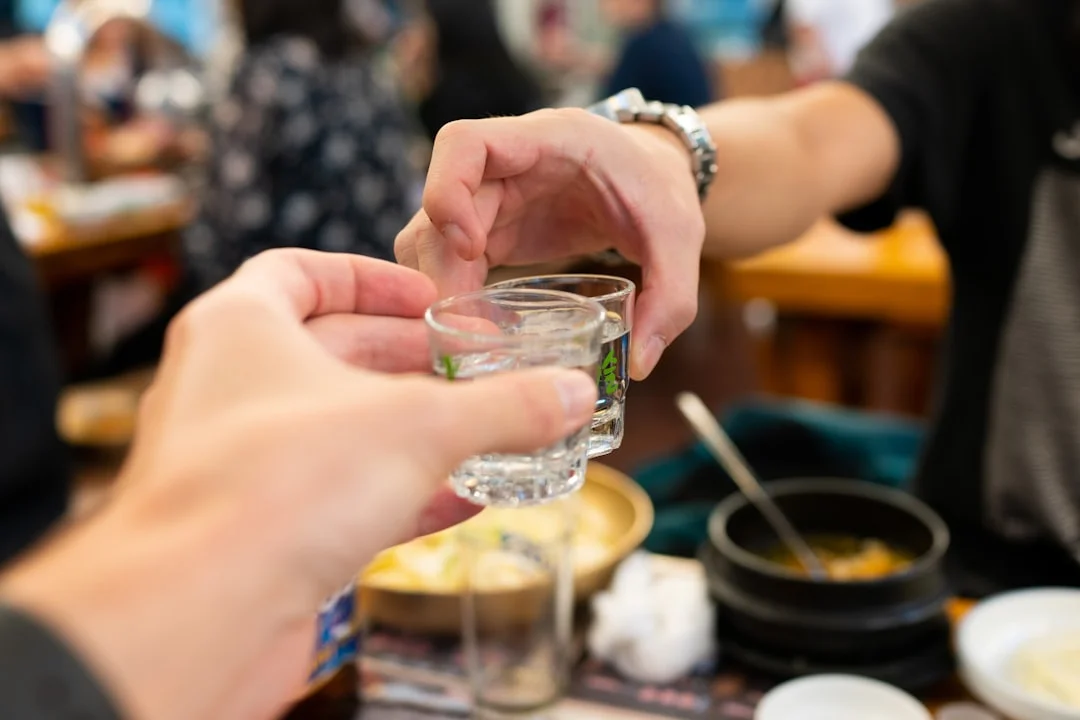
- Serving temperature matters. Cheongju and yakju are typically served slightly chilled or at room temperature — not ice cold like commercial soju. Some are served warm in cold weather, similar to sake. Bokbunja-ju is generally served chilled.
- Nuruk fermentation creates distinct flavors. The earthy, sometimes slightly funky complexity in yakju and cheongju comes from wild yeast strains in nuruk — the same principle as natural wine fermentation in European terms. This is a feature, not a sign the bottle has gone off.
- These are not substitutes for commercial soju. Jeontongju has different flavors, different ABV levels, and different pairing logic. Treating Andong Soju as an alternative to Chamisul will result in drinking far more alcohol than intended.
- Food pairing follows different logic. Yakju and cheongju pair well with seafood, seasoned vegetables, and Korean beef tartare. Bokbunja-ju works with rich, fatty dishes like galbi. Igangju is well suited to dessert or light snacks. Andong Soju is traditionally served with dried fish (과메기, gwamegi) and other preserved foods.
- The Sool Gallery is typically free. No cover charge, no purchase requirement. The monthly tasting themes are listed on their website in advance — checking the schedule before visiting is worth doing.
Practical Tips
-
Start at The Sool Gallery if you have only one day in Seoul for jeontongju. The English tours at 2pm and 4pm provide structured context that is difficult to replicate on your own. Reservation is recommended, particularly on weekends.
-
Try Igangju 25% as your first introduction to traditional spirits. The pear-ginger-spice flavor profile is approachable for drinkers who have never encountered nuruk fermentation, and the 25% ABV is manageable. It is available at The Sool Gallery and Incheon duty-free.
-
Buy Andong Soju at Incheon Airport duty-free if you plan to take it home. At 45% ABV, it must travel in checked luggage — but duty-free purchases in sealed bags can go in the cabin. This is the most convenient option for avoiding checked luggage complications.
-
Check the date on makgeolli before buying. Traditional and craft makgeolli (the unfiltered, milky fermented rice drink) has a short shelf life — typically one to two weeks from production. This is not an issue at The Sool Gallery or specialty shops, but worth verifying at supermarkets.
-
Pair cheongju or yakju with raw fish dishes. If you are visiting a sashimi restaurant (hoe jib 회집) or ordering Korean beef tartare (yukhe), a chilled yakju is a more authentic pairing than beer and often recommended by the restaurant itself.
-
Andong is worth the trip if you have two or more days outside Seoul. The Andong Soju Museum (안동소주·전통음식박물관) offers free entry and includes a tasting of 45% Andong Soju at the end. Most exhibits are in Korean with limited English signage, but the staff are helpful. Andong is approximately 2.5 hours from Seoul by KTX.
-
Check the label format before purchasing at convenience stores. Baekseju (백세주) and Bokbunja-ju (복분자주) are available at most GS25, CU, and 7-Eleven locations. Both have small English descriptions on the label. If the label is entirely in Korean with no product name in English, a translation app pointed at the bottle is sufficient.
Frequently Asked Questions
What is jeontongju and how is it different from regular soju? Jeontongju is traditional Korean alcohol brewed or distilled using nuruk (indigenous grain-based yeast starter), local Korean grains, and traditional recipes that predate industrial production. Commercial soju — the Chamisul and Jinro you find everywhere — is made from industrial ethanol (usually sweet potato or tapioca), diluted with water to approximately 16–17% ABV. Jeontongju is fermented or distilled from actual grain using centuries-old methods and has far more variety in flavor and strength.
Which Korean traditional spirit is easiest for beginners to try? Baekseju (ginseng herb rice wine, ~13–15% ABV, available in convenience stores), Bokbunja-ju (black raspberry wine, ~13–15%), and Igangju at 25% (pear and ginger spirit) are the most approachable. All three are available at The Sool Gallery in Seoul, where you can taste before you buy.
Where can I try Korean traditional spirits in Seoul without going to Andong or Jeonju? The Sool Gallery (전통주갤러리) near Anguk Station on Line 3 is the definitive answer — free entry, free monthly tastings, English tours at 2pm and 4pm. Specialty bottle shops like Aejoo Geumho (금호역) also carry wide selections. Ikseon-dong (익선동) in central Seoul has bars in renovated hanok buildings that serve craft jeontongju.
Can I buy Andong Soju in Seoul, or do I have to go to Andong? Andong Soju is available at The Sool Gallery, premium liquor shops in Seoul, and Incheon Airport duty-free. If you want the full context — museum, distillery visit, tasting at the source — Andong is worth the trip (approximately 2.5 hours by KTX). The museum entry is free and includes a tasting of the 45% expression.
Can I bring Korean traditional spirits home on the plane? Bottles under 24% ABV can go in your carry-on. Bottles from 24% to 70% ABV (including Andong Soju 45%, Munbae-ju 40%, and Igangju 38%) must go in checked luggage, with a maximum of 5 liters per person. Bottles at 70% ABV or above cannot be transported in either carry-on or checked luggage. Purchases from Incheon Airport duty-free in sealed bags can travel in the cabin.
What does yakju taste like compared to sake? Both are filtered rice wines, but yakju has more complexity and a slightly earthier or mushroomy character due to nuruk fermentation — the wild yeast strains produce a broader range of flavor compounds than the cleaner koji used in Japanese sake. Yakju is generally fruitier and less sweet than sake, with more noticeable floral notes and textural variation between producers.
What is Munbae-ju and why does it smell like pear if there are no pears in it? Munbae-ju (문배주) is a distilled grain spirit — made from wheat, millet, and sorghum — that produces a pronounced wild pear aroma through fermentation alone. The specific combination of grains and nuruk naturally generates aromatic compounds that smell of wild pear. It is designated Important Intangible Cultural Property No. 86-1 and originally came from Pyongyang, North Korea, where the technique was preserved before being brought south after the Korean War.
Is The Sool Gallery actually free? Yes — entry is free and the basic tastings are free. The Sool Gallery is government-operated and functions partly as a promotion and education center for traditional Korean alcohol. English guided tours at 2pm and 4pm are also free, though reservation by email is recommended. Retail bottles are available for purchase, but there is no requirement to buy.
Related Questions
- New to Korean drinking culture? Start with the broader context: Drinking in Korea: Complete Guide for Tourists 2026
- For a dedicated guide to the spirit most visitors encounter first: Soju Guide: Types, ABV, Brands, and How to Drink It in Korea
- If makgeolli is your entry point into traditional Korean alcohol: Makgeolli Guide: Types, ABV, How to Drink, and Where to Buy in Korea