Korean Drinking Games Guide: Rules, Tips, and How to Play
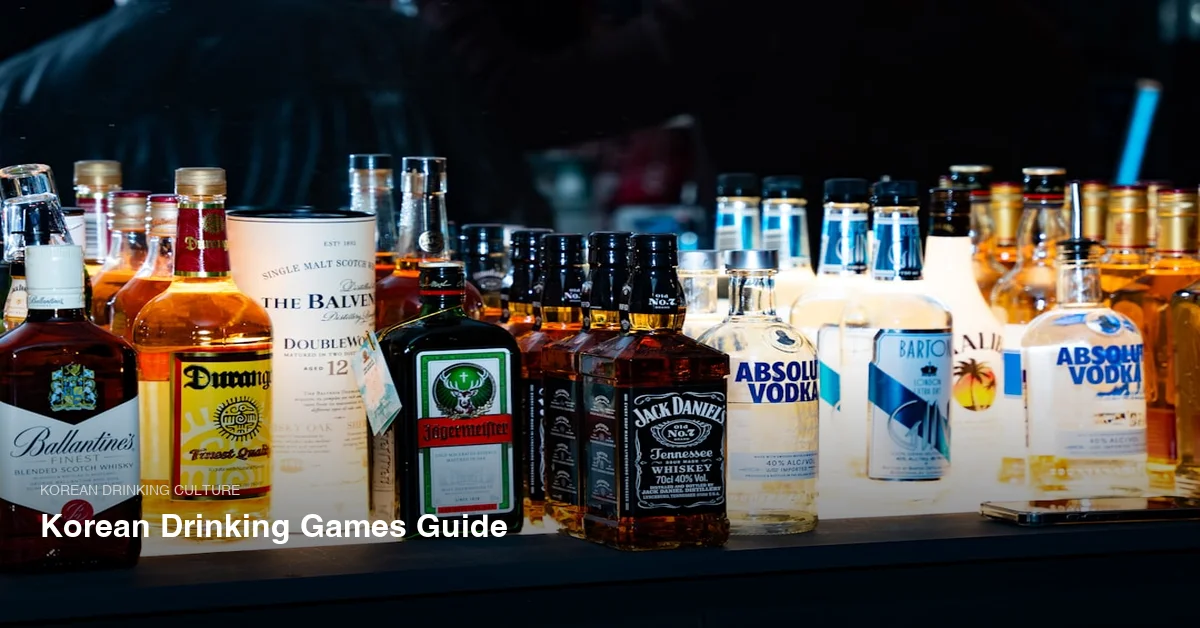
Photo by foto DIAL on Unsplash
Quick Answer
Korean drinking games (술게임, sul-geim) are a central part of social drinking culture — played at hof bars, pojangmacha street stalls, and norebang after-parties. The most foreigner-friendly options are Baskin Robbins 31, Titanic, the APT game, and Nunchi, all of which require no Korean language ability. The loser of each round typically drinks a shot of soju or a glass of somaek (soju mixed with beer).
The Full Answer
If you have spent any time watching K-dramas or K-pop content, you have probably seen groups of people crowded around a table, hands stacked, shouting numbers in unison. That is not a scripted television moment — it is a fairly accurate representation of how Koreans actually drink.
Korean drinking games (술게임) serve a social function that goes beyond the alcohol itself. They are used to break the ice at company dinners (hoesik, 회식), to bond at university outings (MT, 엠티), and to keep energy up during the second or third round of a night out. The games are structured around turn-based penalties rather than competitive scoring — the point is not to win so much as to make sure no one sits out of the group dynamic.
The standard drinking night in Korea follows a multi-stop format: 1차 (il-cha, first stop) is usually a full meal with drinks at a grilled meat restaurant or hof bar; 2차 (i-cha, second stop) moves to a norebang or a different bar where the games actually happen; 3차 (sam-cha, third stop) is whatever is still open — often a convenience store forecourt or pojangmacha. Drinking games are most common from the second stop onward.
For foreigners, the most important thing to know is that most of these games are number-based and require no Korean language ability at all. Even in a group where you share no common language, you can play Baskin Robbins 31 or Titanic without missing a beat. Koreans are generally patient with foreigners learning the rules — making an effort to participate is received far better than politely declining.
The Top Korean Drinking Games
1. Baskin Robbins 31 (바스킨라빈스 31)
The name comes from the Baskin-Robbins ice cream brand slogan "31 Flavors." No equipment needed — just players, a sequence of numbers, and the collective pressure of not wanting to say 31.
How to play: 1. Players sit or stand in a circle. 2. The first player says one, two, or three consecutive numbers starting from 1 — for example, "1, 2, 3." 3. The next player continues from where the previous stopped, again choosing to say one, two, or three consecutive numbers. 4. Play continues around the circle. Whoever is forced to say the number 31 loses and drinks. 5. If a player makes an error — wrong number, wrong count — they drink immediately and the round resets from 1.
Strategy: There is a mathematical winning strategy. If you always ensure that the running total after your turn is a multiple of 4 plus 1 (1, 5, 9, 13, 17, 21, 25, 29), you put your opponent in a losing position. Most players figure this out quickly, which makes the endgame genuinely tense.
Foreigner friendliness: No Korean required — only numbers. The highest foreigner-friendly rating of any game on this list.
▶ Watch how to play on YouTube
2. Titanic (타이타닉)
One of the most visually obvious games to spot in a Korean bar. It requires a pint glass, a shot glass, beer, and soju — all of which will already be on the table at a hof bar.
How to play: 1. Fill a pint-sized beer glass approximately halfway with beer. 2. Float an empty shot glass on the surface of the beer — it should sit on top without sinking. 3. Players take turns pouring soju into the floating shot glass — as little as possible per turn. 4. Whoever causes the shot glass to sink loses the round. 5. The loser must drink the entire contents of the pint glass — the sunken somaek (소맥), the soju-beer mixture that gives the game its name.
Strategy: Steady hands and small pours. Anxiety about going too small tends to produce overcorrections — that is when the glass sinks.
Foreigner friendliness: Entirely visual. No Korean required at any point, and the penalty drink — somaek — is actually what most Koreans would order anyway. The game is most common at hof bars (호프집, hofeu-jib) and pojangmacha (포장마차).
▶ Watch how to play on YouTube
3. APT Game / Apartment Game (아파트 게임)
This game existed long before 2024, but Rosé and Bruno Mars made it internationally famous with the song "APT." — which reached 1 billion views by January 31, 2025, the fastest K-pop video to do so. The song is essentially a description of the game itself.
How to play: 1. All players chant "아파트, 아파트, 아파트, 아파트" (APT, APT, APT, APT) together four times. 2. While chanting, everyone stacks their hands on top of each other — one hand per player, in random order, on the table or in the air. 3. One player (the leader, or whoever goes first) calls out a random number — for example, "7th floor." 4. Starting from the bottom of the hand stack and counting upward: the player whose hand is in the called position must pull it out. 5. That player loses and drinks.
Foreigner friendliness: Almost entirely language-free. You need to understand one number per round. The chant is easy to pick up phonetically within one or two rounds.
▶ Watch how to play on YouTube
4. Nunchi Game (눈치게임)
눈치 (nunchi) is a Korean concept describing the social skill of reading a room — sensing what others are thinking or feeling without being told directly. The game is a test of exactly that.
How to play: 1. Players stand or sit in a group — the more people, the better. Four is a minimum. 2. With no set order and no signal, players call out numbers spontaneously starting from 1, attempting to count up to the total number of players. 3. No two players can say the same number simultaneously. If two people call the same number at the same time, both are eliminated and the round resets. 4. The last player to call a number — the one who completes the count — loses and drinks. 5. A common variation: eliminated players sit down one by one, and the last person standing loses.
Notes: The game became widely known internationally through the Korean variety show Running Man (런닝맨), where it was played in increasingly chaotic formats. It is also sometimes called the Timing Game or the Sensing Game.
Foreigner friendliness: No Korean required — numbers only. The chaos is the point.
▶ Watch how to play on YouTube
5. 3-6-9 Game (삼육구, Sam-Yuk-Gu)
A counting game that sounds simple and becomes progressively harder as the numbers get larger — and as the evening progresses.
How to play: 1. Players take turns counting upward from 1, one number per turn, in order around the circle. 2. Any number containing a 3, 6, or 9 — instead of saying the number aloud, the player claps once. 3. If a number contains two digits with 3, 6, or 9 (such as 33, 36, 66, or 99), the player claps twice. 4. The entire 30s range (30, 31, 32, 33... through 39) requires claps rather than spoken numbers. 5. Any mistake — saying a number that should be a clap, clapping at the wrong time, or losing the pace — results in a penalty drink.
Difficulty spike: The 30s range is where most rounds collapse. The transition from 29 to 30 catches players who are counting on autopilot.
Foreigner friendliness: Moderate. Fast counting and reaction speed are required. The concept is simple to explain in any language, but execution under pressure is another matter.
▶ Watch how to play on YouTube
6. Bottle Cap Game (병뚜껑 게임)
This game uses the metal cap from a soju bottle. Once a bottle is opened, the bent metal tab on the underside of the cap creates a small tail — that tail is what the game is built around.
How to play: 1. After opening a soju bottle, the metal serration on the cap's underside is bent upward, creating a small metal tail. 2. Players take turns flicking the tail with a finger, trying to snap it off. 3. Whoever breaks the tail off wins the round — typically meaning everyone else drinks, or the winner designates a drinker. 4. The game then transitions into a High/Low round: the inside of a soju bottle cap has a printed number. The winner looks at the number and keeps it secret. Other players guess "High" or "Low." Those who guess wrong drink.
Foreigner friendliness: Good. The flicking mechanic requires a small amount of technique — index finger bent against thumb, released with controlled force — but the rules require almost no language.
▶ Watch how to play on YouTube
7. 007 Bang (007 뱅)
A reaction game that requires attention to sequence and fast reflexes. It works best with five or more players.
How to play: 1. One player starts by pointing at any other player and saying "공" (gong — the Korean word for zero, referencing the "00" in 007). 2. That player points at someone else and says "공" again. 3. The next person pointed to says "칠" (chil — seven), pointing at yet another player. 4. The player who receives "칠" says "뱅" (bang) — at this moment, both players on either side of the "뱅" recipient must raise their hands quickly. 5. Whoever said "뱅," or whoever was sitting beside them and raised their hands too slowly, drinks. 6. Any hesitation, wrong word, or missed sequence results in an immediate penalty drink.
Notes: The game became known outside Korea partly through K-pop group MAMAMOO, who played it on television programs. The sequence (공, 공, 칠, 뱅) is straightforward — the difficulty is maintaining that sequence under social pressure.
Foreigner friendliness: Moderate. You need to learn four Korean words (공, 공, 칠, 뱅) and react quickly. Not the first game to start with for a group that has just met.
▶ Watch how to play on YouTube
8. Cham Cham Cham (참참참)
A two-player head-turning game — fast, simple, and easy to run as a tournament bracket within a larger group.
How to play: 1. Two players face each other and chant "참참참" (cham cham cham) together. 2. On the final syllable, both players simultaneously turn their heads — left or right. 3. If both players turn to the same side, one player drinks (typically the one who loses a best-of-three or whoever the group decides). 4. If they turn to opposite sides, the round continues.
Notes: The game runs fast — a single round can last under ten seconds. It works well as a tiebreaker between two players or as a quick-fire tournament. No language is required, and the concept can be demonstrated in under thirty seconds.
Foreigner friendliness: No language required at all. One of the most accessible games on this list.
▶ Watch how to play on YouTube
Where to Play Korean Drinking Games
Hof bars (호프집, hofeu-jib) are the most natural setting for games like Titanic and Baskin Robbins 31. They serve large pitchers of beer alongside soju, provide wide tables with enough space for glass-floating setups, and stay open late. Hongdae (홍대) and Itaewon (이태원) in Seoul have clusters of hof bars that are foreigner-friendly.
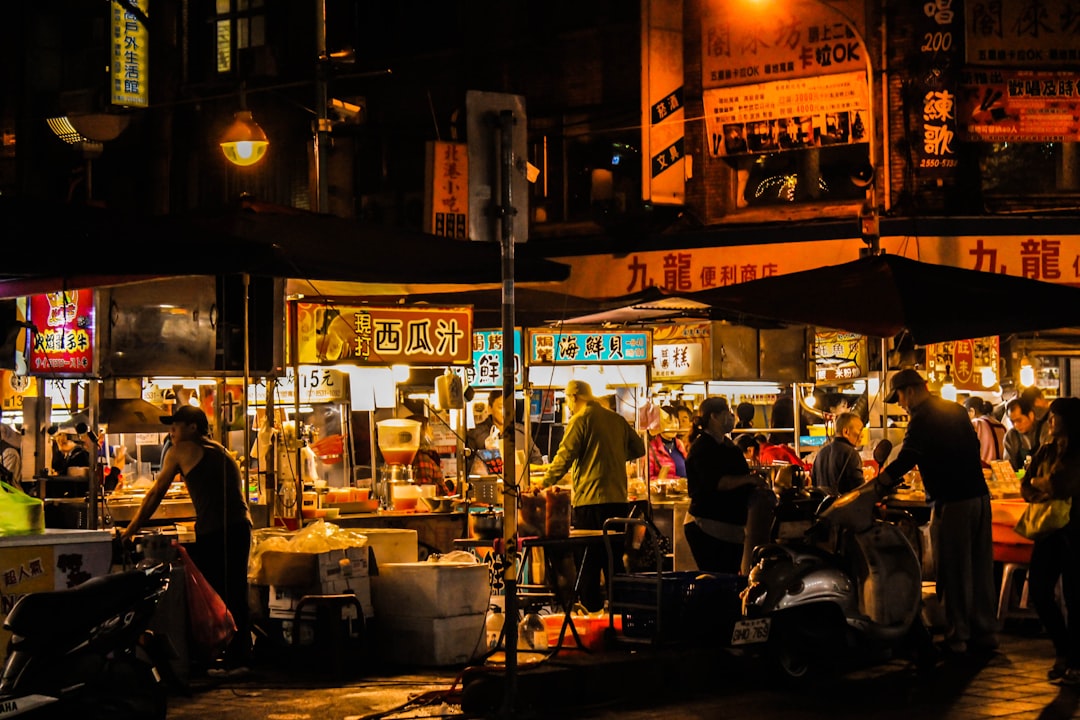
Pojangmacha (포장마차) — the orange-tent street stalls that appear in the evening — are better suited for simpler number games like 369 and Nunchi. Space is limited, the atmosphere is louder, and the menu runs to snacks like tteokbokki (떡볶이, spicy rice cakes) and eomuk (어묵, fish cake skewers). They operate at night only and are common near universities and transit hubs.
Norebang (노래방) — private room karaoke — is primarily about singing, not drinking games. That said, simple games like APT and Cham Cham Cham fill the gaps between songs, particularly in the later hours of a night out. The private room format makes it lower-stakes for foreigners unfamiliar with the rules.
For a more structured introduction, GetYourGuide and Klook both list "Korean Drinking Games Night" group tours in Seoul — these are organized specifically for foreigners and walk participants through the games in English.
What You Need to Know
-
Soju is stronger than most people expect. Standard soju (소주) runs at 16–25% ABV depending on the brand — roughly three times the strength of beer. Games that move quickly through multiple rounds can add up faster than expected. Order water alongside your drinks.
-
Anju is not optional — it is expected. Korean drinking culture is built around the assumption that food accompanies alcohol. Every hof bar, pojangmacha, and grilled-meat restaurant serves anju (안주, drinking snacks). Common options include fried chicken, tteokbokki, and dried squid. Drinking on an empty stomach is considered both bad practice and socially out of place.
-
Refusing a drink has a right way and a wrong way. Outright refusing when a senior person offers you a drink can read as rude, particularly in a workplace context. The generally accepted approach: accept the glass, drink a small amount, and put it down. Saying "저는 못 마셔요" (Jeoneun mot ma-syeo-yo — "I cannot drink") with a clear reason (driving, medication, health) is well understood. Saying you will participate in the games but skip the drinking is increasingly accepted, especially in younger social groups.
-
The pressure culture is changing. Forced drinking (강권, gang-gwon) is noticeably less common among Koreans in their 20s and 30s than it was a decade ago. Participation in the games themselves — not the drinking — is what signals social engagement.
-
Foreigners get extra latitude. Getting a rule wrong, mispronouncing a game word, or needing a re-explanation of the sequence is treated as part of the interaction rather than a disruption. The effort to participate tends to matter more than technical accuracy.
Practical Tips
-
Start with Baskin Robbins 31 or Titanic. Both games require zero Korean and can be explained through demonstration in under two minutes. They are the most common entry point for foreigners.
-
Learn the sequence for 007 Bang before you sit down. 공 → 공 → 칠 → 뱅. Practice saying it out loud once. The words are simple but the cadence under social pressure is where people lose track.
-
Drink water between rounds. Soju at 16–25% ABV in rapid succession — particularly in Titanic, where the loser drinks a full glass — can escalate faster than a comparable session with beer alone.
-
Order anju before the games start. It slows alcohol absorption and is simply part of how the evening is meant to work. At a hof bar, fried chicken is the default pairing; at a pojangmacha, tteokbokki or eomuk works.
-
Understand what somaek is before playing Titanic. Somaek (소맥) — soju mixed with beer — is the penalty drink in Titanic. The ratio in the glass at the end of the game depends entirely on how aggressively players poured during the round, so the strength varies significantly by table.
-
The Korean legal drinking age is 19 by international (Western) age calculation — not Korean age. As of 2026, Korea officially uses the international age system, so the cutoff is the same year of birth reference foreigners would expect.
-
If you are playing in a group with mixed Korean and English speakers, the APT game and Cham Cham Cham are the best equalizers — both are almost entirely non-verbal once the basic premise is understood.
Frequently Asked Questions
What are the most popular Korean drinking games for foreigners? Baskin Robbins 31, Titanic, and the APT game are the three most commonly played by foreigners in Korea — all are number-based or gesture-based, requiring no Korean language ability. Nunchi (눈치게임) is also accessible and works well with larger groups.
How do you play Baskin Robbins 31? Players take turns saying one, two, or three consecutive numbers, starting from 1. Whoever is forced to say 31 drinks. The round also resets with a penalty drink if any player says an incorrect number. There is a mathematical winning strategy: control the count so that numbers 1, 5, 9, 13, 17, 21, 25, and 29 fall to you.
What is the APT drinking game and how do you play it? The APT game — named after the Korean word for apartment (아파트) — involves players chanting "APT" four times while stacking their hands. A leader calls a random number; counting upward from the bottom of the stack, whoever's hand is in that position loses and drinks. It went global after Rosé and Bruno Mars released the song "APT." in 2024.
What is somaek and when do you drink it? Somaek (소맥) is a mixture of soju (소주) and beer (맥주) — the name is a blend of both Korean words. It is most commonly consumed as a penalty drink in the Titanic game, where the loser drinks the full glass of mixed soju and beer that formed during play. The ratio depends on how much soju was poured during the round — it varies by table.
Can I refuse drinks during Korean drinking games? Yes, but approach matters. Accepting a glass and drinking a small amount is more socially comfortable than refusing outright — particularly if an older person or senior colleague is offering. Telling the group you will participate in the games but skip the alcohol is increasingly accepted in younger social settings. The phrase "저는 못 마셔요" (I cannot drink) with a clear reason is understood without offense.
Do I need to speak Korean to play Korean drinking games? For most of the popular games — Baskin Robbins 31, Titanic, APT, Nunchi, and Cham Cham Cham — no Korean is required at all. The 3-6-9 game and 007 Bang require learning a few words (numbers and "뱅"), but the rules can be demonstrated rather than explained. King Game (왕게임) is the one that genuinely benefits from shared Korean language ability.
Where can I play Korean drinking games in Seoul? Hof bars in Hongdae (홍대) and Itaewon (이태원) are the most foreigner-accessible venues. Pojangmacha in university districts — around Sinchon (신촌) and Hyehwa (혜화) — are also good options for a more local feel. Organized group tours specifically for foreigner-friendly Korean drinking game sessions are available through GetYourGuide and Klook.
What is anju and why does it matter? Anju (안주) is the food served alongside alcohol in Korean drinking culture. It is not a side order — it is considered an essential part of the evening. Common options include fried chicken at hof bars, and tteokbokki or fish cake skewers at pojangmacha. Eating anju slows alcohol absorption and is part of how Koreans pace a night of drinking games.
Related Questions
- Drinking in Korea: Complete Guide for Foreign Visitors — covers the full context of Korean drinking culture, from bar types to etiquette rules
- Soju Guide: Types, ABV, Brands, and How to Drink It — essential reading before playing Titanic or any game where soju is the penalty drink
- Korean Drinks You Must Try Beyond Soju — alternatives if soju is too strong for an evening of games

🍺 Related: Anju Guide — Korean Drinking Snacks You Need to Know — what to order with soju, beer, and makgeolli at hof bars and pojangmacha.
🍶 Related: Korean Traditional Spirits Guide: Jeontongju Types, Where to Try, and How to Buy — Andong Soju, Igangju, Bokbunja-ju, and where to find traditional Korean spirits in Seoul.