Korean Beer Guide: Brands, Craft Beer, Somaek, and Where to Drink (2026)
Quick Answer
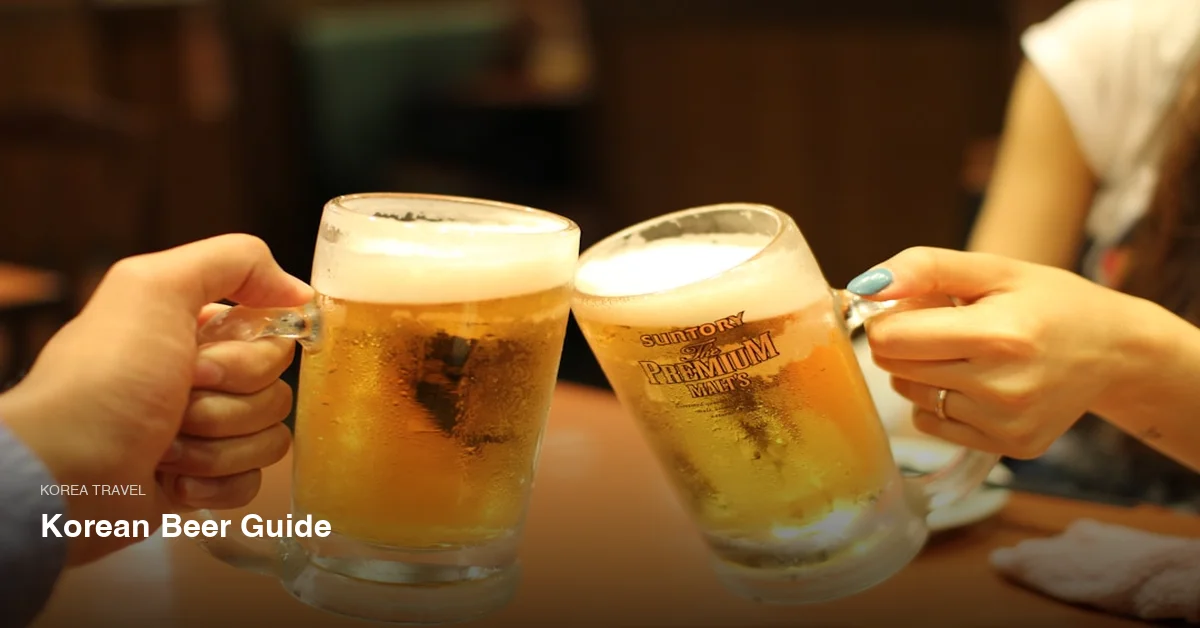
Korean beer (맥주, maekju) ranges from light affordable lagers to a rapidly expanding craft scene with 180+ microbreweries nationwide. The dominant mainstream brands — Cass, Terra, Hite, and Kloud — are crisp adjunct lagers in the 4.3–5.0% ABV range, designed to pair with food rather than stand alone. A 500ml can costs approximately ₩2,500–₩2,800 at any convenience store (as of mid-2025). Seoul's Itaewon, Euljiro, and Hapjeong neighborhoods have taprooms serving IPAs, stouts, and sours worth seeking out.
The Full Answer
In 2012, The Economist published a jab that stung: "brewing remains just about the only useful activity at which North Korea beats the South." It was a dig at Korea's two-company beer duopoly — Oriental Brewery (OB) and HiteJinro — whose corn and rice adjunct lagers dominated every convenience store, hof bar, and pojangmacha in the country. The criticism catalyzed a national conversation about beer quality, and within two years the government had revised its brewing laws.
The pre-2014 regulations required any brewery seeking a distribution license to maintain an annual production capacity of at least 150,000 liters — a threshold that made microbrewing economically impossible. After the 2014 reform, that minimum dropped to 80,000 liters, and crucially, microbreweries were permitted to sell outside their own premises for the first time. A 2020 tax reform then switched the basis for beer taxation from production cost to volume, dramatically improving the economics for small-batch brewers.
By 2025, South Korea's craft beer market had reached $2.9 billion and was home to 180+ microbreweries — numbers that would have seemed improbable a decade earlier.
The "bland Korean beer" reputation has not entirely disappeared, but it is increasingly outdated. The mainstream lagers are intentionally light and crisp — designed to let the food shine, not fight it. That is a deliberate philosophy, not a failure of skill. If you arrive expecting German pilsners, you will be disappointed by Cass. If you arrive understanding that Korean lagers exist to accompany tteokbokki (떡볶이), samgyeopsal (삼겹살), and fried chicken, they do exactly what they are supposed to do.
The Mainstream Brands: What You'll Actually Find Everywhere
Understanding which brewery makes which beer saves confusion at the convenience store. Korea's mainstream beer market divides into three ownership groups:
- OB (Oriental Brewery, owned by AB InBev): Cass, OB Golden Lager, Cafri
- HiteJinro: Hite, Terra, Kelly, Hite Max
- Lotte Chilsung: Kloud
Cass (카스) — The Market Leader
Cass Fresh has held South Korea's top-selling beer position since 2011, when it overtook Hite. Roughly one in every two beers sold in Korea in 2024 was a Cass, according to reporting from 아시아경제 (2025). At 4.5% ABV, it is an American adjunct lager brewed with corn starch rather than pure malt — which explains the lighter body compared to all-malt alternatives. The taste is relatively clean with faint citrus and breadiness. Cass Red (6.9% ABV) is the outlier in the lineup, noticeably heavier than the standard.
Terra (테라) — The Green Bottle
HiteJinro launched Terra in March 2019, and it sold 1 million boxes faster than any beer in Korean history. The distinctive green bottle has become a shorthand for "premium lager" at Korean restaurants. Unlike Cass, Terra uses 100% Australian malt barley and natural carbonation — the result is a slightly more pronounced hop character and a velvety texture that many drinkers find noticeably smoother than older HiteJinro products. ABV is 4.6%. Note that HiteJinro raised Terra's convenience store prices in May 2025 — a 355ml can now runs approximately ₩2,500 (as of mid-2025), up from ₩2,250.
Kelly (켈리) — The New Entrant
Launched April 4, 2023, Kelly hit 100 million bottles sold in its first 99 days — a commercial milestone built on heavy marketing and a genuinely different flavor profile from Terra. Kelly uses 100% Danish premium malt and a double-aging process (first at 7°C, then at -1.5°C), producing a noticeably sweet, smooth finish with reduced bitterness. At 4.5% ABV, it sits in the same range as Cass but tastes more polished.
Kloud (클라우드) — The European-Style Outlier
Lotte Chilsung entered the beer market in 2014 with Kloud — a 100% malt lager brewed at original gravity using German and Czech hops and yeast. At 5.0% ABV it is the strongest of the mainstream brands, and the flavor is noticeably fuller: honeyed aromas, cereal/toast notes, a trace of lactic acidity, and an earthy finish. It occupies a premium price point and has leaned heavily on K-pop celebrity endorsements in its marketing.
Hite (하이트) — The Old Standard
Hite was Korea's best-selling beer before Cass overtook it in 2011. It remains widely available at 4.3% ABV — a light lager with rice adjunct, creamy malt character, and a velvety texture that makes it easy to drink in quantity. It is not a beer for flavor analysis; it is a beer for a long dinner.
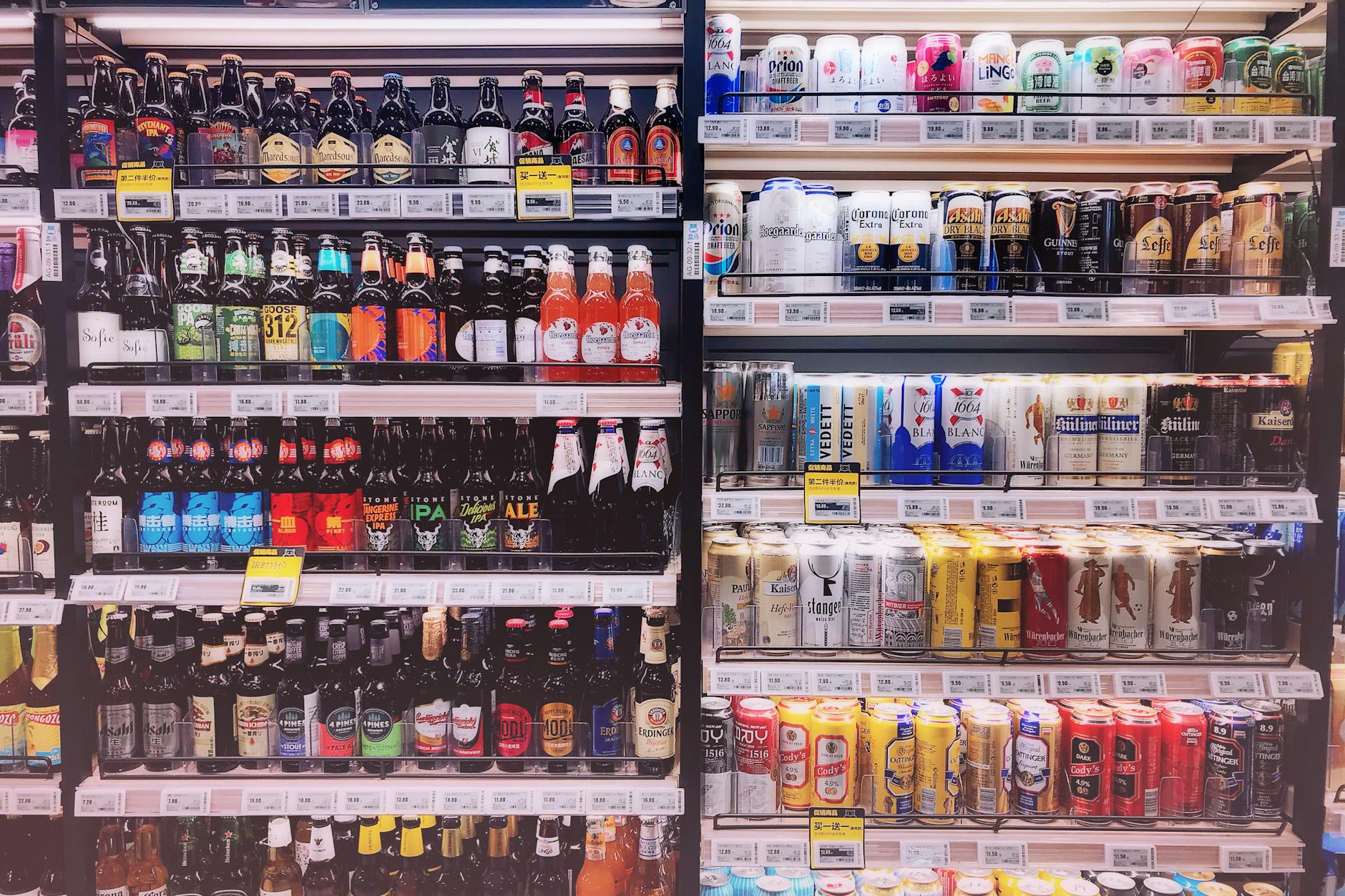
Photo by junjie xu on Pexels
Somaek (소맥) — The Korean Boilermaker
Somaek (소맥) is the word you will encounter everywhere in Korean drinking culture. It is a syllabic blend of soju (소주) + maekju (맥주, beer) — Korea's version of the boilermaker, and arguably the most social drink in the country.
The "golden ratio" (황금 비율) is most commonly cited as 3 parts soju : 7 parts beer, though this is more a cultural reference point than a strict recipe. In practice the range runs from 2:8 (lighter, better for long sessions) to 4:6 (noticeably stronger). The most common combination you will see poured at a Korean barbecue restaurant is Jinro Chamisul soju into a glass of Cass or Terra.
How to make it: Pour the soju into the glass first, then add the beer. Mix by using a spoon or chopstick to make one swift swirl — or tap the spoon lightly against a chopstick held over the glass to create a gentle vibration that distributes the soju without flattening the carbonation. The mixing ritual itself is part of the social function.
Best beer for somaek: Light Korean lagers — Hite, Cass, or Terra. Hop-forward or heavy beers disrupt the balance, and craft IPAs do not work in this format. The point is smoothness and speed of consumption, not complexity.
Somaek is the standard companion for samgyeopsal (삼겹살, pork belly BBQ), yangnyeom chicken (양념 치킨, spicy sweet glazed fried chicken), and late-night street food at any pojangmacha (포장마차). If someone at your table mixes you a glass uninvited, it is a gesture of hospitality — accept it with both hands.
Chimaek (치맥) — Fried Chicken and Beer
Chimaek (치맥) combines "chi" (치) from chicken (치킨) with "maek" (맥) from maekju (맥주) — fried chicken and beer, a pairing that became a national institution. The combination works because light Korean lager cuts through fried chicken grease cleanly, and the temperature contrast between hot crispy chicken and ice-cold beer is precisely the point.
Two varieties dominate: huraideu (후라이드) is plain crispy fried chicken, while yangnyeom (양념) is coated in a spicy-sweet sauce that makes the beer essential rather than optional. The pairing became globally visible during the 2002 Korea–Japan World Cup, when Korean fans watching matches at home established the chimaek ritual as a sporting event tradition.
Modern hof bars and craft beer venues have updated the anju (안주, drinking snacks) menu considerably — gochujang burgers, Korean corn cheese (콘치즈), and spicy tteokbokki fries alongside IPAs and stouts have become common. The core logic remains: the beer and the food are in dialogue, not competition.
Where to Drink Beer in Seoul: Craft Beer Neighborhoods
Seoul's craft beer scene clusters in three main neighborhoods.
Itaewon and Gyeongnidan-gil (이태원 / 경리단길)
Magpie Brewing Co. (매그파이 브루잉) at 244-1 Noksapyeong-daero, Yongsan-gu, is Korea's pioneer craft brewery — founded in 2011, before the 2014 regulatory reform, which required Magpie to operate under considerable constraints in its early years. The taproom runs 10 taps with a combination of house beers and guest brews. Core offerings include a Porter (5.6% ABV), Pale Ale (4.8% ABV), and a Kölsch (4.8% ABV). Half pints run approximately ₩4,000 and full pints approximately ₩7,000 (as of 2026). The space is unpretentious — no dress code, no reservation required.
White Rabbit Tap House at 242 Noksapyeong-daero, Yongsan-gu, combines local and imported craft options across an indoor taproom and an outdoor terrace. Open 5PM–2AM.
The Booth Gyeongnidan (더부스) is a short walk from Magpie and leans toward hop-forward styles. The colorful mural-covered interior has made it recognizable on Instagram, though the beers — rather than the decor — are the reason to visit.
Euljiro (을지로)
Euljiro has become Seoul's most interesting neighborhood for food and drink in the past four years, and the craft beer venues here reflect the area's general atmosphere of slightly industrial, no-frills quality.
Euljiro Brewing (을지로 브루잉) at 48-16 Supyo-ro, Jung-gu operates two taprooms directly across from each other. The core range includes Session Seersucker IPA (5.5% ABV) and Pink Chambray Saison (5.2% ABV). Open 3:30PM–2AM.
The Ranch Brewing Co. at 11 Eulji-ro 12-gil, Jung-gu runs 14 taps alongside a food menu built around signature pizzas. They advertise "47 seconds" delivery from tap to table. Prices run approximately ₩7,000–₩8,500 per large beer (as of 2026).
Artmonster — with locations in Euljiro and Myeongdong — operates a self-pour model with electronic wristbands at 16 taps. A tasting flight of five 220ml pours costs approximately ₩19,000 (as of 2026).
Hapjeong and Mapo (합정 / 마포)
Seoul Brewery Hapjeong (서울브루어리) in Hapjeong-dong, Mapo-gu, runs 14 taps (as of April 2026) with brewing equipment visible from the bar area. The setup is transparent — you can see what you are drinking being made. Open Monday–Friday 5PM–12AM, Saturday–Sunday 1PM–12AM. Pints start at approximately ₩8,000 (as of 2026).
Seongsu (성수동)
Seoul Brewery Seongsu opened in April 2023 as a multi-floor venue integrating a lounge, café, restaurant, and live music programming. They rotate through 50+ unique seasonal brews and have executed 40+ collaboration beers. The Seongsu location offers a substantially different experience from the Hapjeong bar — more of an all-day venue than a dedicated taproom.
One note on Seongsu's craft beer landscape: Amazing Brewing Company, which was formerly the anchor of the neighborhood's craft scene, closed permanently in December 2025 and entered formal bankruptcy proceedings in January 2026. It is no longer operating.
🎮 Related: Korean Drinking Games Guide: Rules, Tips, and How to Play — Baskin Robbins 31, Titanic, APT game, and how to play at Korean bars.
🍺 Related: Anju Guide — Korean Drinking Snacks You Need to Know — what to order with soju, beer, and makgeolli at hof bars and pojangmacha.
🍶 Related: Korean Traditional Spirits Guide: Jeontongju Types, Where to Try, and How to Buy — Andong Soju, Igangju, Bokbunja-ju, and where to find traditional Korean spirits in Seoul.
Photo by Phil Hearing on Unsplash
Beer at Convenience Stores: Prices and What to Buy
Korean convenience stores — CU, GS25, 7-Eleven, and Emart24 — are the most straightforward place to buy beer in the country, available 24 hours with no cover charge.
Domestic cans (as of mid-2025): - Cass Fresh 500ml can: approximately ₩2,800 - Terra 355ml can: approximately ₩2,500 (after the May 2025 price increase of ~11.1%) - Terra 500ml bottle: approximately ₩2,500 - Terra Light 355ml can: approximately ₩2,200
Imported beer deals: The famous "4 cans for ₩10,000" promotion has crept up — most convenience stores now offer mix-and-match bundles of Guinness, Asahi, Stella Artois, and similar imports for approximately ₩11,000–₩13,000 for four cans (as of 2026).
Craft beer at convenience stores: Korean craft cans — Magpie, and others — run approximately ₩4,000–₩5,000 per 500ml can (as of 2026). The convenience store craft selection varies by location and season.
One label worth noting: Gompyo Wheat Beer (곰표 밀맥주), produced by Jeju Beer Company, was a convenience store standout and is currently being discontinued as Daehan Flour Mills exits the beer business. If you find it, the window for trying it is closing.
Drinking Beer at a Hof Bar or Pojangmacha
Hof (호프집) — Korea's Beer Hall
The word "hof" derives from "Hofbräuhaus" — the German royal court brewery in Munich — and arrived in Korea via a 1980s beer culture import. Korean hof bars are the closest local equivalent to a beer hall: plastic-laminate tables, cold draft beer, and mandatory anju (안주, drinking snacks).
Standard sizes for draft beer (생맥주, saeng-maekju): 300cc (approximately ₩3,300), 500cc (approximately ₩4,500), or a 1,000cc pitcher (approximately ₩8,700) — though prices vary by venue and region (as of 2026, regional variation expected). "Slush ice beer" (살얼음 생맥주, sal-eoreum saeng-maekju), served near-freezing at approximately -2°C to 0°C with visible ice crystals in the glass, is a Korean bar specialty worth ordering at least once.
Useful phrases for ordering beer: - 맥주 (maekju) — beer in general - 생맥주 (saeng-maekju) — draft/tap beer - 병맥주 (byeong-maekju) — bottled beer - 큰 거 하나 (keun geo hana) — one large glass - 소맥 한 잔 (somaek han jan) — one glass of somaek
Pojangmacha (포장마차) — Street Tent Bars
Pojangmachas are the orange-tented sidewalk stalls found near subway exits and park perimeters — cash-preferred, open late, and almost always serving beer alongside tteokbokki (떡볶이, spicy rice cakes), odeng (오뎅, fish cake), and egg rolls. The typical spend per person is approximately ₩15,000–₩30,000 including food and drinks (as of 2026). Ask the price before sitting down — 얼마예요? (eolmayeyo?) is sufficient.
What You Need to Know
-
Korean drinking etiquette applies to beer as much as soju. Pour and receive drinks with both hands, or with the right hand supported at the wrist or elbow by the left. Never pour your own glass — wait for a tablemate to pour for you, and pour for others in turn.
-
Don't fill a glass that still has beer in it. Wait until the glass is nearly empty before refilling. Pouring into a half-full glass is considered slightly rude — it implies you want someone to drink faster.
-
Mainstream lagers are served extremely cold. Korean bars keep draft lines at lower temperatures than most Western countries. If you order a hof beer and it arrives near-frozen, this is intentional.
-
Craft beer momentum has cooled since its peak. After rapid growth from 2014 to 2023, several craft brands have run into financial difficulty — Seven Brau delisted from the Korean stock exchange in August 2025, Jeju Beer Company's sales fell from ₩28.4 billion (2021) to ₩13.8 billion (2025). The scene remains active, but the initial gold-rush phase is over. Venues you find online may have closed. Check hours before traveling to a specific taproom.
-
Prices increased in 2025. HiteJinro raised convenience store prices for Terra and Kelly in May 2025 — the first major domestic price increase in years. Factor this in if prices you see elsewhere are slightly lower than what you find on the shelf.
Practical Tips
-
At a Korean BBQ restaurant, ask for a somaek glass. Most barbecue restaurants have dedicated somaek glasses — wider at the top than a standard beer glass, designed to hold the right proportion. If you see a group mixing their own, watch the technique before attempting it yourself.
-
Try draft beer over canned beer at a hof bar. The difference between Cass on draft served at near-freezing temperature and the same brand in a room-temperature can is more significant than you would expect. The slush ice (살얼음) version is worth requesting specifically.
-
At a convenience store, buy two cold singles rather than one bundle. The 4-can imported bundles are better value by unit, but Korean convenience stores now keep domestic 500ml cans in the refrigerator section near the entrance. A cold Cass or Terra from a convenience store at a park or riverside is a different experience from the room-temperature cans in the bundle display.
-
Use neighborhood context when choosing a craft bar. Magpie Brewing in Itaewon/Gyeongnidan is the historical starting point and still runs a solid program. Euljiro's venues (Euljiro Brewing, The Ranch) tend to attract a slightly younger, more local Korean crowd. Seoul Brewery Hapjeong is the best place to watch the brewing process while you drink.
-
Ask for anju with your beer at a hof bar. Drinking without food is unusual in Korean drinking culture — hof bars expect orders of fried chicken, seasoned dried squid (오징어, ojingeo), or corn cheese alongside beer. Some venues have a minimum food order requirement.
-
Avoid assuming the imported beer bundle at a convenience store is better value. The 4-can imported bundle at ₩11,000–₩13,000 (as of 2026) works out to roughly ₩2,750–₩3,250 per can — comparable to or more expensive than domestic 500ml cans, which are larger. The imported cans are typically 355ml or 440ml.
-
If you are drinking at a pojangmacha alone or as a foreigner, sitting at the counter nearest the vendor is the conventional position. Ask the price before ordering — the menu is rarely posted — and expect to pay at the end of the session rather than per round.
Frequently Asked Questions
What is the most popular beer in Korea? Cass Fresh (카스 프레시) has been South Korea's best-selling beer since 2011 — roughly one in every two beers sold in Korea in 2024 was a Cass. It is a 4.5% ABV American adjunct lager owned by AB InBev through Oriental Brewery. Terra (테라) by HiteJinro is the second most popular brand and widely considered the better-tasting of the two by regular drinkers.
Is Korean beer good? That depends entirely on what you are looking for. Mainstream Korean lagers — Cass, Terra, Hite — are light, crisp, and low-bitterness by design. They pair well with spicy and rich Korean food and are engineered for cold, fast consumption rather than sipping and analyzing. If you are comparing them to German pilsners or IPAs, they will seem thin. If you are comparing them to their actual purpose — cutting through samgyeopsal fat or yangnyeom chicken sauce — they perform exactly as intended. Seoul's craft beer scene, meanwhile, offers genuinely complex options that compare well to any regional craft scene in Asia.
What is somaek and how do I make it? Somaek (소맥) is a mixture of soju and beer — Korea's version of the boilermaker. The most commonly cited ratio is 3 parts soju to 7 parts beer, though ratios from 2:8 to 4:6 are all practiced. Pour soju into the beer glass first, then add beer, and use a chopstick or spoon to mix briefly. Jinro Chamisul soju with Cass or Terra is the most common combination. Light Korean lagers work best — craft IPAs or heavy beers disrupt the balance.
How much does beer cost at a Korean convenience store? As of mid-2025, a 500ml can of Cass costs approximately ₩2,800, and a 355ml can of Terra costs approximately ₩2,500. Four-can imported beer bundles (Guinness, Asahi, Stella Artois, etc.) run approximately ₩11,000–₩13,000. Korean craft beer cans typically cost ₩4,000–₩5,000 per 500ml.
Where can I find craft beer in Seoul? The three main neighborhoods are Itaewon/Gyeongnidan-gil (Magpie Brewing, White Rabbit, The Booth), Euljiro (Euljiro Brewing, The Ranch, Artmonster), and Hapjeong/Mapo (Seoul Brewery Hapjeong). Seongsu also has Seoul Brewery Seongsu, which opened in 2023 as a larger multi-floor venue.
What is chimaek? Chimaek (치맥) is fried chicken (치킨, chicken) and beer (맥주, maekju). The two are consumed together — cold beer with hot crispy fried chicken — and the combination became a national institution starting in the 1970s through hof bar culture, with global attention arriving during the 2002 World Cup.
What is a hof bar in Korea? A hof bar (호프집) is Korea's version of a beer hall — the word derives from Munich's Hofbräuhaus. Typical elements: cold draft beer in standard sizes (300cc, 500cc, 1,000cc pitcher), mandatory drinking snacks (anju, 안주), plastic-laminate tables, and no dress code. Most hof bars serve two or three mainstream lagers on draft with a menu of fried chicken and bar snacks.
What is saeng maekju? Saeng maekju (생맥주) means draft or tap beer — "saeng" (생) means fresh or live, and "maekju" (맥주) means beer. It is served colder than most Western draft beer, and Korean bars often offer a "slush ice" version (살얼음 생맥주, sal-eoreum saeng-maekju) at near-freezing temperatures with visible ice crystals in the glass. Ordering saeng at a hof bar will get you the draft version rather than the bottled option.